

Exploring Technical Support Roles in Australian University Research
Australian universities play a vital role in advancing biomedical research, and behind every breakthrough are dedicated professionals ensuring laboratories run smoothly and safely. One such opportunity has emerged at Queensland University of Technology, where the Faculty of Health is seeking a Scientific/Technical Officer to bolster its research capabilities. This position highlights the essential contributions of technical experts who bridge the gap between academic inquiry and practical laboratory execution.
The role focuses on providing operational laboratory services within a dynamic team environment. It supports a wide range of research activities in biomedical sciences, emphasizing safety, efficiency, and innovation. For those with a background in cell and molecular biology or related fields, this represents a meaningful way to contribute to health outcomes while building a stable career in higher education.
QUT Faculty of Health and Its Research Focus
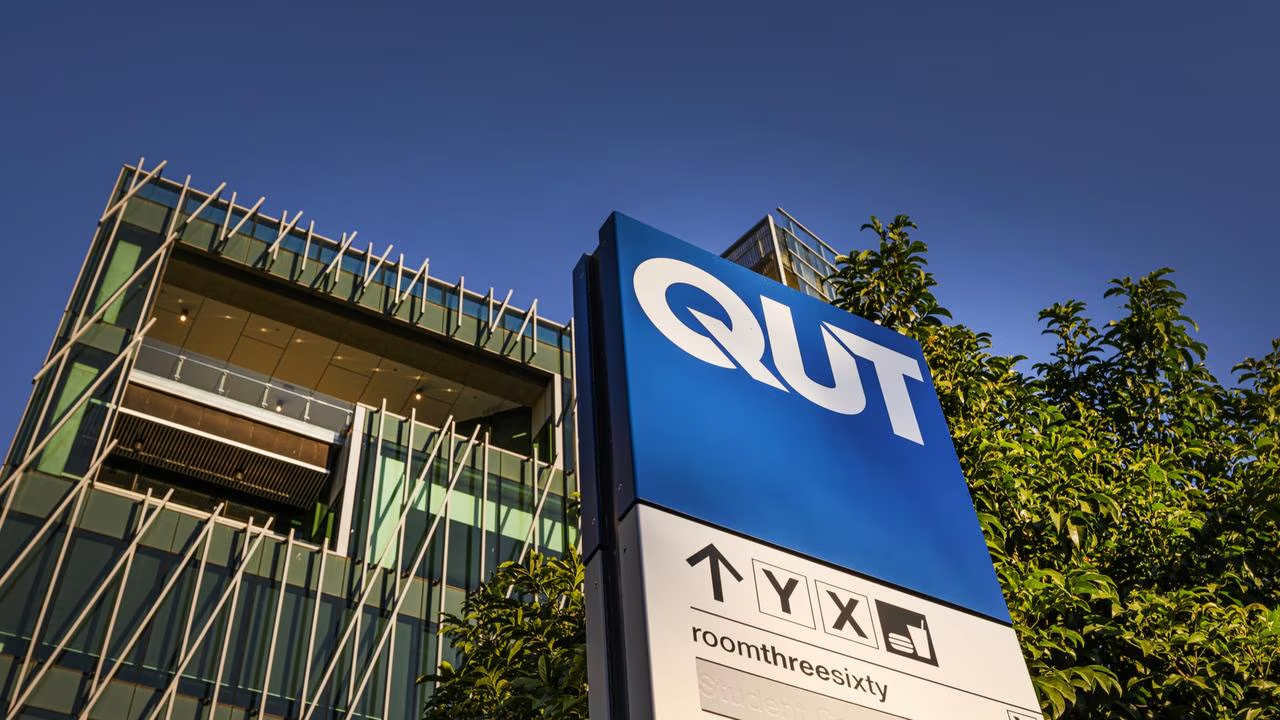
Queensland University of Technology stands out as a forward-thinking institution with a strong emphasis on real-world impact. Its Faculty of Health enrolls over 10,000 students across undergraduate, postgraduate, and research programs. The faculty operates across Kelvin Grove and Gardens Point campuses, with strategic proximity to major hospital facilities at Herston. This location fosters close collaboration between education, research, and clinical practice.
Research within the faculty targets improvements in health and wellbeing, disease prevention, and innovative solutions. Disciplines span cell and molecular biology, various omics approaches, and bioengineering. Technical officers play a pivotal part in maintaining the infrastructure that enables these investigations, ensuring equipment functions reliably and protocols adhere to the highest standards.
Opportunities like this one underscore how universities invest in support staff to sustain high-impact work. The ongoing, full-time nature of the position offers stability, allowing the successful candidate to develop deep expertise alongside academic colleagues and students.
Key Responsibilities of the Scientific Technical Officer
The primary duties center on delivering expert laboratory support for research endeavors. This includes managing specialist equipment used in biomedical experiments, troubleshooting technical issues, and producing accurate documentation. The officer collaborates with other technical team members to create an integrated support system that prioritizes occupational health and safety.
Daily work involves responding to the evolving needs of researchers and students. This might mean preparing facilities for complex experiments, ensuring sustainable practices, or adapting to new technologies in omics or bioengineering. Continuous improvement forms a core expectation, with the role contributing ideas to enhance service delivery across the faculty.
Stakeholders benefit from responsive, high-quality assistance that allows academics to focus on discovery rather than operational hurdles. The emphasis on teamwork ensures seamless coverage, even during peak research periods or equipment maintenance cycles.
Essential Qualifications and Skills Required
Candidates need education and experience equivalent to a Bachelor degree in Biomedical Sciences or a related discipline. An Associate Diploma combined with at least two years of relevant work experience also qualifies, as does an equivalent mix of training and practical background. Discipline-specific knowledge in cell and molecular biology, omics fields, and bioengineering proves particularly valuable.
Interpersonal abilities rank highly, enabling effective collaboration within teams and with diverse stakeholders. Problem-solving skills help navigate the complexities of laboratory environments, while the capacity to embrace change supports ongoing adaptation to new research demands. Strong written and verbal communication ensures clear technical reports and instructions.
Commitment to equity, diversity, and Indigenous Australian engagement aligns with broader institutional values. Applicants with ongoing full-time work rights in Australia are eligible, and Aboriginal and Torres Strait Islander candidates receive particular encouragement.
The Growing Demand for Technical Expertise in Higher Education
Technical support roles have become increasingly important across Australian universities as research grows more sophisticated. Biomedical fields require precise handling of advanced equipment and adherence to strict safety regulations. Professionals in these positions help maximize research productivity and maintain competitive edges in funding and publications.
Similar positions appear regularly at institutions nationwide, reflecting sustained investment in research infrastructure. These roles offer pathways for graduates seeking meaningful contributions without pursuing traditional academic tracks. They also provide exposure to cutting-edge projects that can inform further career development.
Universities recognize that skilled technical officers enhance both teaching and research outcomes. Their expertise supports practical classes, student projects, and grant-funded investigations alike, creating a ripple effect that strengthens the entire higher education ecosystem.
Benefits and Culture at QUT
Employment at QUT comes with competitive remuneration in the HEW5 range, specifically $95,981 to $108,257 per annum inclusive of salary, 17% superannuation, and leave loading. Additional perks include generous parental leave, fitness programs, salary packaging options, and professional development opportunities.
The university fosters a culture centered on ambition, integrity, inclusiveness, innovation, and academic freedom. Work-life balance receives attention through flexible arrangements where applicable. Initiatives supporting Indigenous staff and broader diversity efforts create an environment where varied perspectives thrive.
These elements combine to make roles like the Scientific/Technical Officer attractive for long-term careers. Staff gain access to networks, training, and resources that support both personal growth and contributions to meaningful health research.
How This Role Advances Biomedical Research Outcomes
Effective technical support directly influences the quality and pace of discoveries. By maintaining specialized equipment and ensuring safe operations, officers enable experiments in cell biology, molecular techniques, and bioengineering that might otherwise face delays. This reliability proves crucial for time-sensitive studies and collaborative projects.
Researchers benefit from consistent access to well-managed facilities, allowing focus on data interpretation and innovation. Students gain hands-on learning experiences under expert guidance, preparing them for careers in science and health sectors. The integrated approach across technical teams promotes efficiency and knowledge sharing.
Broader societal impacts emerge as supported research translates into better health strategies and technologies. Positions like this one represent quiet yet powerful enablers of progress in Australian higher education and beyond.
Career Pathways and Professional Development
Starting as a Scientific/Technical Officer can open doors to senior technical positions, laboratory management, or specialized consultancy roles within universities. Experience gained in biomedical support builds transferable skills valued across research institutions, government labs, and industry partners.
Many professionals in these fields pursue further qualifications while working, leveraging university study assistance schemes. Leadership programs and workshops help develop capabilities in team coordination and continuous improvement. Over time, individuals often contribute to policy development or training of newer staff.
The stable, ongoing nature of such appointments provides a solid foundation for those seeking predictable careers with opportunities for advancement. Engagement with the wider higher education community through conferences or networks further enriches prospects.

Application Process and Timeline
Applications for the position opened on 12 June 2026 and close on 1 July 2026 at 11:30pm. Interested candidates should review the full position description available through QUT's recruitment portal. The process involves submitting details via the online system, with emphasis on demonstrating relevant experience and alignment with role requirements.
Preparation should highlight practical laboratory expertise, problem-solving examples, and collaborative achievements. References to specific techniques in biomedical sciences strengthen applications. Early submission allows time for any required documentation.
Successful applicants join a supportive environment committed to excellence in research support. Details and the application link appear on the official QUT careers platform.
Future Outlook for Technical Roles in Australian Universities
As biomedical research expands with advances in genomics, personalized medicine, and bioengineering, demand for skilled technical officers is expected to remain strong. Universities continue investing in facilities and staff to maintain global competitiveness and address national health priorities.
Emerging trends include greater integration of digital tools, sustainability practices, and interdisciplinary collaboration. Technical professionals who adapt to these shifts position themselves well for enduring careers. Institutions like QUT exemplify the supportive frameworks that attract and retain talent in these vital support functions.
Overall, roles such as this contribute to a robust higher education sector capable of delivering impactful research and preparing the next generation of scientists and health professionals.