

At a glance
Bond University is recruiting a Manager, Research Laboratories at 0.4 FTE on a 12-month job share, with a full-time equivalent salary of $99,108.89 at HEW 7. The compliance load, the pay benchmark and the questions applicants should ask.

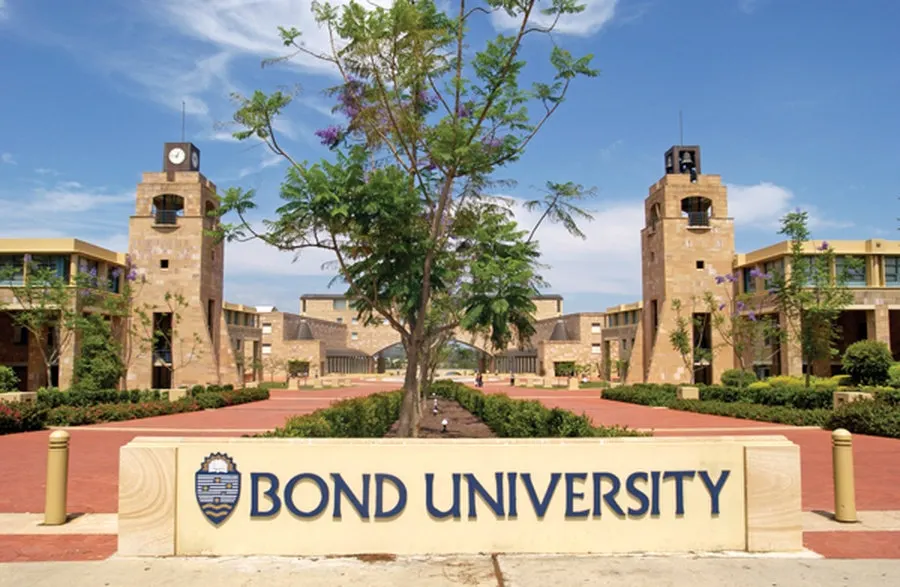
Bond University is advertising a manager's job for two days a week. The title is Manager, Research Laboratories, the fraction is 0.4 FTE, and the contract runs for up to 12 months on a job-share basis. The role sits in the Faculty of Health Sciences and Medicine at the university's Robina campus on the Gold Coast and reports to the Manager, Technical Services and Facilities.
Advertised pay is $39,643.56 a year at 0.4 FTE. That is $99,108.89 on a full-time basis, classified HEW 7 equivalent, plus 12 per cent superannuation. The reference number is 201417422.
Fractional technical leadership is not new in Australian universities. What's worth watching here is where it has landed. This is a role carrying statutory compliance obligations, a small team, an equipment budget argument and the training of every researcher who walks into a PC2 laboratory, compressed into two days a week.
What the two days actually hold
The position description is more specific than most technical manager ads, and that works in Bond's favour. The successful applicant keeps the biomedical laboratories safe and compliant, contributes to planning for future laboratory needs and resource priorities, and manages equipment across its whole life: maintenance, fault resolution, upgrades, replacement planning and the capital bids that pay for it.
Then there's the process work. Reviewing and updating standard operating procedures. Keeping documentation straight. Leading OGTR certification and uplift activity, which is the phrase to notice. OGTR is the Office of the Gene Technology Regulator, the body that certifies facilities handling genetically modified organisms. Uplift means the faculty isn't simply holding a certificate; it's raising the standard of what its laboratories can do.
- Guide a small technical team delivering research laboratory support.
- Train staff and students in cell culture, general laboratory skills, PC2 safety, work health and safety requirements and chemical handling.
- Engage industry partners to strengthen research capability.
- Oversee infrastructure and resource planning, equipment needs and daily operations.
Applications need a current resume and a cover letter that addresses the selection criteria in the position description. That's Bond's standard process and it's the first filter. A generic letter won't survive it.
PC2 is not a sticker on a door
Physical Containment Level 2, better known as PC2, is the containment standard used for work with Risk Group 2 organisms and the genetically modified organisms that sit in the same risk band. Certification isn't a one-off approval. The Regulator's containment facility requirements set out annual inspection, and the conditions attached to a certificate run to detail: biological safety cabinets tested at least every 12 months, autoclaves monitored monthly and calibrated annually, signed and dated training records for every authorised user, a backflow risk assessment, and a facility manual holding the paperwork to prove all of it.
Whoever takes this Bond role owns that evidence trail. When an inspector arrives, they ask for records, not intentions. A cabinet test certificate hanging on the wall with the wrong date on it is a finding. A training register missing a signature from a PhD student who started in March is a finding too.
The ad's line about championing good laboratory practice is doing real work. Half of compliance is training, and training is the part that gets skipped when a lab is busy. Bond is asking for someone who will run inductions, keep the record of who has been trained in what, and say no when a researcher wants to shortcut a decontamination step because a culture is ready.
The pay, benchmarked honestly
A full-time equivalent of $99,108.89 plus 12 per cent superannuation is modest against the public universities Bond competes with for technical staff. HEW 7 at Swinburne runs from $103,556 to $111,669 depending on step, before superannuation. A HEW 7 principal research technician role at the University of Queensland was recently advertised in a band from $104,616 to $113,920, plus 17 per cent super.
The superannuation gap is the bigger number. Seventeen per cent is standard at most public universities. At the same base salary, moving from 17 to 12 per cent costs an employee roughly $5,000 a year in retirement contributions before the base difference is counted.
Bond is a private, not-for-profit university and doesn't draw on the Commonwealth funding stream its competitors do. It leans on other benefits, and they're listed: free staff parking, a 36.75-hour standard week, flexible and work-from-home arrangements, up to 18 or 26 weeks of parental leave depending on service, 17.5 per cent leave loading on base salary, salary packaging, study assistance, an on-site medical centre and a sports centre with gym and pool. For a candidate weighing a two-day contract, leave loading and parking are not trivial. Neither is the fact that the campus sits at Robina, next to a hospital and a train line.
The question that matters more than the salary
It's a 12-month fixed term. Australia's rules on fixed-term contracts changed on 6 December 2023, limiting most employers to two consecutive contracts or two years for the same work. Higher education held a regulatory exception to those limits, and the government has since moved to wind it back, expecting universities to rely on award provisions instead. The Fair Work Commission varied the higher education awards in March 2025 to clarify how that works. The full bench decision is dry reading but it sets the ground rules for anyone hiring professional staff on repeat contracts.
For an applicant, the practical question is what happens at month 12. If the answer is that the certification work continues and the role becomes ongoing, say so in the ad. If the answer is that the funding runs out, say that too. Candidates respond to candour.
Job share raises a second set of questions that the ad doesn't answer. Who holds the other fraction, and are they already in place? Is the split by day or by function? Who signs off on a compliance record on the three days you're not on campus? What happens to the arrangement if your partner resigns? Ask all four at interview. The answers tell you whether this is a genuine shared role or a full-time job cut in half with the same expectations attached.
What Bond is building at Robina
The faculty this role supports is not a teaching-only operation. Bond's research centres include the Clem Jones Centre for Regenerative Medicine, which works on stem cell therapies for age-related macular degeneration and runs its own PC1 laboratory, animal holding room, tissue culture facilities, molecular biology laboratory, flow cytometry and confocal microscopy, plus an ophthalmology suite with optical coherence tomography and electroretinography. The Institute for Evidence-Based Healthcare and the Tactical Research Unit sit in the same faculty.
Four kilometres away, the Bond Institute of Health and Sport houses a biomechanics laboratory, a simulation ward and exercise physiology facilities in a precinct the university has described as a $45 million development. The medical and research laboratories on Level 4 of the Health Sciences and Medicine building were refurbished in 2023 and doubled in size.
That's a lot of kit for a two-day manager. It also explains why the compliance load in the ad is so heavy. Flow cytometers, confocal microscopes and cell culture suites need service contracts, calibration schedules and a register that tells you what's due next month. When nobody owns that register, equipment sits idle waiting for a part, and research timelines slip.
Bond has been hiring technical leadership in fractions for a while. A Manager, Biosciences Laboratories was advertised at 0.4 FTE on a job share, with a full-time equivalent of $96,222. A full-time continuing Laboratory Manager was advertised in late 2024 at $112,653.85. A Senior Technical Officer for science laboratories went out at $90,587.42. The pattern suggests a faculty building technical capacity incrementally, role by role, rather than in one restructure.

If you're applying
Write the cover letter against the selection criteria, one criterion at a time, with evidence. A CV that lists duties isn't evidence. If you've maintained an OGTR-certified facility, name the certification, the containment level and what happened at the last inspection. If you've written a capital bid that got funded, say what the instrument was, what it cost and what it's now used for. A CV built for this kind of panel leads with equipment, compliance and training, not with a list of employers.
Technicians moving up from a hands-on role should be honest about the shift. Two days a week managing means most of your output is other people's work: a rota that holds, a training record that's current, a service visit that happens before the freezer fails. The research assistant guide on this site covers the groundwork that makes a manager credible in a lab, and it applies here.
Ask about the equipment register and the maintenance backlog. Ask which certifications the faculty holds now and which ones the uplift is aiming at. Ask how the team is structured and who covers the other days. Ask what the capital planning cycle looks like, because supporting bids is listed in the ad and it's where a technical manager earns their keep.
If you're hiring a role like this
Put the full-time equivalent salary in the ad next to the pro-rata figure, as Bond has done. Candidates do the arithmetic anyway, and hiding it wastes everyone's first interview.
Then name the other job-share partner and describe the split. A fractional leadership role is only attractive if the applicant can see how the handover works. If the arrangement is new, say so and explain the trial period.
And describe the laboratory. A list of duties tells a candidate what they'll be accountable for. A sentence about the flow cytometry suite, the animal facility and the retinal imaging equipment tells them why the job is worth having.
A two-day-a-week manager can run a compliant laboratory. It only works when the paperwork is good enough to run it without them.
- Bond University
- research laboratories
- laboratory manager
- PC2 compliance
- OGTR certification