

At a glance
QUT is hiring a Data/Digital Analytics Lead at A$116,774 to A$132,357. What the selection criteria demand, the flat international market behind the role, and the privacy deadline it inherits.
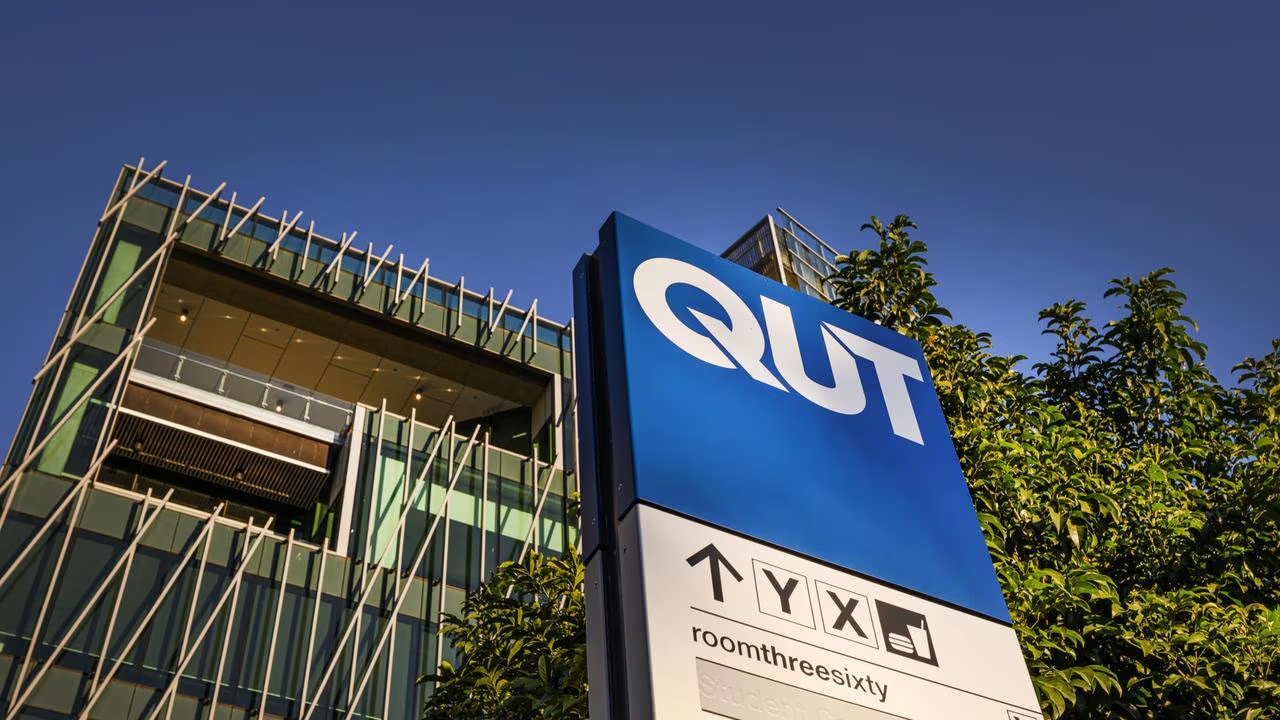
Queensland University of Technology has opened applications for a Data/Digital Analytics Lead: ongoing, full-time, based at Kelvin Grove with a hybrid option attached. The advertised salary is A$116,774 to A$132,357 a year. On top of that QUT pays up to 17 per cent superannuation and 17.5 per cent recreation leave loading, plus access to salary packaging and its study assistance scheme. Applications close at 11.30pm on 30 November 2026.
Where the job sits in the org chart is the first thing worth reading. The lead belongs to the Engagement Portfolio in the Chancellery Division, not to Digital Business Solutions, the division that has carried most of QUT's analytics vacancies in recent years. Engagement runs marketing, communication and recruitment. That placement tells you what the university believes it's buying: someone who can explain why a prospective student went quiet three weeks after an open day, and what it cost to bring them back.
The position description reaches for "a connected view of prospective and current student behaviour" across marketing, recruitment, engagement and digital experience touchpoints. In practice, that means stitching together a CRM, a website analytics stack, paid media reporting and campaign records that were almost certainly built by different vendors for different masters.
What the selection criteria actually reward
QUT is not asking for a research scientist. The qualifications line reads "education, training and/or experience equivalent to postgraduate qualifications," which leaves the door open to someone with a master's, someone partway through one, or someone with a decade of agency work and a portfolio of dashboards. That flexibility is deliberate. Analytics capability in Australian marketing teams is thin, and a university that insists on a specific credential will not fill the chair.
The technical asks are specific enough to plan an application around:
- Expertise in CRM and digital analytics platforms, plus a working grasp of marketing data ecosystems, audience segmentation, customer journeys and attribution methods.
- Experience designing analytics architecture, including tagging frameworks, data integration, pipeline management and data collection strategies that survive a website rebuild.
- Data visualisation and reporting in Power BI or Tableau, with dashboards built for people making decisions rather than for other analysts.
- Data governance: quality management, privacy compliance, risk, and the legislative machinery now sitting behind all three.
The leadership criterion is where applications will be won or lost. QUT wants evidence you've built, mentored and developed analytics staff, and that you can influence stakeholders across "technical and non-technical environments." Read that as two questions. Can you get a senior executive to change a recruitment decision on the strength of a chart? And can you stop a developer shipping a tracking tag that quietly breaks your funnel?
There's also a stated commitment to equity, diversity and Indigenous Australian engagement, listed among the selection criteria rather than buried in the fine print. QUT says internal applicants and Aboriginal and Torres Strait Islander people will be given priority consideration, and the role is open only to applicants with ongoing full-time work rights in Australia. Expect the panel to ask what you've done, not what you believe.
What the university is offering back
The pitch rests on QUT Strategy 2036, which names building a leadership position in technology and AI as one of six strategic accelerators. The institutional digital strategy sets "data driven and digitally literate" as an underpinning priority, and the role description ties the lead's work directly to marketing and recruitment effectiveness. Whoever takes this job will be able to point at a strategy document when asking for budget, which is not a small thing in a sector where analytics is often the first line cut.
The benefits are ordinary for the sector and worth stating plainly: up to 26 weeks of parental leave for primary carers including superannuation, a purchased leave scheme of up to eight extra weeks, discounts on private health insurance, and professional development through QUT's leadership programs. The hybrid arrangement is genuine rather than notional — QUT advertises most professional roles this way.

The market this hire walks into
Start with the base rate. Australian international higher education commencements have sat in a band of roughly 200,000 to 210,000 a year for four years, and the sector analyst Studymove projects a decline of about 4 per cent in 2026 — the first fall in four years. Offshore applications are down around 10 per cent, while progression by students already in Australia is up about 9 per cent. In the first half of 2026, immigration officials refused roughly 21,000 offshore higher education visa applications, concentrated heavily in India, Nepal and Bangladesh. The full Studymove analysis is worth reading in detail, if only because it reframes the problem as market share rather than market growth.
Students already in the country behave like price-sensitive buyers. Studymove puts average international undergraduate tuition at an Australian university at around A$42,000, against about A$24,000 at non-university providers, and the growth in onshore progression has gone largely to the cheaper option. For a marketing analytics lead, that's a segmentation problem before it's a pricing problem: the audience you can reach is not the audience that converts at the rate your forecasts assume.
QUT's own accounts show the same squeeze from a different angle. In 2024 the university posted an underlying operating deficit of A$31.4 million on core operations, its third consecutive year in the red, while international student revenue climbed about 21 per cent on overseas numbers that grew only 7 per cent. That gap is price. It cannot be repeated indefinitely, and everyone in the building knows it.
An analytics manager I worked alongside — call her A. — once spent a quarter reconciling two numbers that both claimed to count "enquiries." The CRM counted a form submission. The web analytics platform counted a session that reached the confirmation page. One system reported about 40 per cent more volume than the other, and the marketing director had been setting budget against the larger figure for eighteen months. The technical fix took a week. The argument about who owned the definition took a good deal longer than the fix.
When the pool is expanding, that kind of discrepancy is an annoyance. When the pool is flat, it's a budget error you carry into a deficit.
Prospects now arrive pre-shortlisted
IDP's Emerging Futures survey of nearly 8,000 current and prospective international students, run in July and August 2025, found that 54 per cent planned to use tools such as ChatGPT to decide which institution to study at, up from 35 per cent a year earlier. Fifty-three per cent said the same about choosing a program. IDP's findings are summarised here, and the detail that matters for this role is the sequencing: the AI conversation happens before the student ever touches a university website.
More than half of those surveyed still relied on university websites to confirm what they'd been told, and around a third named counsellors among their most trusted sources. So the funnel hasn't collapsed. It has developed a first stage that leaves no server log. An analytics lead who reports only on what happens after the first click will describe half a journey and call it complete.
The 10 December deadline nobody in marketing owns yet
From 10 December 2026, entities covered by the Privacy Act must disclose in their privacy policy where a computer program makes, or does something substantially and directly related to making, a decision that could reasonably be expected to significantly affect an individual's rights or interests. The obligation comes through new Australian Privacy Principles 1.7 to 1.9, introduced by the Privacy and Other Legislation Amendment Act 2024.
The Office of the Australian Information Commissioner's guidance is broader than most organisations assumed. "Computer program" covers off-the-shelf software, spreadsheet formulas and generative AI chatbots. A decision stays in scope even when a human reviews the output, provided the program is a key factor in what that human decides. Education is named among the services where decisions about access count as significant. Allens has a practical breakdown of what the amendments require, including the grey area around nominal human oversight.
QUT's incoming lead will run models that rank prospects by propensity to enrol, decide which enquirers get a phone call and which get a nurture email, and attribute conversions to channels that someone is about to spend money on. Some of that now needs to be described publicly, in language a nineteen-year-old applicant can read without a law degree. That's a governance deliverable with a fixed date, and it lands on a marketing desk rather than an IT one.

What this means for your analytics team
Universities are hiring analysts into marketing functions at the same moment regulators are asking those functions to explain themselves. Nationally, the skills base is thin: ACS Digital Pulse 2025 found 60 per cent of Australian workers rate their ability to analyse data using AI as below what their current role requires, and 40 per cent say the same about using digital dashboards. Data analytics and visualisation sits among the most commonly reported gaps. The ACS report puts 150,000 businesses in significant or severe digital capability shortage, and universities are not exempt from the pattern.
Four habits travel well, whether you're applying for this job or running the equivalent function somewhere else:
- Write the definitions down before you buy another tool. One page: enquiry, lead, application, offer, acceptance, and the name of the person who owns each.
- Keep a decision register — what the model decides, what personal information it uses, who can override it, and how often they do. It doubles as your APP 1.7 disclosure.
- Instrument the untaggable. A single application-form question about where a student first heard of you is crude, and it beats a blank space.
- Report cost per enrolment across a rolling twelve months, not cost per click across one campaign. The second number flatters everyone and predicts nothing.
QUT has unusual depth on the research side of this problem — its Centre for Data Science leads a national Advanced Analytics and AI Resource Hub backed by the Australian Research Data Commons — but a marketing analytics function doesn't inherit that capability by proximity. The gap between a strong research data culture and a strong operational one is usually one person who can translate between them.
Making an application land
The panel will read a lot of applications describing dashboards. Fewer will describe a decision that changed because of one. Lead with a case where your analysis moved money, a target or a policy, state the base rate you were working against, and name the number that shifted. If you've inherited a broken taxonomy or a CRM migration mid-flight, say so and say what you did about it, because QUT's integration work across marketing, recruitment and digital experience is exactly that kind of job.
One concrete thing to do this week, whether or not you apply: open the last campaign report your team sent to a senior executive and count how many of its numbers you could defend to a regulator. If the answer is fewer than half, you've found the case study for your application, and the first item on your own to-do list.
- Queensland University of Technology
- data analytics jobs
- higher education jobs Australia
- marketing analytics
- international student recruitment