
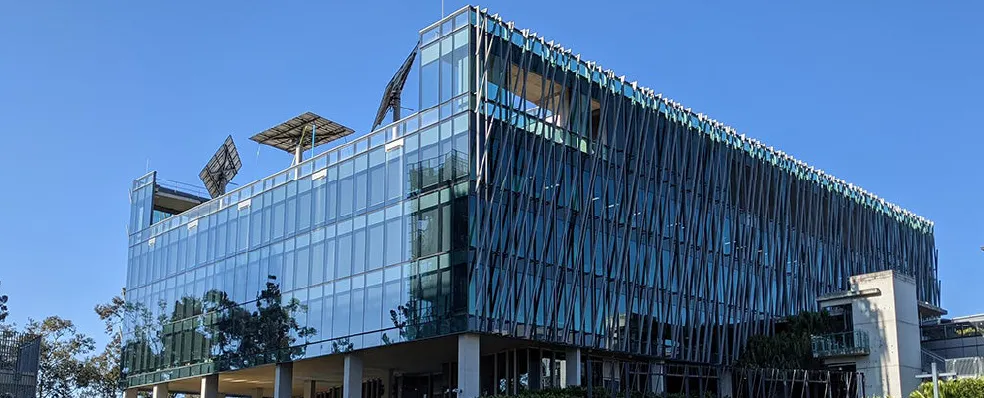
QUT has posted an Engineer, AV Delivery job on its recruitment portal, and the listing is now live on AcademicJobs.com's university jobs board. The title is easy to scroll past because it isn't a flashy IT brand. But if you've ever stood in a lecture theatre at 7 a.m. because the wireless mic dropped out before a first-year class, you know exactly why this role exists.
At a university, audiovisual systems are not optional furniture. They carry lectures, hybrid tutorials, research presentations and graduations. The engineer who delivers those systems is the person who turns a room full of cables and screens into a space that works without a technician hovering over it. QUT is looking for that person right now.
What the role actually covers
The job sits on the delivery side of AV, not just break-fix support. That means you'd be scoping, designing, installing and commissioning systems across teaching and meeting spaces, then handing them over to the support team with documentation that doesn't require a phone call to decode.
Typical work includes:
- Working with AV integrators and building contractors during refits and new builds
- Programming and commissioning control systems such as Crestron, Extron, Q-SYS or AMX
- Configuring audio DSP platforms and networked audio, including Dante and AES67
- Building and testing video conferencing setups for hybrid rooms, including Teams Rooms and Zoom Rooms
- Producing as-built documentation, test results and user guides
A typical project might be a 200-seat lecture theatre refresh: an old lamp projector replaced with a laser unit, a PTZ camera added, a Crestron touch panel reprogrammed and audio gain structure rebalanced across multiple zones. Or it could be a 12-person meeting room that needs a Teams Room with one-touch join. The delivery engineer owns the technical outcome from design intent to user acceptance.
On any given week the work can move from a construction site to a commissioning bench to a user acceptance walkthrough. The common thread is that you're accountable for a working system, not just a drawing.
QUT runs two main campuses in Brisbane, at Gardens Point and Kelvin Grove, plus a mix of specialist health, education and creative industries spaces. That means the estate is varied: a small meeting room one week, a tiered lecture theatre the next, and a research lab with specific capture requirements after that.
The skills that get your application read
University IT teams don't have time to decode a CV that lists every AV project since 2009 without telling them what you actually did. The strongest applications for a delivery role are specific about systems, room counts and outcomes.
If your background includes AV over IP, networked audio, control system programming and structured cabling, say so in plain terms. A CTS certification from AVIXA also helps here because it signals you can work across the full signal chain, not just one vendor's ecosystem. You can check the current CTS requirements on AVIXA's certification page.
Practical knowledge of HDBaseT, SDVoE, NDI and USB-C is increasingly expected because room designs have shifted away from point-to-point analogue connections. Being able to terminate and test Cat6a cleanly is a basic requirement, not a bonus.
Experience with video conferencing platforms matters more than it did a few years ago. Rooms now have to support in-person and remote participants at the same time, along with lecture capture and automated camera switching. If you've configured a Microsoft Teams Room or a Zoom Room and then handed it to an academic who just wants one button to press, that's the kind of outcome worth naming in your application.
The job posting on QUT's recruitment portal has the full position description and key selection criteria. Read those before you write anything.

Where this sits in a university that cannot stop teaching
QUT is one of Australia's larger public universities, with teaching and research happening across health, engineering, business, creative industries, law and science. All of that depends on rooms that hear, project and record reliably. The AV delivery engineer is not the person who responds to a ticket when a screen dies; they're the person who plans the system so the screen is less likely to die in the first place.
That distinction matters when you apply. Delivery roles often get confused with support roles. If you can show that you've taken a project from consultant drawings to a working room, you need to lead with that. Mention the handover process you built, the test plan you ran, the integration issues you caught and how you resolved them before they reached a live class. QUT's campus infrastructure gives you a sense of the environment: inner-city buildings and high-volume teaching spaces, along with a continuous refresh cycle.
A university's AV environment is different from a corporate boardroom rollout. You have fixed teaching timetables and no second chance if a system fails during an exam. The support team often has to operate in tight windows between semesters, and the delivery engineer has to design for that reality.
How to apply without getting filtered out
Here's the process that gives you the best shot, based on how university panels actually shortlist for technical delivery roles.
- Read the position description and make a checklist of the systems and platforms it names.
- Rebuild your CV so each relevant system appears with a room count, a timeline and an outcome. Don't list every duty from a support job; list what you delivered.
- Use the selection criteria as headings in your cover letter if the portal asks for a separate response. Panels like it when you make their matching job easy.
- Include certifications such as CTS, Crestron programmer credentials, Extron AV Associate, Q-SYS Level 2, Dante certification or equivalent in the first half of your CV, not the last page.
You can find the full application details through the listing on AcademicJobs.com's university jobs board.
What happens after you click submit
University recruitment portals move slower than private-sector AV businesses. You might wait a few weeks for a shortlist update. Don't sit by the phone; use that time to line up your referees and gather your commissioning documentation.
If you make the shortlist, expect questions about how you'd approach a room that's having lip-sync issues across a hybrid lecture, how you'd manage an integrator missing a deadline, or how you'd document a system for a support team that wasn't in the room during build. Prepare specific answers from real projects, not general statements about being a team player.
After an interview, send a short follow-up that references one real issue discussed in the room. That's rare enough to register with a technical panel.
One thing to do this week
Write a two-page CV that starts with the last three AV delivery projects you completed, the room counts, the platforms you programmed and the handover outcome. If the position description names Q-SYS and you've done it, put Q-SYS in the first line after your name and contact details. Not in a list on page three. In the first line.
Then submit it through the QUT portal. The best AV delivery engineers often wait too long because they're busy on site. The listing won't wait for your next commissioning window to close.



Discussion
Be the first to comment on this article!
You’ll be asked to sign in before your comment is posted.