
Promote Your Research… Share it Worldwide
Have a story or a research paper to share? Become a contributor and publish your work on AcademicJobs.com.
Submit your Research - Make it Global NewsQueensland University of Technology (QUT), a leading institution in Brisbane, Australia, has opened applications for the position of Senior Technician - Chemistry and Instrumentation within its Faculty of Science. This ongoing full-time role, based at the Gardens Point campus, offers a competitive total remuneration package ranging from $111,341 to $120,557 per annum, including superannuation and recreation leave loading. With a closing date of May 21, 2026, this opportunity is ideal for experienced professionals passionate about supporting cutting-edge chemistry research through expert handling of analytical instrumentation.
The Faculty Operations team, specifically the Technical Services & Space Unit, is looking for someone who can ensure the effective, safe, and sustainable operation of laboratory equipment and facilities. Drawing on extensive knowledge of complex analytical tools and solid chemistry principles, the successful candidate will deliver high-quality technical support to academics, researchers, and students across diverse projects.
🔬 Key Responsibilities in Action
In this senior role, you'll interpret complex research needs from clients with varied backgrounds, applying advanced expertise in analytical instrumentation to devise effective experimental solutions. This involves logical, systematic fault-finding on sophisticated equipment, underpinned by a deep understanding of how instruments perform and the chemical processes they analyze.
Daily tasks include prioritizing workloads in a fast-paced environment, critically evaluating systems for improvements, and collaborating with teams to meet objectives. You'll also prepare precise documentation, communicate findings clearly to diverse audiences, and champion a strong health and safety culture—essential in handling hazardous chemicals and high-voltage instruments.
- Operate and maintain a suite of analytical instruments like NMR spectrometers, mass spectrometers, and chromatographs.
- Train users on equipment protocols and troubleshoot issues proactively.
- Ensure compliance with laboratory standards and sustainability practices.
- Support teaching labs by preparing reagents and calibrating devices for student experiments.
Such responsibilities highlight the pivotal bridge between theoretical research and practical execution in university settings.
Qualifications and Experience Demanded
Candidates need a relevant degree in chemistry, analytical science, or a related field, complemented by substantial hands-on experience in a chemistry instrumentation laboratory or industry research setting. Equivalent combinations of education and training are considered, emphasizing proven skills in advanced analytical techniques.
Essential attributes include the ability to apply professional judgment to complex problems, strong fault diagnostic skills, and excellent communication for stakeholder engagement. Commitment to equity, diversity, and Indigenous Australian perspectives is also key, aligning with QUT's inclusive values.
Hands-on proficiency with instruments such as high-performance liquid chromatography (HPLC), gas chromatography-mass spectrometry (GC-MS), inductively coupled plasma mass spectrometry (ICP-MS), and nuclear magnetic resonance (NMR) spectroscopy is highly desirable. These tools are staples in modern chemistry labs for separating, identifying, and quantifying compounds in samples ranging from novel materials to environmental pollutants.

This image depicts a typical setup where a senior technician might calibrate an HPLC system, ensuring precise separations for research accuracy.
A Day in the Life of a Senior Technician at QUT
Imagine starting your day reviewing overnight instrument logs from the Central Analytical Research Facility (CARF), QUT's hub for state-of-the-art analysis. You might begin by running quality control samples on a liquid chromatography-mass spectrometer (LC-MS) to verify performance before assisting a PhD student with sample preparation for proteomics studies.
Mid-morning could involve fault-finding on a Fourier-transform infrared (FT-IR) spectrometer that's showing inconsistent spectra—diagnosing a detector issue through systematic checks of optics, vacuum seals, and software calibration. Lunchtime discussions with academics might refine experimental designs for battery material testing using the National Battery Testing Centre.
Afternoons often include training sessions for undergraduates on safe handling of volatile organic solvents in synthesis labs or maintaining X-ray diffraction (XRD) instruments for structural analysis. Ending with safety audits and process documentation ensures everything is primed for the next day.
This dynamic routine blends technical mastery, problem-solving, and interpersonal skills, making it rewarding for those who thrive in collaborative academic environments.
QUT's Faculty of Science: A Hub of Innovation
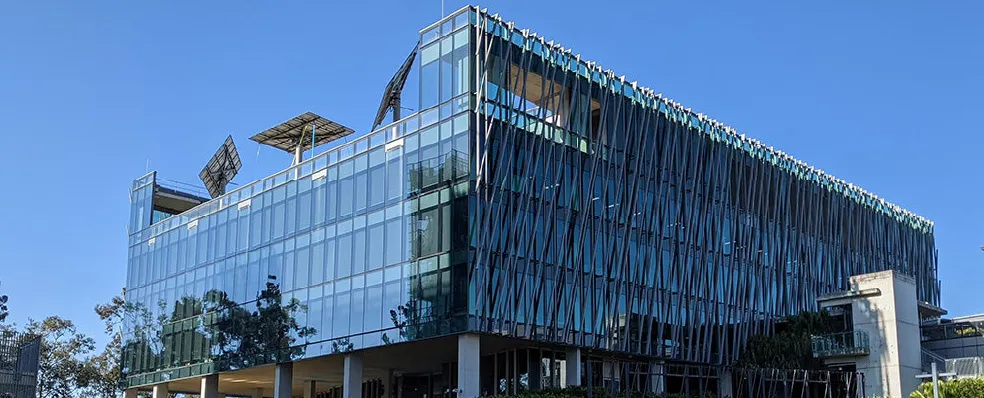
The Faculty of Science at QUT drives real-world impact through programs in chemistry, physics, and interdisciplinary fields. The School of Chemistry and Physics stands out with research clusters like Surface Science and 2D Materials for next-gen electronics, Molecular Recognition and Sensors for precise detection technologies, and MACROARC Soft Matter Materials exploring polymers for sustainable applications.
Key figures include Distinguished Professor Christopher Barner-Kowollik in macromolecular chemistry and Professor Deepak Dubal in energy storage nanomaterials. Recent breakthroughs, such as atomic-level crystal elasticity measurements and efficient renewable energy materials, underscore the faculty's global standing.
Technical staff like the Senior Technician play crucial roles, enabling these advances by keeping labs operational amid high-demand research timelines.
Exploring QUT's World-Class Instrumentation Facilities
QUT's Central Analytical Research Facility (CARF) boasts an impressive array of tools vital for chemistry research. From Bruker Avance NMR spectrometers at 600 MHz for molecular structure elucidation to SCIEX TripleTOF mass spectrometers for proteomics, the facility supports everything from elemental analysis via ICP-MS to surface characterization with X-ray photoelectron spectroscopy (XPS).
Other highlights include LC-MS/MS systems for trace metabolite detection, GC-MS for volatile compounds, and vibrational spectrometers like Raman and FT-IR for functional group identification. These instruments facilitate transdisciplinary work in materials science, environmental monitoring, and biomedicine.
As a Senior Technician, you'll maintain and optimize these assets, ensuring researchers access reliable data for publications and grants. Self-service options post-training empower users, while full-service support handles complex analyses.

The Growing Demand for Expert Lab Technicians in Australian Universities
Australia's higher education sector is expanding research capabilities, with chemistry labs at the forefront of national priorities like clean energy and health innovation. Roles like Senior Technician - Chemistry and Instrumentation are increasingly vital as universities invest in advanced facilities to attract top talent and funding.
According to industry data, chemistry technicians earn an average of around $90,000 annually, with senior positions at universities offering higher bands due to specialized skills and enterprise agreements. Progression paths include lab management, research officer roles, or even adjunct teaching, often with opportunities for further qualifications like postgraduate certificates in lab management.
Career Progression and Benefits at QUT
Starting as a laboratory technician, professionals can advance through demonstrated expertise, often reaching senior levels within 5-10 years. At QUT, this role offers professional development, salary packaging, fitness passports, and generous leave schemes, fostering long-term careers.
Beyond financial perks—base salary $94,084-$101,872 plus 17% super—the position provides exposure to groundbreaking research, networking with leading scientists, and contributions to societal challenges like sustainable materials and sensors.
| Level | Average Salary (AUD) | Typical Experience |
|---|---|---|
| Lab Technician | $70,000-$85,000 | Entry with diploma/degree |
| Senior Technician | $90,000-$120,000 | 5+ years, advanced skills |
| Lab Manager | $130,000+ | 10+ years, leadership |
Navigating the Application Process
To apply, visit QUT's careers portal with reference 26217, submitting a resume and responses to selection criteria addressing technical expertise, problem-solving, and safety commitment. Tailor your application to highlight instrumentation experience and chemistry knowledge.
For broader visibility, check listings on AcademicJobs.com, which aggregates university opportunities across Australia. Prepare for interviews by demonstrating fault-finding scenarios and user training examples.
Future Outlook: Instrumentation in Chemistry Research
Looking ahead, demand for skilled technicians will surge with Australia's push toward net-zero emissions, requiring advanced analysis of catalysts, batteries, and nanomaterials. QUT's investments in facilities like CARF position it as a leader, offering stable, impactful careers.
Emerging trends include automation in labs, AI-assisted data analysis, and hybrid instruments combining MS with NMR. Technicians adapting to these will thrive, contributing to innovations that shape Australia's research landscape.
This role at QUT represents more than a job—it's a chance to fuel scientific discovery in one of Australia's dynamic universities. With Brisbane's vibrant lifestyle and strong support networks, it's an opportune moment for chemistry professionals to advance their careers.

.jpg&w=128&q=75)




Be the first to comment on this article!
Please keep comments respectful and on-topic.