
Rate My Professor Adam Booth

Ratings & reviews
Makes even the toughest topics accessible.
Taught by or worked with Adam ?
Add your rating. It takes about 30 seconds.
About Adam
Professor Adam Booth serves as Professor of Applied Geophysics and Communication in the School of Earth, Environment and Sustainability at the University of Leeds, within the Faculty of Environment. He earned his PhD in Near Surface Geophysics, MSc in Exploration Geophysics, BSc in Geophysical Sciences, and PGCert in Academic Practice, all from the University of Leeds. His research focuses on near-surface geophysics, including reflection seismology, ground-penetrating radar, fibre-optic sensing, glaciology, geothermal energy, archaeology, data processing, and field geophysics. Booth leads the MSc Exploration Geophysics programme, teaches undergraduate modules, supervises dissertations with near-surface field data, and mentors early-career researchers in teaching. He manages the Fibre Optic Facility and serves on the Geosolutions Leeds Management Board as Schools Liaison Lead. As a Fellow of the Geological Society and the Higher Education Academy, he contributes to public engagement through initiatives like Quantum Sauce and has featured in BBC's 'Animals with Cameras' documentary on meerkat radar studies. Booth is an Associate Editor for The Cryosphere (EGU, since 2020) and Near Surface Geophysics (EAGE, 10 years), and a committee member of the Geological Society's Near Surface Geophysics Group, convening postgraduate symposia and fieldwork funding.
Booth has led and contributed to major projects such as SmartRes (NERC NE/X005496/1, 2022-2025, £453k, primary investigator) on urban geothermal resources; SLIDE (NERC NE/X000257/1, 2022-2025) characterizing subglacial lakes in Greenland; Thwaites Interdisciplinary Margin Evolution (NERC/NSF NE/S00677X/1, 2018-2023, £358k, co-investigator); and Ice shelf stress response to large iceberg calving (NERC NE/R012334/1, 2017-2018, £65k, primary investigator). He received a University of Leeds Research Impact and Engagement award for Touching the Past, enhancing geoarchaeological data accessibility for museum exhibits. His influential publications include 'Ocean regulation hypothesis for glacier dynamics in southeast Greenland and implications for ice sheet mass changes' (Murray et al., 2010, Journal of Geophysical Research: Earth Surface, 227 citations); 'Massive subsurface ice formed by refreezing of ice-shelf melt ponds' (Hubbard et al., 2016, Nature Communications, 108 citations); 'Distributed acoustic sensing of seismic properties in a borehole drilled on a fast-flowing Greenlandic outlet glacier' (Booth et al., 2020, Geophysical Research Letters, 104 citations); and 'Extensive retreat of Greenland tidewater glaciers, 2000–2010' (Murray et al., 2015, Arctic, Antarctic, and Alpine Research, 104 citations). He co-authored CIRIA guidance on geophysical surveys for ground investigation.
Trending Geoscience Research & Publication News

Academic Mobility After US Funding Freezes | AcademicJobs
Photo by Jorge Fernández Salas on Unsplash

Beach Science: 7 Things to Teach Kids | AcademicJobs
Photo by Caroline Pasarin on Unsplash

When Does Fog Happen? Timing and Conditions | AcademicJobs
Photo by Nathan Anderson on Unsplash

Pumice Research Reveals Unique Qualities | AcademicJobs
Photo by Amin Hasani on Unsplash

Mongibello Etna History and Research Findings | AcademicJobs
Photo by Julia Taubitz on Unsplash

Tungsten Wolfram Explained: Properties and Supply | AcademicJobs
Photo by Güleren E. on Unsplash
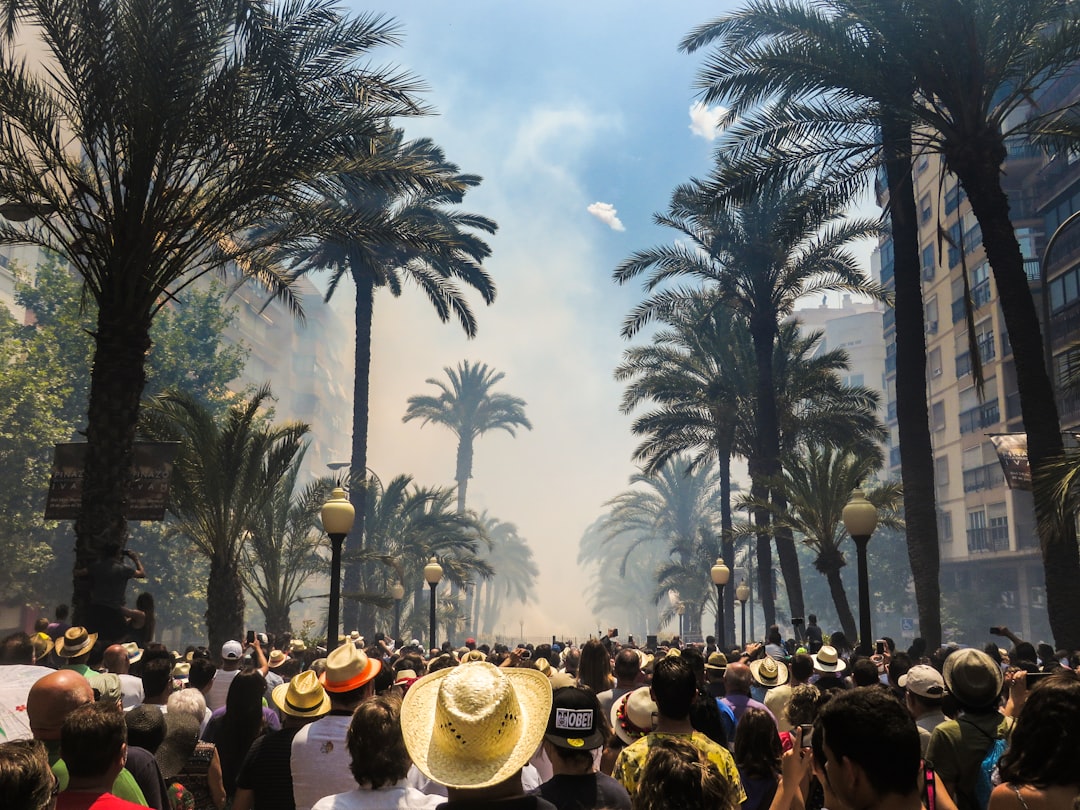
Extreme Heat Records Spain: University Research Impacts 2026
Photo by Lucas Davies on Unsplash