

Ratings & reviews
Helps students see the value in learning.
Taught by or worked with Chris?
Add your rating. It takes about 30 seconds.
About Chris
Professor Chris Moy is a Professor in the Department of Geology at the University of Otago. He earned a BSc from Union College (Schenectady), MSc from Syracuse University, and PhD from Stanford University. His research specializations include paleoclimatology, sedimentology, and geochemistry. Moy coordinates undergraduate and postgraduate courses such as GEOL112 Dynamic Earth: A New Zealand Perspective, GEOL252 Field Studies and New Zealand Geology, GEOL273 Sedimentary Processes and Materials, GEOL373 Sedimentary Processes and Materials, GEOL301 Independent Field Studies, and GEOL473 Advanced Topics in Paleoceanography and Paleoclimatology. He supervises postgraduate students investigating paleoclimate records from New Zealand lake and fjord sediments.
Moy's research reconstructs Southern Hemisphere climate variability using sediment cores, focusing on the southern westerly winds' influence on New Zealand hydroclimate, drought, and the global carbon cycle. Current projects analyze closed-basin lake sediments from the South Island via geophysical imaging, core scanning, and stable isotopes in n-alkanes and diatoms to identify past hydrologic deficits. As part of the Lakes380 project, he develops high-resolution paleoclimate records spanning the last millennium to establish hydroclimate baselines and evaluate drivers. In 2021, he and Gary Wilson secured an $8.6 million MBIE Endeavour Research Programme grant to study carbon sequestration potential in New Zealand's southern fjords. Key publications include 'Variability of El Niño/Southern Oscillation activity at millennial timescales during the Holocene epoch' (Nature, 2002), 'Fjords as aquatic critical zones (ACZs)' (Earth-Science Reviews, 2020), 'Covariability of the Southern Westerlies and atmospheric CO2 during the Holocene' (Geology, 2010), 'High-resolution records of Oceanic Anoxic Event 2' (Earth and Planetary Science Letters, 2019), and 'Late Holocene intensification of the westerly winds at the subantarctic Auckland Islands' (Climate of the Past, 2017). He participated as sedimentologist in IODP Expedition 341.
Trending Geoscience Research & Publication News

Academic Mobility After US Funding Freezes | AcademicJobs
Photo by Jorge Fernández Salas on Unsplash

Beach Science: 7 Things to Teach Kids | AcademicJobs
Photo by Caroline Pasarin on Unsplash

When Does Fog Happen? Timing and Conditions | AcademicJobs
Photo by Nathan Anderson on Unsplash

Pumice Research Reveals Unique Qualities | AcademicJobs
Photo by Amin Hasani on Unsplash

Mongibello Etna History and Research Findings | AcademicJobs
Photo by Julia Taubitz on Unsplash

Tungsten Wolfram Explained: Properties and Supply | AcademicJobs
Photo by Güleren E. on Unsplash
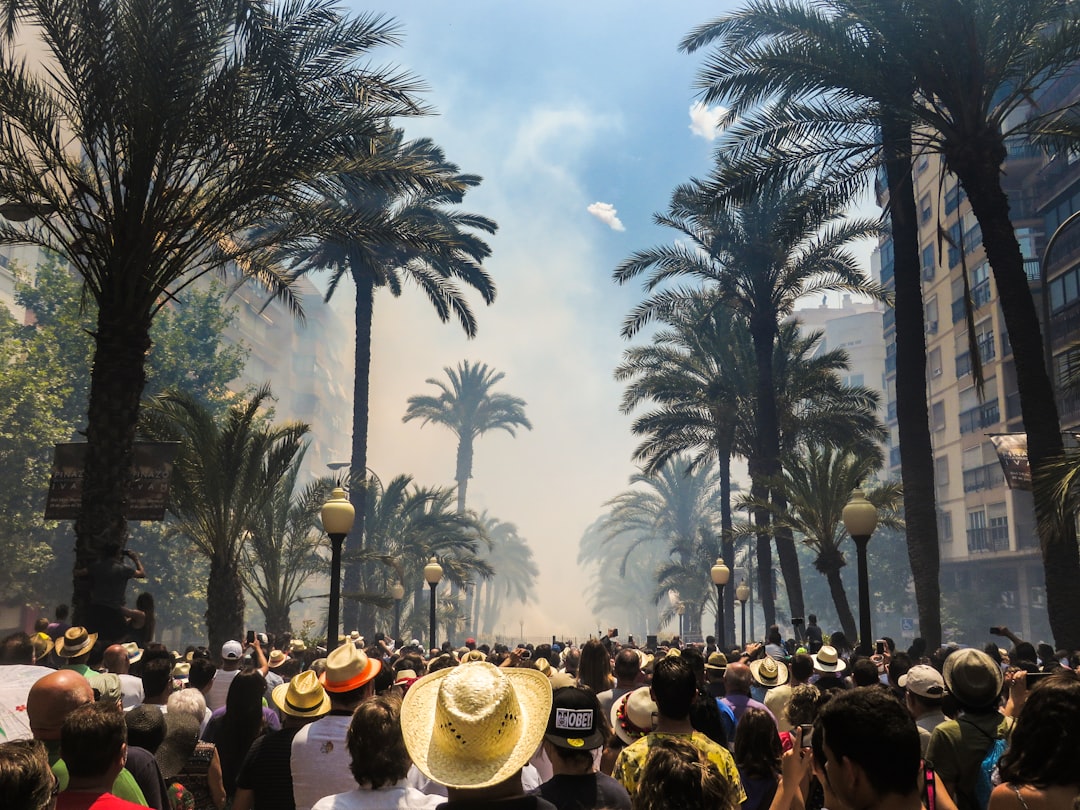
Extreme Heat Records Spain: University Research Impacts 2026
Photo by Lucas Davies on Unsplash