
Rate My Professor Christian Ohneiser

Ratings & reviews
Encourages deep understanding and curiosity.
Taught by or worked with Christian?
Add your rating. It takes about 30 seconds.
About Christian
Dr. Christian Ohneiser is a lecturer in the Department of Geology at the University of Otago, where his research centers on paleomagnetism and its applications in reconstructing paleoenvironments, paleoclimate, and ocean circulation patterns. He earned his MSc and PhD from the University of Otago, with his doctoral thesis titled 'Late Neogene evolution of the Antarctic Ice Sheet - environmental-magnetic studies of New Harbour drill cores,' completed in 2012. Ohneiser's work involves studying sedimentary records from timescales of tens to millions of years, utilizing paleomagnetic and geochemical techniques to establish precise chronologies and infer past climatic conditions. This includes participation in research expeditions aboard vessels in the Pacific Ocean around New Zealand and to remote Antarctic field sites. His investigations reveal changes in sediment sources, erosion rates, ocean current strengths, and directions through environmental magnetic, geochemical, and sedimentological analyses.
Ohneiser has made substantial contributions to understanding Antarctic climate evolution and ice sheet dynamics. Key publications include 'West Antarctic ice volume variability paced by obliquity until 400,000 years ago' (Nature Geoscience, 2023), 'Warm fjords and vegetated landscapes in early Pliocene East Antarctica' (Earth and Planetary Science Letters, 2020), 'Ocean mixing and heat transport processes observed under the Ross Ice Shelf control its basal melting' (Proceedings of the National Academy of Sciences, 2020), 'Antarctic glacio-eustatic contributions to late Miocene Mediterranean desiccation and reflooding' (Nature Communications, 2015), and 'A middle Miocene relative paleointensity record from the Equatorial Pacific' (Earth and Planetary Science Letters, 2013). His research portfolio encompasses over 65 publications with more than 2,400 citations, demonstrating significant impact in paleomagnetism, sedimentology, and paleoclimatology. Expertise areas include Earth's magnetic field, past climate change in the Southern Ocean, and Antarctica.
Trending Geoscience Research & Publication News

Academic Mobility After US Funding Freezes | AcademicJobs
Photo by Jorge Fernández Salas on Unsplash

Beach Science: 7 Things to Teach Kids | AcademicJobs
Photo by Caroline Pasarin on Unsplash

When Does Fog Happen? Timing and Conditions | AcademicJobs
Photo by Nathan Anderson on Unsplash

Pumice Research Reveals Unique Qualities | AcademicJobs
Photo by Amin Hasani on Unsplash

Mongibello Etna History and Research Findings | AcademicJobs
Photo by Julia Taubitz on Unsplash

Tungsten Wolfram Explained: Properties and Supply | AcademicJobs
Photo by Güleren E. on Unsplash
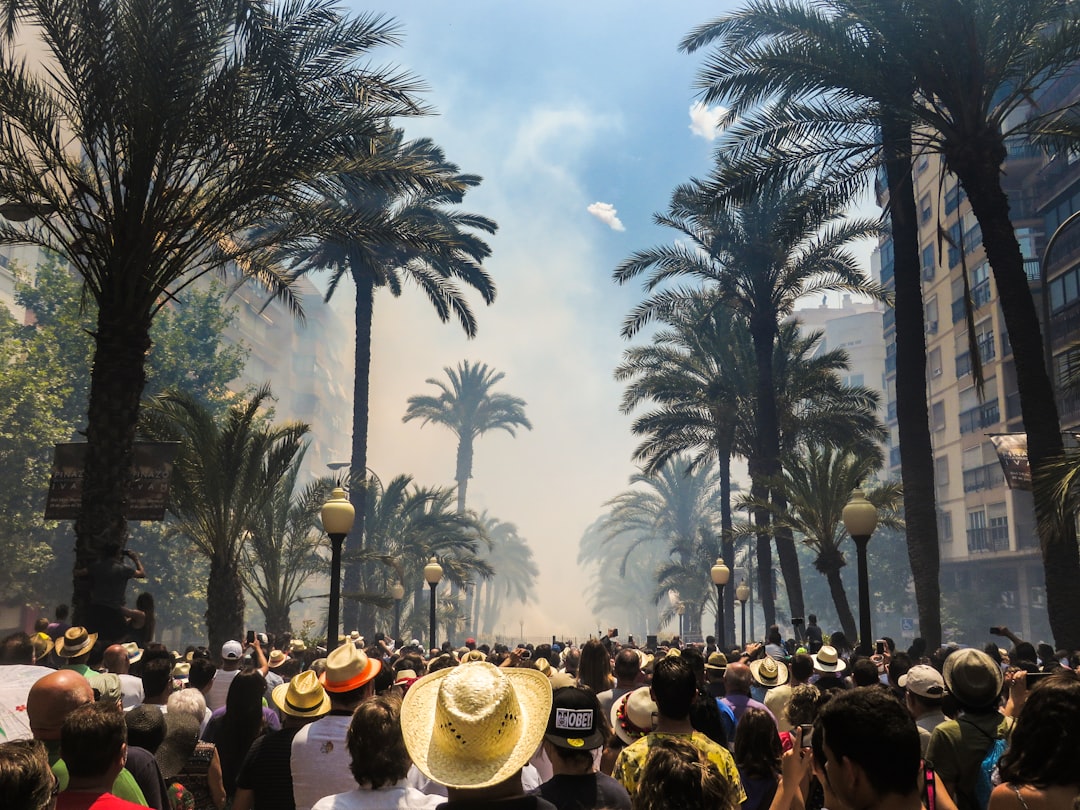
Extreme Heat Records Spain: University Research Impacts 2026
Photo by Lucas Davies on Unsplash