
Rate My Professor Eric Colhoun

Ratings & reviews
Always fair, encouraging, and motivating.
Makes learning feel rewarding and fun.
Inspires a passion for knowledge and growth.
Brings energy and passion to every lesson.
Great Professor!
Taught by or worked with Eric?
Add your rating. It takes about 30 seconds.
About Eric
Emeritus Professor Eric Colhoun is affiliated with the College of Engineering, Science and Environment at the University of Newcastle, Australia, in the Department of Earth Sciences. He holds a Doctor of Science and previously served as Professor of Geography and Head of the Department of Geography at the University of Newcastle. His long-standing academic career has centered on Quaternary palaeoenvironments, with extensive fieldwork and analysis contributing to global understandings of past climates.
Professor Colhoun's research specializations encompass Quaternary landscape evolution, glaciation, vegetation history, fire regimes, and environmental change, particularly in Tasmania, southeastern Australia, and Antarctic regions. His expertise includes pollen analysis, radiocarbon dating, glacial stratigraphy, palaeomagnetism, and exposure dating. He has produced 133 publications, amassing 4,781 citations and 18,578 reads on ResearchGate. Key publications include "A community-based geological reconstruction of Antarctic Ice Sheet deglaciation since the Last Glacial Maximum" (Antarctic Science, 2014); "Terrestrial and submarine evidence for the extent and timing of the Last Glacial Maximum and the onset of deglaciation on the maritime-Antarctic and sub-Antarctic islands" (Antarctic Science, 2014); "Predictability of biomass burning in response to climate changes" (Nature, 2012); "Late Quaternary fire regimes in Australia" (Vegetation History and Archaeobotany, 2011); "Late-surviving megafauna in Tasmania, Australia, implicate human involvement in their extinction" (Proceedings of the National Academy of Sciences, 2008); "Exposure dating and glacial reconstruction at Mt. Field, Tasmania, Australia, identifies MIS 3 and MIS 2 glacial advances and climatic variability" (Quaternary Science Reviews, 2006); "Pollen-based reconstructions of biome distributions for Australia, Southeast Asia and the Pacific (SEAPAC region) at 0, 6000 and 18,000 C-14 yr BP" (Journal of Biogeography, 2004); "Bunger Hills, East Antarctica: Ice free at the Last Glacial Maximum" (Geology, 2001); and "Vegetation and climate change during the Last Interglacial-Glacial cycle in western Tasmania, Australia" (Palaeogeography, Palaeoclimatology, Palaeoecology, 2000). These works have advanced knowledge of ice sheet dynamics, biome shifts, and palaeoclimatic variability. Professor Colhoun is a Life Member of the Australasian Quaternary Association.
Trending Geoscience Research & Publication News

Academic Mobility After US Funding Freezes | AcademicJobs
Photo by Jorge Fernández Salas on Unsplash

Beach Science: 7 Things to Teach Kids | AcademicJobs
Photo by Caroline Pasarin on Unsplash

When Does Fog Happen? Timing and Conditions | AcademicJobs
Photo by Nathan Anderson on Unsplash

Pumice Research Reveals Unique Qualities | AcademicJobs
Photo by Amin Hasani on Unsplash

Mongibello Etna History and Research Findings | AcademicJobs
Photo by Julia Taubitz on Unsplash

Tungsten Wolfram Explained: Properties and Supply | AcademicJobs
Photo by Güleren E. on Unsplash
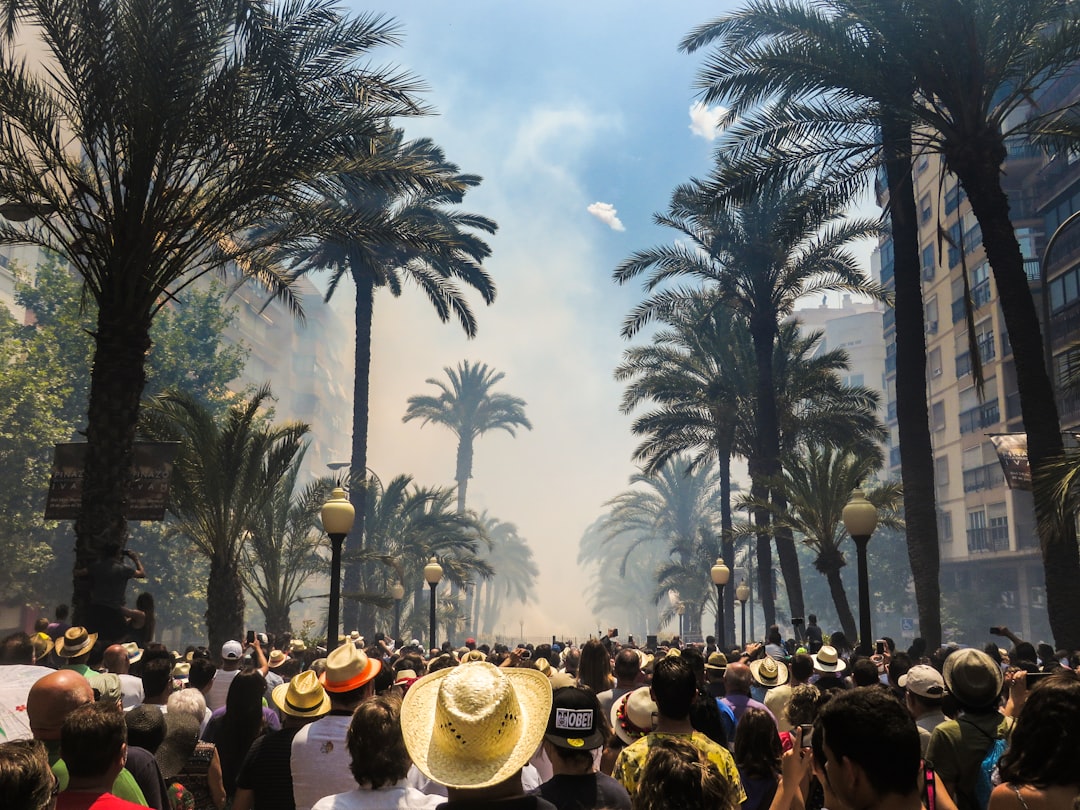
Extreme Heat Records Spain: University Research Impacts 2026
Photo by Lucas Davies on Unsplash