
Rate My Professor Robert Stern

Ratings & reviews
Makes learning exciting and impactful.
Taught by or worked with Robert?
Add your rating. It takes about 30 seconds.
About Robert
Robert Stern is a Professor of Geosciences in the School of Natural Sciences and Mathematics at The University of Texas at Dallas, where he joined as Assistant Professor in 1982, was promoted to Associate Professor in 1987 and to Professor in 1991, and served as Department Head from 1997 to 2005. He currently serves as Graduate Student Advisor and directs the Permian Basin Research Lab, which supports student research on the geology and petroleum systems of the Permian Basin, and the UTD Geoscience Studio, producing educational animations and videos on geoscientific processes available on YouTube. Stern holds a Ph.D. in Earth Sciences from the University of California, San Diego (1979) and a B.Sc. in Geology from the University of California, Davis (1974). His postdoctoral experience includes a fellowship at the Carnegie Institution of Washington (1979-1981), Blaustein Fellowship at Stanford University (2005), and Tectonics Observatory Fellowship at the California Institute of Technology (2006).
Stern's research examines volcanism associated with convergent plate margins and subduction zones, the initiation of new subduction zones, generation and destruction of Earth's continental crust, plate tectonic processes, geologic evolution of the Middle East, formation of the Gulf of Mexico, geology of sedimented basins including the Permian Basin, and the Dallas-Fort Worth Metroplex. He employs tectonic, chemical, and isotopic studies, including major and trace elements, Sr-Nd-Pb isotopes, and U-Pb zircon geochronology, with foci on the Izu-Bonin-Mariana arc and Neoproterozoic crust in northeast Africa, Arabia, China, and Iran. Stern is a Fellow of the American Geophysical Union, Geological Society of America, and American Association for the Advancement of Science, and received the 2019 International Prize of the Geological Society of Japan for outstanding contributions to geological research and academic cooperation. Key publications include "Unusually tight bending of subducting pacific plate causes the extreme depth of challenger deep" (2026), "A reinterpretation of the past 2.5 billion years of Earth’s tectonic history: Two episodes each of plate and single-lid tectonics" (2025), "Molybdenum isotope evidence for subduction-modified mantle beneath mid-ocean ridges" (2025), "The Shadli metavolcanic belt in the south Eastern Desert of Egypt: A late Tonian-Cryogenian hotspot track in the northern Arabian-Nubian Shield" (2025), and "The Cadomian (∼550 ma) orogen in North Africa and Arabia" (2024). He has supervised more than 25 graduate students to degree completion and contributed extensively to university governance through committees such as the Academic Senate, Committee on Educational Policy (Chair 1996-1998), and Accessibility Committee (Chair 2021-present).
Trending Geoscience Research & Publication News

Academic Mobility After US Funding Freezes | AcademicJobs
Photo by Jorge Fernández Salas on Unsplash

Beach Science: 7 Things to Teach Kids | AcademicJobs
Photo by Caroline Pasarin on Unsplash

When Does Fog Happen? Timing and Conditions | AcademicJobs
Photo by Nathan Anderson on Unsplash

Pumice Research Reveals Unique Qualities | AcademicJobs
Photo by Amin Hasani on Unsplash

Mongibello Etna History and Research Findings | AcademicJobs
Photo by Julia Taubitz on Unsplash

Tungsten Wolfram Explained: Properties and Supply | AcademicJobs
Photo by Güleren E. on Unsplash
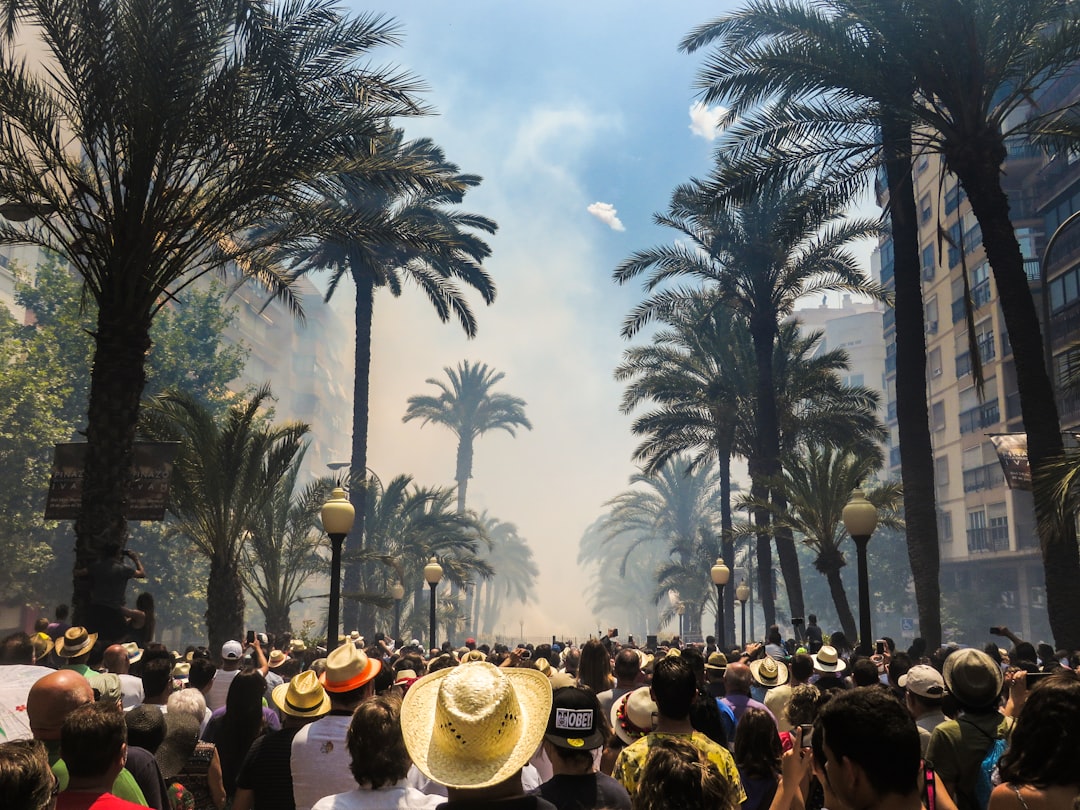
Extreme Heat Records Spain: University Research Impacts 2026
Photo by Lucas Davies on Unsplash