

At a glance
James Cook University is hiring a Technical Advisor for its Cairns laboratories at HEWL6, $90,821 to $98,369 plus 17% super. What the job demands, and how to apply by 29 November.
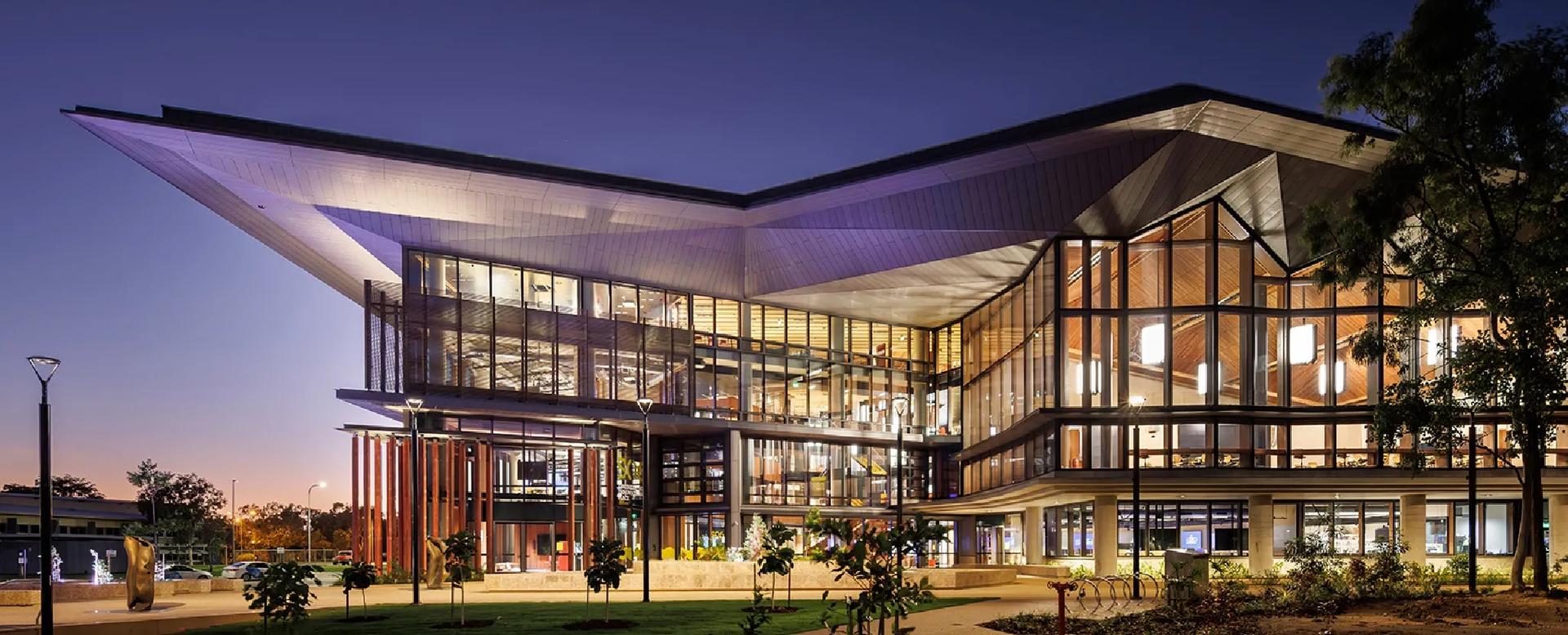
James Cook University is advertising a continuing, full-time technical advisor for its Cairns science laboratories at the end of a year in which the same unit shed about five full-time positions. Both things are true, and a candidate needs to hold both in their head before writing a cover letter.
The role is Technical Advisor (Operations and Safety), Scientific Laboratories, classified HEWL6 at $90,821.85 to $98,369.41 a year plus up to 17 per cent superannuation, 36.25 hours a week, based at the Nguma-bada campus in Smithfield. Applications close on 29 November 2026. You need to be in Cairns or willing to move before you start, and you need valid Australian working rights for the length of the appointment.
Strip the title back and here's the job. Somebody has to own the physical state and the paperwork of the labs: PC1 and PC2 spaces, the earth and environmental science facilities, biosecurity approved arrangements, chemical and biological safety, dangerous goods storage, the training and competency records that prove who is allowed where, and the maintenance and calibration history on the instruments those labs depend on.
That's a broad brief. It's broad on purpose.
What the compliance load really looks like
The advertisement names Australian laboratory standards without spelling them out. So let's spell them out. The relevant series is AS/NZS 2243, Safety in laboratories, published by Standards Australia and running to eight parts. The ones a Cairns advisor lives inside are AS 2243.1:2021 for planning and operational aspects, AS/NZS 2243.2:2021 for chemical aspects and storage — a revision that absorbed the old standalone chemical storage standard and added material on nanomaterials and the Globally Harmonized System of classification and labelling — and AS/NZS 2243.3:2022 for microbiological safety and containment, which in its seventh edition added a section for water-based species, fish and aquatic invertebrates included.
Then there's the gene technology side. Work with genetically modified organisms in a PC2 facility happens under certification from the Office of the Gene Technology Regulator, and the conditions attached to that certification are operational rather than theoretical. Access is restricted to authorised people who have been trained and have signed and dated records of that training, and those records must be produced if the Regulator asks. Biological safety cabinets are tested at least every 12 months against AS 2252.1 and AS 2252.2. Autoclaves used for decontamination are monitored monthly and calibrated annually. The facility itself is inspected at least once a year.
Add biosecurity. An Approved Arrangement is a voluntary agreement with the federal agriculture department that lets an institution manage quarantine risk on its own sites under its own procedures, in exchange for regular auditing. Someone has to keep that arrangement current, keep the registers straight and be the person who answers when the auditor arrives.
None of that is a filing job. The failure mode is an incident, a suspended certification, or a research program that stops because a lab can't be used on a Tuesday morning.
The unit this role joins has had a rough year
In October, Vice Chancellor Simon Biggs finalised a Change Management Plan for Laboratory and Technical Services. The university's own announcement sets out what the final plan did: the Veterinary Diagnostic Pathology Laboratory stays open with two full-time staff instead of three, and there's an overall loss of about five full-time positions across the unit. Biggs described the purpose as "clearer operational and safety accountability" and services that "remain sustainable well into the future".
Getting there was not quiet. The National Tertiary Education Union organised a rally outside The Science Place in August against a spill-and-fill process, where staff lose their existing roles and apply for the new ones. Queensland Greens Senator Penny Allman-Payne used a Senate speech in September to call on the university to save the vet lab. A student-led petition circulated. The lab survived, minus a position.
So the incoming advisor walks into a service that has spent most of a year in uncertainty. Experienced people have left. Some functions have been pared back. The accountability the restructure promised now has to be embodied in a person who can hold it across a portfolio that spans disciplines rather than a single lab.
What's actually in the building
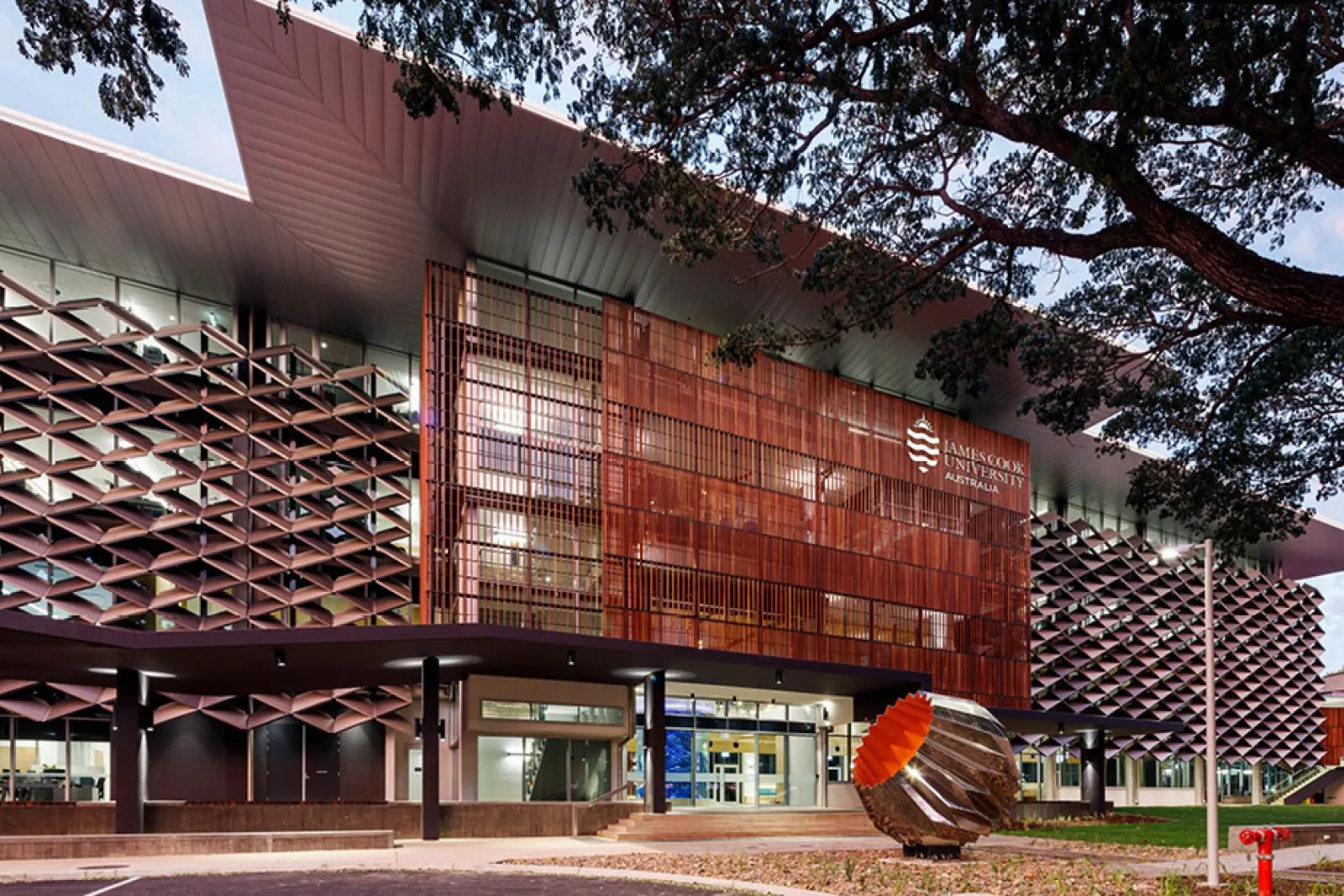
The campus sits about 15 kilometres north of Cairns city, in Smithfield, and is named Nguma-bada — from the Yirrgay (Yirrganydji) coastal dialect of Djabugay, meaning belonging to tomorrow. Around 2,300 students. Rainforest-covered mountains on three sides.
The laboratory footprint is bigger than those student numbers suggest. The Australian Institute of Tropical Health and Medicine runs a cluster of facilities on this campus: multiple OGTR-certified PC2 laboratories, two dedicated invertebrate research facilities, the eduQuarium, and a biobank holding clinical samples at cryogenic temperatures. There's a protein analysis suite with electrospray ionisation and MALDI mass spectrometry and nuclear magnetic resonance spectroscopy, plus immunology and cell biology suites with multi-colour flow cytometry.
The second AITHM building on campus opened in 2018 at a total construction cost of $28 million — $18 million from the Australian Research Council's Special Research Initiative, $6.5 million from the Queensland Government — and added 16 laboratories plus more than 200 square metres approved by the state for research under biosecurity control. A short walk away, the Australian Tropical Herbarium holds more than 180,000 pressed specimens, around 15,000 preserved in ethanol, and its own molecular laboratories.
Whoever takes this job is the technical custodial layer under all of it.
The package, and what Cairns takes back
On paper the offer is solid. The 17 per cent employer contribution through UniSuper sits at the top of the sector. Five weeks of recreation leave with leave loading, 15 days of sick and carer's leave, up to six months paid parental leave, study assistance and paid study leave, Fitness Passport, a health insurance discount and on-site medical services at the campus.
The catch is geography, and it isn't the salary. SQM Research had Cairns houses asking $731 a week and units $536 in the week to 15 October 2026, with combined asking rents up 5.8 per cent on a year earlier and vacancy at 0.7 per cent in September. The Cairns Economic Monitor recorded 66 consecutive months with the vacancy rate between 0.5 per cent and 1.2 per cent.
| Area | Median house rent | Median 2-bed unit rent |
|---|---|---|
| Trinity Beach – Smithfield | $740 | $600 |
| Redlynch | $780 | $580 |
| Yorkeys Knob – Machans Beach | $650 | $525 |
| Cairns postcode 4870 (asking rents) | $731 | $536 |
Two of those rows cover the suburbs closest to the campus. A single applicant paying $600 a week for a two-bedroom unit is spending about $31,200 a year on rent, against a salary band that starts at $90,821.85. It works, but it works tightly, and a 0.7 per cent vacancy rate means you take what's available rather than what you'd choose.
Do the arithmetic before the interview, not after the offer. Ask about relocation support early.
How to write the application this panel will read
JCU asks for a completed form, a resume, and a cover letter addressing both the Key Requirements for Success in the Role Profile and the selection criteria listed in the ad. That's two separate lists. Most applicants write one letter and hope it covers both.
The criteria are unusually specific, which is good news for anyone prepared to answer them directly. They name PC2 research facilities. They name Biosecurity Approved Arrangements. They name gene technology regulatory requirements and the records, procedures and operational controls that go with them. They name inductions, technical instruction, and accurate training, competency and authorisation records. If you've done those things, say so in those words and give an example each.
People arriving from commercial labs, pathology, agricultural research or environmental consultancies have the skills but not the vocabulary. A scientist who ran a quality system and sat through external assessments has audit experience — write it as audit experience against laboratory standards, not as "quality duties". A technician who maintained a chemical register and ran the dangerous goods store has exactly what the panel is asking for. Name the register, name the volume, name what changed because you kept it.
- State your containment experience explicitly — PC1, PC2, quarantine, whatever certification you've worked under.
- Give one worked example of a training or competency record you built and maintained, including who audited it.
- Name the instruments you've maintained, calibrated or troubleshot, and the systems you used to track them.
- Describe one incident, hazard report or audit finding you closed out, and what the fix was.
- Confirm your Australian working rights and your Cairns start date in the first paragraph, not the last.
One more thing. The ad lists a willingness to develop capability across disciplines, which is a polite way of saying no single candidate covers all of it. Don't pretend otherwise. Say which two or three areas you're strong in and how you'd get up to speed in the rest. The full job listing is on the AcademicJobs university jobs board if you want to read the criteria alongside comparable roles.
What the university could do better next time
Two things would improve this recruitment and neither costs money.
First, publish the reporting line and the audit calendar. A candidate deciding whether to move a family to Cairns needs to know who they answer to, how many facilities fall inside the role, and roughly when the OGTR inspection and the biosecurity audit are due. The ad describes the work well and the structure not at all.
Second, say what the restructure changed. Any serious applicant will find the October announcement, the union rally and the Senate speech inside ten minutes. Getting ahead of that with one plain sentence about the new structure would do more for the applicant pool than another paragraph about values. People apply to places that tell them the truth about the job.
What to do this month
If you're applying, treat the letter as a compliance document with a person inside it. Map your experience to each criterion, use the panel's own terms, and be specific about containment levels and records. Then run the rent numbers for the northern beaches before you accept anything.
If you're hiring, remember what this role actually buys: labs that stay certified, instruments that stay in service, and a research program that doesn't stop because nobody signed the training record. That's worth paying for, and worth advertising properly.
- James Cook University
- JCU Cairns
- laboratory safety
- PC2 laboratories
- higher education jobs Australia