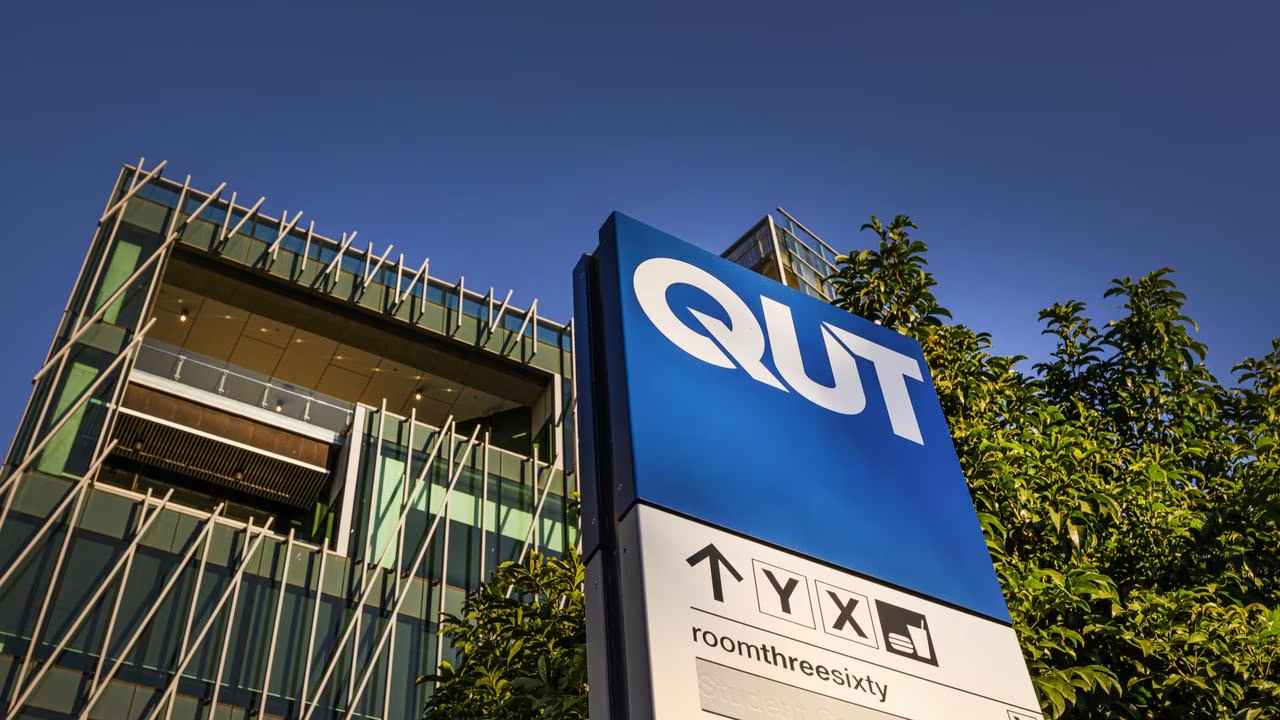
QUT just posted a job for an Assistant Web Developer with a focus on student and stakeholder engagement, and it's a better opportunity than most university web roles you'll see this month.
Here's why. The title combines two skill sets that rarely sit together in one job ad. You'll need to write code, sure. But you'll also need to understand how students actually use a university website and what digital content works for the people who support them. That mix is what makes the role interesting, and it's why the right candidate will have an unusually clear path to impact.
The position is live now on QUT's recruitment portal, and applications are being accepted through the official online form. If you've been looking for a way into a university digital team without needing to be a senior engineer first, this is the kind of job you should study closely.
What the job actually involves
The title splits into two halves. "Assistant Web Developer" means you'll build pages, fix bugs, and maintain the front end of websites. "Student and Stakeholder Engagement" means you'll do that work for the audiences QUT cares about most: its students and the people who work with them.
That second half changes the job. Instead of just shipping code against tickets, you'll spend real time with content owners, student services teams, communications staff, and academic departments. You'll translate what they need into functional web pages, forms, user journeys, and interactive tools. If a student can't find an enrolment deadline or a stakeholder can't locate a partnership form, your work is why they can.
The role likely sits in a central digital or marketing team at QUT, working alongside developers, designers, content producers, and project managers. You won't be the only person who touches the website, but you'll be the one who makes sure small changes happen quickly and correctly.
Why this role exists now
Universities have spent the last few years realising their websites are service platforms, not brochures. Students expect to enrol, pay fees, book appointments, and find support online without phoning anyone. Stakeholders expect the same. That shift has pushed web development roles out of the IT basement and into the middle of student experience work.
The Australian Government's Labour Market Insights profile for web developers shows steady demand across the country, with education among the sectors that consistently hire. The work isn't going away, and universities that treat their web teams as cost centres are falling behind the ones that treat them as product teams.
QUT is one of Australia's larger public universities, with a main campus in inner Brisbane and a reputation for technology and creative industries. That context matters. The institution has a strong digital footprint already, and this role exists to keep improving it for the people who actually use it.
What you need to bring
You don't need to be a senior engineer for this role. The "assistant" in the title signals an early-career position. A year or two of hands-on web development experience, or a strong portfolio from a degree, a bootcamp, self-directed work, or an internship, will usually get you a serious look.
The technical side will include HTML, CSS, JavaScript, and a content management system such as Drupal, WordPress, Squiz Matrix, or another modern CMS. You should be comfortable with version control using Git. Accessibility matters more in higher education than in most sectors because universities have legal obligations to make digital services usable for everyone.
The non-technical side is where candidates separate themselves. You need to write clearly, listen to non-technical colleagues, turn a vague request like "make this page less confusing" into a concrete improvement, and explain technical decisions to non-experts. If you've built something for a real user and can explain what you changed and why, you're ahead of most applicants.
How to apply without wasting your time
Most university job ads bury the useful information. This one doesn't, but you still need to read the full position description before you write a word. The ad will tell you who you report to, what the first projects are, which skills are non-negotiable, and how the role fits the team. Match your application to those specifics.
Here's what I'd do if I were applying. First, open the position description and highlight every requirement you can directly evidence. Second, pick two projects from your portfolio that show both the technical and the engagement side of this job. Third, write a cover letter that explains those two projects in plain language, including what the user needed, what you built, what changed, and how you measured the improvement. Fourth, keep your resume to two pages and put your strongest relevant experience in the top third.
Don't list every technology you've ever touched. Universities see hundreds of keyword-stuffed resumes, and they read like noise. Show two or three concrete outcomes instead of ten vague responsibilities.
The QUT factor
QUT is not a small regional college. It's a major public university with around 50,000 students and a campus network across Brisbane. Its strengths in technology and creative industries, paired with a strong real-world learning focus, are well known in Australia, and the university has invested heavily in digital channels for years.
That means the team you'd join already has standards, processes, experienced colleagues, and a clear direction. You won't be the only person figuring out how to push a change live. You'll inherit a real codebase, a real user base, real constraints, and an existing team culture. For an early-career developer, that's a better learning environment than a startup where you're the only person who knows how the site works.
You can get a feel for the institution's digital presence and its public commitments on the QUT about page. Spend fifteen minutes there before you apply. Notice how the university talks about students, partners, community members, and industry collaborators. Your cover letter should sound like you've done that homework.
What happens after you submit
Universities are not known for fast hiring. A QUT recruitment process can take weeks, sometimes longer if a panel has scheduling conflicts. Strong candidates don't sit by the inbox waiting for a committee to reconvene. They keep applying elsewhere while staying ready for an interview at short notice.
If you're invited to interview, expect questions about accessibility and working with non-technical stakeholders, plus how you prioritise competing requests. Prepare a short story for each. You'll also likely be asked to talk through a portfolio piece or complete a small technical task. Treat that task seriously, but don't over-engineer it. Clean, working code with a short explanation beats a sprawling solution.
One more thing: the application portal at QUT uses a specific system, and you'll need to create an account and complete all required fields in one session. Don't start it at 11pm after a long day. Give yourself an hour, have your resume and portfolio links ready, and check the preview before you submit.
One thing to do this week
Open the position description and write down two specific projects where you built something for a real user and communicated with a stakeholder. Use those two projects as the spine of your cover letter. Then submit the application and move on to the next one.