

At a glance
QUT is hiring a Discoverability and Search Manager on an HEW9 package worth up to $168,919. Here's the scope, the pay comparison and why generative search changed the job.

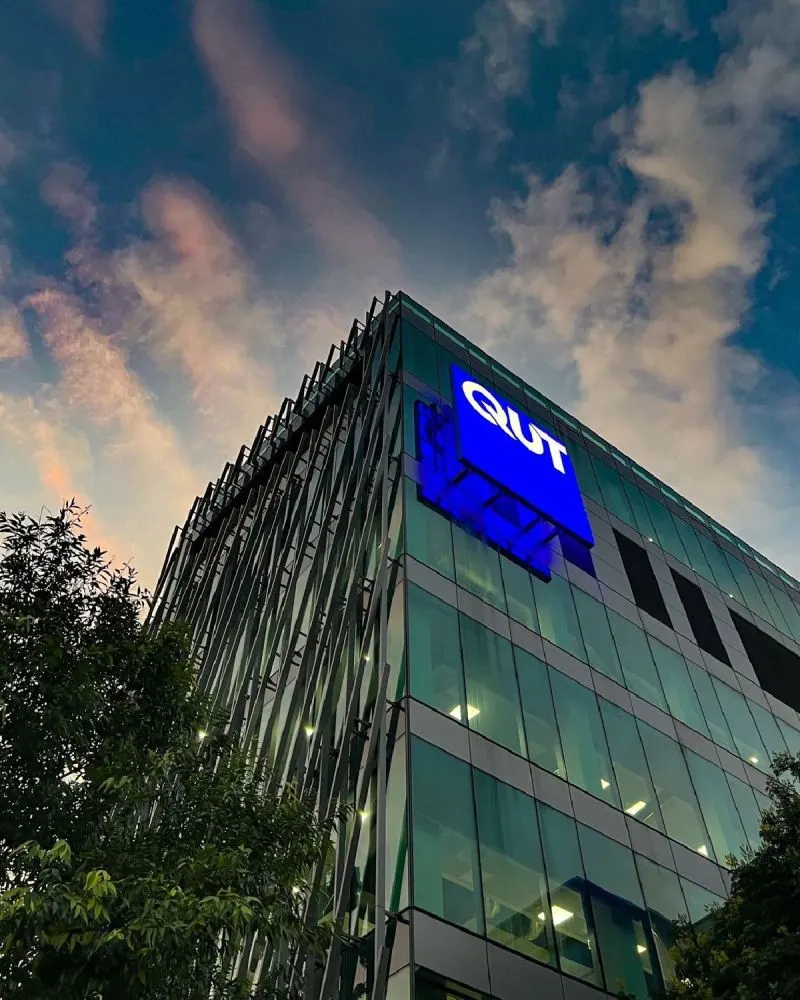
Queensland University of Technology is hiring an ongoing, full-time Discoverability and Search Manager at its Kelvin Grove campus, and it has priced the job above the commercial market. The package runs from $161,241 to $168,919 a year: a base salary of $136,251 to $142,738, plus 17 per cent superannuation and 17.5 per cent recreation leave loading, classified HEW9. Applications opened on 16 November and close at 11.30pm on 30 November.
The position description is where the story sits. Alongside organic and paid search, the role carries responsibility for “generative search” — the answers Google, ChatGPT and their competitors now assemble before anyone reaches a website. QUT isn't hiring someone to defend a rankings table. It's hiring someone to make the university the source those answers get built from.
The job behind the title
On paper the manager leads QUT's search and discoverability strategy and establishes the governance, priorities and performance frameworks underneath it. That translates to capability planning, deciding which optimisation work gets funded and in what order, watching performance, and getting faculties and divisions to follow a shared standard. The role sits in the Engagement portfolio within the Chancellery Division, working with marketing, content, digital and technology teams.
That portfolio is wide. It covers QUT Marketing, External Affairs and Civic Engagement, Strategic Partnerships and Corporate Engagement, Partnerships and Community Engagement (Indigenous Australians), Advancement, and 2032 Engagement, the unit tied to the Brisbane Olympics. A search manager inside that structure spends as much time negotiating with content owners as tuning anything technical.
The selection criteria set the bar at education, training or experience equivalent to postgraduate qualifications plus extensive relevant experience. Beyond that, QUT wants demonstrated expertise across search engine optimisation (SEO), search engine marketing (SEM) and emerging approaches to generative search; the analytical skill to read search, website, campaign and audience data and turn it into recommendations; proven knowledge of search governance and performance frameworks; and a record of working across marketing, content, digital and technology teams in what the listing calls a complex organisational environment. There's also a stated commitment to equity, diversity and Indigenous Australian engagement.
Worth noting for anyone mapping a career: HEW9 is a professional staff classification, not an academic one. The job sits on the administrative spine of the university, which is where digital, marketing and student-experience functions have concentrated their senior appointments.
The base rate: fewer clicks, broader reach
State the numbers before the exceptions. Pew Research Center analysed nearly 69,000 Google searches made by 900 US adults and found that when an AI summary appeared, users clicked a traditional result on 8 per cent of visits, against 15 per cent when none did. Links inside the summaries drew clicks on 1 per cent of visits, and roughly a quarter of sessions ended at the summary itself. A randomised field experiment by Saharsh Agarwal of the Indian School of Business and Ananya Sen of Carnegie Mellon, tracking more than 1,000 Google users, found outbound organic clicks fell 39.8 per cent and zero-click searches rose 34.5 per cent when an overview appeared. Ahrefs' analysis of 300,000 keywords estimated a 58 per cent drop in click-through to the top organic result where an AI Overview ran, with declines of 51 per cent for the second result and 46 per cent for the third.
Now the counterweight, because the panic has outrun the traffic data in both directions. Sensor Tower's State of Web put traffic from AI assistants up 86 per cent year on year in 2025, while generative AI referrals still accounted for roughly 0.7 per cent of overall web traffic. Similarweb found search drawing about 3.3 billion average monthly unique visitors against 655 million for AI chatbots, and that 461 million of ChatGPT's 494 million users also used Google in the same window. BrightEdge measured ChatGPT at 95.1 per cent of AI referral traffic in August 2026, with total AI referrals up about 73 per cent in less than a year.
The detail that should shape a job like this one: the page that gets cited and the page that gets clicked are often different. Similarweb found only 6.8 per cent of ChatGPT answers in the US included an external link in May 2026, up from about 1 per cent a year earlier, and that 58.8 per cent of AI referral traffic lands on a homepage while most cited URLs sit two or three folders deep. The Digital Content Next review of the evidence pulls these studies together and reaches a blunt conclusion: answers reduce referrals, and AI platforms send too little traffic to replace what's lost.
What universities have measured so far
The Brick Factory compared organic search sessions across roughly 70 client sites for January to May 2026 against the same months in 2025. The sample skews to nonprofits, trade associations and higher education. Higher education was the mildest of the four categories and still declined: total volume down 6.0 per cent, the typical site down 7.6 per cent, with brand and high-intent queries such as program names and logins holding up better than informational pages. AllCampus, which runs online program marketing for universities, describes the same pattern from the inside — rankings steady, organic sessions down by double digits, click-through rates up, because the people who do click have already had their first question answered.
Branded search is where the shift bites hardest. Everspring's tracking across more than 120 institutions put branded search down 22 per cent between March 2024 and February 2026, with regional and comprehensive universities down 29.1 per cent against 16 per cent at flagship research institutions. Students stopped typing institution names and started asking what a degree leads to and what it costs.
Demand hasn't vanished; it has moved upstream. UPCEA and Search Influence found 79 per cent of prospects read Google's AI-generated overviews and 56 per cent are more likely to trust an institution those overviews cite. QS's 2026 Australia report finds 75 per cent of Australia-bound students still use official university websites, though general online search slipped from 61 per cent in 2022 to 57 per cent, while education agents rose from 22 per cent to 32 per cent. IDP's Emerging Futures research put 54 per cent of prospective international students planning to use ChatGPT to help choose an institution, up from 35 per cent a year earlier.
Why the Australian version is harder
Australia's National Planning Level for international commencements is 295,000 for 2026, 25,000 above 2025. Growth has moderated anyway: the government reported student visa lodgements down more than 26 per cent year on year and commencements down 16 per cent, as Assistant Minister for International Education Julian Hill told the 2025 AIEC conference. Fewer students, more competition for each one, and a marketing budget asked to do more per dollar.
QUT's own accounts show what's at stake. The university recorded 53,554 enrolments in 2025, with international students at 18.8 per cent of the total. Times Higher Education's reading of the first 2025 accounts found international student revenue up about 21 per cent at QUT while overseas student numbers rose about 7 per cent — fee growth doing the heavy lifting. The 2025 annual report is explicit that managed growth means modest enrolment increases and a focus on operational efficiency and quality. QUT Strategy 2036 names a leadership position in technology and AI, plus the 2032 Games, as accelerators.
There's a second estate most marketing-led search strategies ignore. QUT Library runs its own discovery stack — Library Search on Primo VE and Alma, LibKey, OpenAthens, Google Scholar integration — and conducts user experience research and usage analytics to find where collection discovery and access break down. Course pages, research repositories and reading lists all compete for the same attention inside the same institution. Whoever takes this job inherits both.
The pay comparison, done honestly
Kindred Talent's June 2026 live-market guide, built from more than 3,300 roles advertised on SEEK and LinkedIn, puts the median advertised SEO salary in Australia at $95,000, with the middle 50 per cent between $82,500 and $108,000. Payscale's Australian data sits an SEO manager's average base near $92,400; Glassdoor reports a median total pay around $100,000. Against those benchmarks, the QUT base clears the advertised median by roughly $28,000 to $40,000 before superannuation, and the total package clears $160,000.
Read the comparison with care. University packages don't carry equity or a bonus culture, but 17 per cent superannuation and leave loading are cash. And the scope here is closer to head of search than SEO manager: governance, prioritisation across divisions, performance frameworks, and advisory authority over emerging search technologies. The advertised-salary data is the right floor for the argument, not the ceiling.

What this means for your team
A search lead I know — call her T — spent a fortnight tuning titles and meta descriptions on a course page. The traffic she wanted was arriving through a cost question, and the summary answering it had been assembled from someone else's comparison table. What fixed it was a fee table and a plain answer, published above the brand copy. No amount of tag editing substitutes for having the fact on the page in liftable form.
- Track citations, not just sessions. Fix a set of 20 to 30 queries you care about and check monthly whether Google's AI Mode, ChatGPT, Gemini and Perplexity name you in the answer.
- Put the fact first. Cost, entry requirements, intake dates, accreditation and career outcomes belong near the top of the page in declarative sentences, before the prose about the campus experience.
- Label your data so a machine can read it. Course, FAQPage and EducationalOrganization markup, plus a 50 to 75 word answer block, do more for extractability than another round of copy edits.
- Audit robots.txt against AI crawlers. Plenty of sites blocked GPTBot and ClaudeBot in 2023 as a defensive reflex and never revisited the decision.
- Give search one owner and one standard. When faculties publish independently, every page drifts and the citation you win on Monday is contradicted by Thursday.
If you're applying
The listing is open to applicants with ongoing full-time work rights in Australia, and internal applicants and Aboriginal and Torres Strait Islander people will be given priority consideration. Read that sentence twice if you're an external candidate; it tells you the competition includes people already inside the building.
A portfolio that shows a before-and-after on a defined query set will beat a list of rankings screenshots. So will evidence that you've changed how an organisation works — a template every faculty adopted, a governance group that survived a restructure, a training program that stopped the drift. QUT's criteria lean on frameworks and adoption for a reason: the technical work is the easy half.
The full position description, remuneration details and application portal are on the AcademicJobs.com listing for this role, and the university's own portal is open until 11.30pm on 30 November.
If you're not applying, the useful move costs nothing. Pick the five queries your institution most wants to own, run them through Google's AI Mode and ChatGPT on Monday morning, and write down who gets cited and who gets skipped. Diarise the same test for the first working day of every month. That log, twelve months from now, is the only defensible answer to the question your executive will eventually ask about why organic traffic is falling while the brand has never been more visible.
- higher-education-jobs-australia
- queensland-university-of-technology
- brisbane-university-jobs
- university-marketing
- hew9-salary