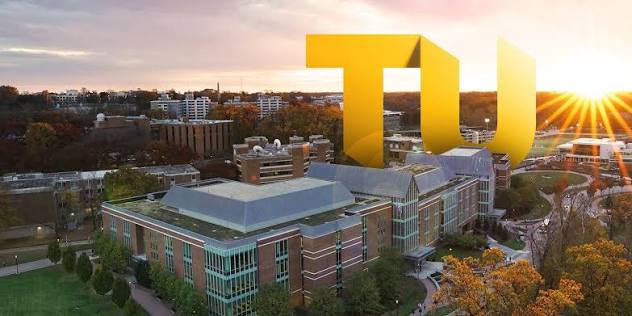
Towson University's search for an assistant professor of music composition deserves a close look. Tenure-track composition lines are scarce, and this one sits inside a large public university with a working music school, a real production calendar, and a student body that wants new work.
You should not treat this as just another faculty posting. If you are a composer with a doctorate, a portfolio of performances, and enough teaching experience to walk into a classroom in September, the next few weeks matter more than the average search cycle does.
The full position description lives on Towson's Taleo portal, and the condensed listing sits on AcademicJobs.com. The Department of Music at Towson belongs to the College of Fine Arts and Communication, which also houses art, dance, electronic media and film, mass communication, and theatre. That matters because composition students at a public arts college tend to work across disciplines rather than in a silo.
The Department of Music at Towson operates within the Center for the Arts on the main campus in Towson, Maryland, north of Baltimore. Faculty perform, direct ensembles, and teach across undergraduate and graduate music degrees. A composition assistant professor at this kind of institution usually carries a mix of applied composition teaching, theory or aural skills instruction, and student mentoring.
Why This Particular Search
Towson is not a small liberal arts college trying to stretch one composer across four theory classes. The university is one of the largest public institutions in Maryland and part of the University System of Maryland. Its music program runs enough degree tracks that a composition line is more than a token hire: student composers, theory curriculum, technology labs, and ensemble premieres all feed into the role.
You can see the scale in the department's calendar. Student recitals, composer readings, visiting artists, and ensemble commissions create a steady production schedule. That schedule changes how you should frame your application. Committees want evidence that you can generate new work and bring students into that process, not simply that you have a strong list of past premieres.
How the Application Process Works
Everything runs through Towson's Taleo portal. You can open the full posting at Towson's faculty job portal. The job number is 260000PV. The condensed view is on AcademicJobs.com if you want to track the role alongside other searches.
Do not email a PDF to the department chair unless the posting says to do that. Portal applications are the record the committee uses. You will need a profile, uploaded materials, and answers to preliminary questions. Some systems also ask for diversity statements or a teaching portfolio, so read every tab before you submit.
What a Strong File Looks Like for This Search
Start with the materials that get read first: the CV, the teaching statement, and the score list. A public university search will ask about classroom management and curriculum work, so do not hide your adjunct or graduate teaching. Put it near the top where a committee can see it.
- Prepare a one-page teaching philosophy that names concrete course types: theory, aural skills, composition seminar, electronic music, or graduate seminar.
- Collect three to five scores and recordings that show range. A large ensemble piece, a chamber work, a fixed media piece, and a work with electronics often reads differently to committees.
- Update your CV with premieres, commissions, recordings, teaching appointments, and recruiting outcomes. Committees look for evidence of student success, not just your catalog.
- Line up references who can speak to teaching first and creative work second. Wait to name someone whose primary memory of you is a premiere from five years ago.
If your CV still lists your dissertation committee service before your own teaching work, remake it. The guide we published on How to Write a Winning Academic CV steps through that reorder without turning your document into a corporate resume.
The Market Behind the Posting
Composition jobs in U.S. universities draw from graduate programs that produce more credentialed composers than the tenure-track market absorbs. You are not imagining the competition. The result is that committees can be choosy, and they will sort by teaching fit after the first screening of scores and degrees.
The U.S. Bureau of Labor Statistics tracks postsecondary teaching roles across broad groups rather than separate composition lines. That data shows steady demand, not a hiring boom. Specific to music, the practical crop of candidates often carries a DMA or PhD, festival premieres, and adjunct teaching experience. Some searches now list music technology, recording, or commercial composition as secondary duties because programs want flexibility.
That flexibility sends a clear signal. If you can teach a digital audio workstation course or a scoring-to-picture module, say so. If your experience is purely acoustic concert music, present it confidently, but be ready to explain how you would handle studio and technology components if the department asks.
After You Submit
Once the application portal confirms your submission, the committee begins its own timeline. Some searches take weeks to acknowledge files, especially at a public university with multiple review stages. Do not wait for a response before applying to other openings. Composition candidates who keep a pipeline of applications active do better in the long run, because the first offer rarely arrives from the first search.
If the posting includes a screening date, use it. If it does not, assume the review can begin at any point after the close date and that late materials will not be considered. After submitting, send your references any relevant deadlines and confirm they will respond. Then move on to the next application.
Your Move This Week
Set aside one hour to open the Taleo posting, draft your first two paragraphs for the cover letter, and request updated letters from two references. The search will not wait for you to finish another commission. A strong file submitted early usually gets a more careful read than a perfect file submitted at the deadline.
Apply through Towson's faculty job portal and keep the AcademicJobs listing bookmarked for updates.