

At a glance
Roger Williams University is hiring a tenure-track psychology professor with forensic research interests and a clinical license. What the ad says, what it leaves out, and how to apply.
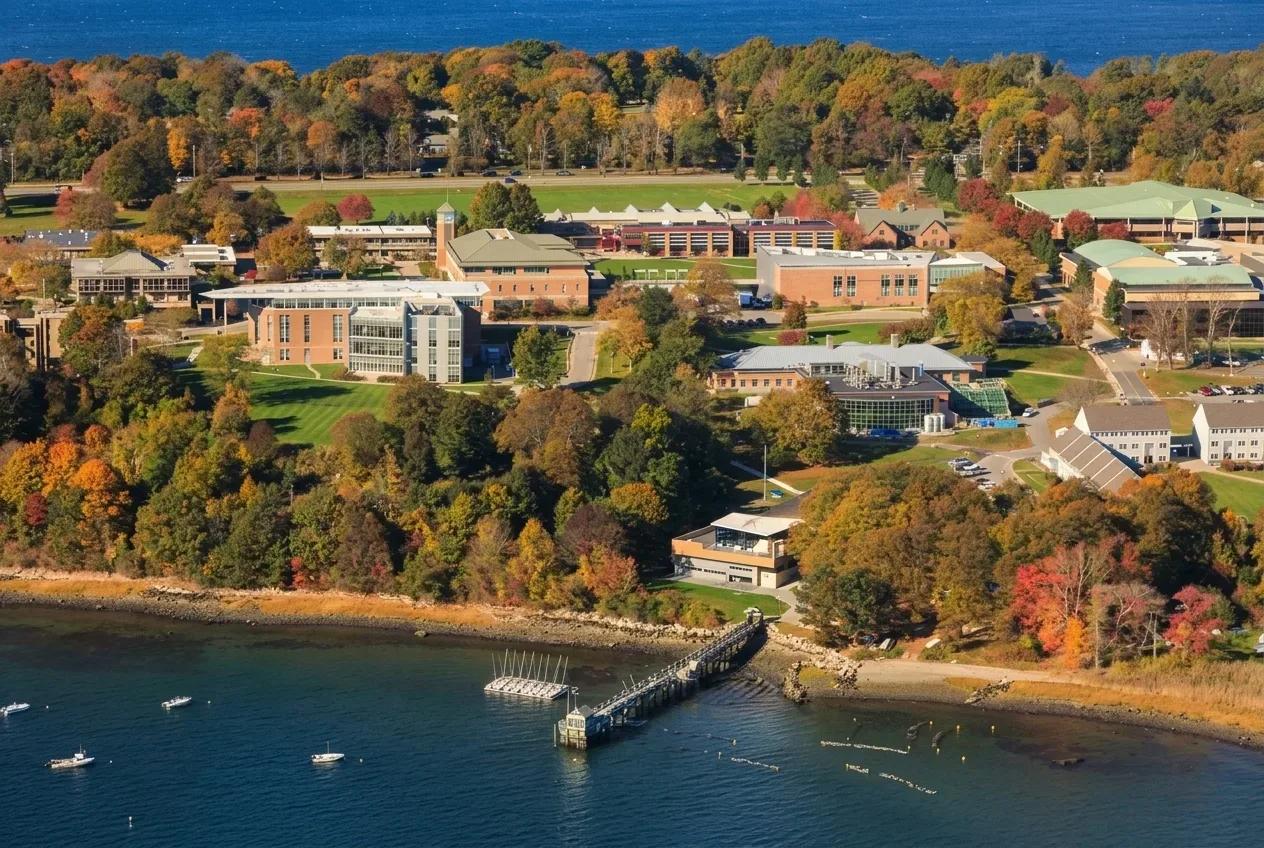
Roger Williams University is hiring a tenure-track assistant professor of psychology, and the posting is unusually plain about the shape of the job. The department wants someone whose research connects to forensic psychology, who can teach clinical courses to graduate and undergraduate students, and who is already licensed — or can get licensed — as a clinical psychologist or mental health clinician in Rhode Island or Massachusetts.
That combination narrows the pool quickly. It also tells candidates more about the working week ahead than most academic job ads manage to.
The job, in plain terms
The line sits in the Department of Psychology, inside the School of Social and Natural Sciences, on the Bristol campus on Rhode Island's coast. The university also runs a campus in Providence, where its law school is based. Teaching duties are spelled out in the ad: clinical classes at both the graduate and undergraduate level, courses in the department's research methods sequence, and electives in the hire's own area. The rest is the standard tenure-track bundle — advising, bringing undergraduates into research, and service to the department, the school and the university.
What the department is asking for:
- A Ph.D. in psychology or a closely related field, in hand by the start date.
- An active research program that can carry faculty-student collaboration and undergraduate research projects.
- Licensure, or clear license eligibility, as a clinical psychologist or Licensed Mental Health Clinician in Rhode Island or Massachusetts.
- Experience supervising graduate students or mental health professionals in a clinical setting.
The application itself is short — a resume, a cover letter and three professional references. Review of applications begins January 8, 2027, the posting closes January 24, and the appointment starts in August 2027 for the 2027–28 academic year.
Why the forensic angle is doing the heavy lifting
Roger Williams has built a niche in forensic psychology, and the graduate programs explain why this posting reads the way it does. The university runs a 60-credit Master of Arts in Forensic Mental Health Counseling, built for students who want to practise as licensed mental health counselors, and a 45-credit Master of Arts in Forensic & Legal Psychology for students heading toward doctoral study. Both are two-year, full-time programs taught in Bristol. The university describes the counseling track as training students to work with people involved in the legal and criminal justice systems, with practicum and internship placements in courts, correctional settings and community agencies.
What that means for a new faculty member is concrete. Supervision hours. Thesis committees. Students who need a licensed clinician in the room before they can start seeing clients. A candidate who has only ever run lab studies will find that half of the job unfamiliar, and a candidate who has only done clinical work will be asked, politely and more than once, what their research pipeline looks like.
The research methods sequence is the other anchor. Every psychology major passes through it, it's named explicitly in the ad, and it's the course most new faculty have never taught. The department's stated mission is to train students in an empirical approach to behaviour, which is a formal way of saying methods teaching is core business rather than a chore handed to the newest hire.
Worth knowing: the department is advertising a second tenure-track line this cycle, in neuroscience, with teaching in an Introduction to Neuroscience course and the same methods sequence. Two searches in one department usually means capacity-building across the major, not a single replacement.

A hiring year with a budget story attached
Nobody is walking into a quiet moment at Roger Williams. In November 2025 the university told most full-time faculty, staff and administrators to take a one-week unpaid furlough before the end of the fiscal year. President Ioannis Miaoulis said the measure would cover up to half of a projected $3.5 million budget gap. The Boston Globe's reporting on the furlough carries the detail that matters most to anyone weighing an offer: the university had been drawing on an endowment of more than $80 million to cover operating shortfalls, and Miaoulis called that unsustainable.
Staffing had already come down before that. At a campus town hall in October 2025, chief financial officer Gloria Arcia said the university had cut 50 positions and trimmed discretionary spending. A university spokesperson said at the time that no hiring freeze had been imposed and that open or vacated roles are reviewed case by case — which is the standard line, and also the honest one. Positions get filled or they get retired, and a search that survives a budget cycle is a search the institution has decided it needs.
The furlough turned into a labour fight. Three of the university's five bargaining units, represented by the National Education Association of Rhode Island, argued it was imposed without bargaining and pointed to the National Labor Relations Act. Faculty association president Clifford Murphy called it a breach of contract. NEARI has kept a running account of the dispute, which stretched into 2026 and overlapped with Miaoulis announcing his retirement and his chief of staff preparing to step up as interim president.
None of this means the psychology search is shaky. A graduate program that depends on licensed supervisors cannot run without them, and a department with two open lines is a department the provost has decided to fund. But a candidate should ask the funding question out loud in the interview: is this a replacement line or new money, is the salary on hard or soft funds, and what happens to the position if enrolment drops again next year. Search committees respect the question. It signals you've done the reading.
What the posting leaves out
No salary range. No teaching load. Nothing about start-up, lab space, moving costs, or whether the department has the clinical partnerships to place the students you'd be supervising. AcademicJobs' own completeness measure scores the listing at 36%, which is a fair summary: it tells you the qualifications and very little about the deal.
For a private university competing for tuition in a crowded New England market, that's a missed pitch. Candidates are comparing two or three offers over a shared spreadsheet, and the ad that answers the practical questions gets read twice. Roger Williams is asking for someone who will stay long enough to build something, and the people most likely to stay are the ones who could see the whole job before they said yes.
If you're applying
Answer the license question in your first paragraph. Say what you hold, in which state, and how you'd transfer or obtain Rhode Island or Massachusetts licensure. If you're finishing a doctorate with clinical placement history but no license yet, give the timeline — application filed, exam booked, supervised hours completed. Committees read dozens of letters; the ones that settle eligibility immediately get a fairer read of everything that follows.
Then the research program. The ad asks for work that supports graduate programming in forensic psychology, so a broad statement about risk and decision-making won't land. Name the populations, the settings, the methods, and one study you could realistically start with master's students in their first year. If you have a correctional, court-clinic or forensic-assessment partnership already, lead with it.
Supervision evidence matters more here than at most liberal arts colleges. If you've supervised practicum students, run a clinical team or taken master's theses to completion, give the numbers and the settings. On teaching, show a research methods course if you've taught one, because it's an explicit assignment and plenty of applicants haven't.
Two practical notes. Three references are requested up front, so brief them before you hit submit — committees sometimes call before the shortlist is set. And ask about the collective bargaining agreement during the interview. Faculty at Roger Williams are represented by the Roger Williams University Faculty Association, which means workload, evaluation and pay progression are governed by a contract rather than a dean's discretion. Reading the contract is the fastest way to understand the job.
If you want a head start on the paperwork, our guide to writing an academic CV that survives a search committee covers the formatting that still matters.

If you're on the committee
Two changes would widen this applicant pool without touching the qualifications. Publish a salary band. The clinical psychology market between Providence and Boston is small enough that candidates already talk to each other; withholding the number doesn't hide it, it just means the wrong people rule themselves out.
The second is supervision load. "Experience providing clinical supervision" could mean four students a year or fifteen, and the difference decides whether a new hire can run a lab at the same time. Give the number, or at least a range, and say how much of it falls on the new position rather than the existing faculty.
Then say what tenure looks like here: how many courses a year, what counts as scholarship, what the third-year review weighs. Every ad claims to value teaching and research. The ones that get strong fields explain how the two are measured when they conflict.
A tenure-track psychology job at a small New England university with a working forensic program and a live budget problem is a specific proposition. It suits someone who wants master's students in the room, holds the license, and is willing to ask about the money before signing rather than after. Apply if that's you. Ask the awkward questions in the interview, not the exit interview.
- higher-education-jobs
- higher-education-jobs
- forensic-psychology
- forensic-psychology
- faculty-hiring