
At a glance
KFUPM's Interdisciplinary Research Center for Aviation and Space Exploration is hiring a postdoctoral researcher in space physics to work on ULF waves, radiation belt dynamics and energetic particle transport. Two years, rolling review, and a published salary of USD 48,000 tax-free.
The advert is short. The deadline reads "open until filled," review is rolling, and the money is tax-free. Those three details tell you most of what you need to know about this postdoctoral post in space physics at King Fahd University of Petroleum and Minerals.
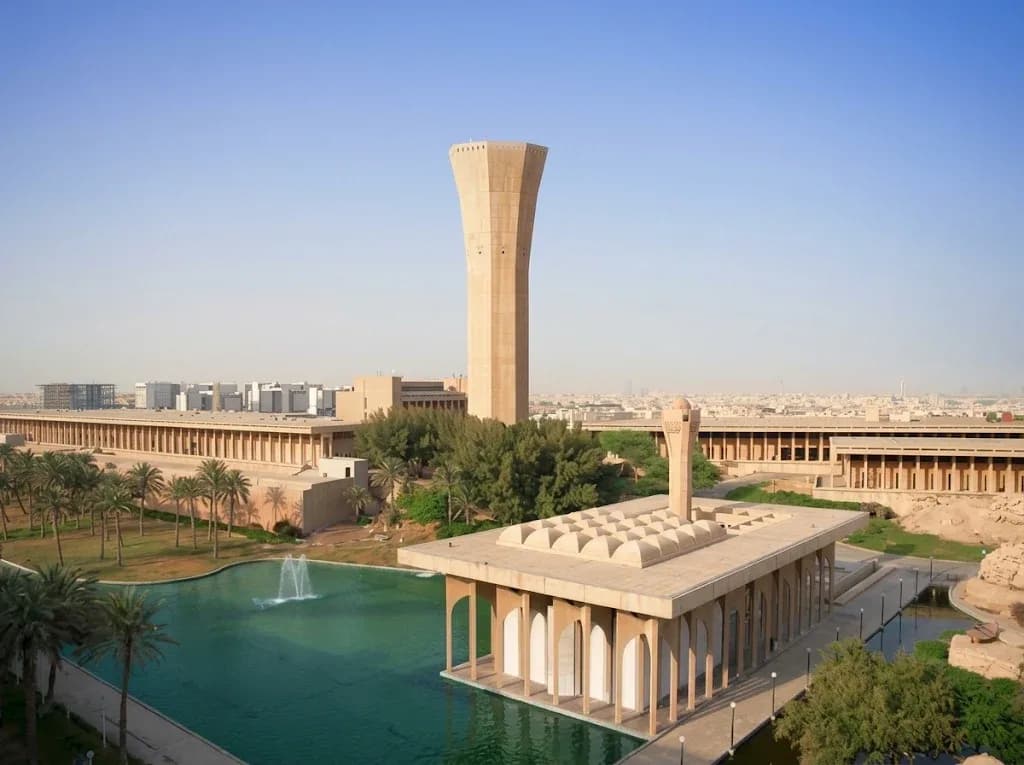
KFUPM sits in Dhahran, in Saudi Arabia's Eastern Province, next door to Saudi Aramco. The post is funded through the Interdisciplinary Research Center for Aviation and Space Exploration, IRC-ASE, which the university established in 2022 and runs alongside the Saudi Space Commission. The work is ultra-low-frequency wave physics in Earth's magnetosphere, done largely through numerical simulation and archived spacecraft data. Two years initially, renewable. Applications go in through an online form.
What decides a competition like this is rarely the length of the publication list. It's whether the file shows the candidate has understood the specific problem the centre wants solved. That part is fixable, and most of this article is about how.
What KFUPM Is Actually Hiring For
The advert names the science with unusual precision, which is a gift to anyone applying. Four things: ultra-low-frequency (ULF) waves, wave–particle interactions, radiation-belt dynamics, and energetic particle transport in Earth's magnetosphere.
The methods are named too. Magnetohydrodynamic, or MHD, fields used as the background for particle-tracing simulations. Spacecraft observations from NASA's Van Allen Probes — the Radiation Belt Storm Probes, RBSP — compared against those simulations. The advert leaves a door open to planetary and solar physics through the same observational toolkit, so a candidate with Mars or solar data experience isn't shut out.
On qualifications, the requirement is a PhD in physics, space physics, plasma physics, planetary science or something close. Desirable: numerical simulation experience, spacecraft data analysis, scientific programming, and enough plasma theory to argue about resonance. The word "desirable" is doing real work here. None of that list is a hard gate.
| Term | Detail |
|---|---|
| Duration | Two years initially, extension possible |
| Salary | USD 48,000 a year under KFUPM's postdoctoral fellowship programme, tax-free |
| Housing | Allowance equivalent to three months' salary |
| Leave | 30 days paid annual |
| Medical | Campus medical services |
| Eligibility | PhD in physics, space physics, plasma physics, planetary science or a closely related field; the university's central programme expects the PhD within the last three years |
| Deadline | Open until filled, reviewed on a rolling basis |
One thing the advert itself doesn't state is the salary. KFUPM's central postdoctoral fellowship page does, along with the leave entitlement, the housing allowance and access to specialised research infrastructure. That page also spells out the three-year rule on the doctorate, with exceptions considered.
The Physics, in Plain Terms
Earth's magnetic field traps charged particles. Electrons and ions bounce along field lines between the poles while drifting around the planet, forming two doughnut-shaped regions called the Van Allen radiation belts. The inner belt sits roughly 1.5 to 2.5 Earth radii out. The outer belt runs from about 3.5 to 6.5.
Those belts are not static. They fill and drain depending on what the Sun throws at us. ULF waves — oscillations in the magnetic field with periods running from about a second to a few minutes — are one of the mechanisms that move particles around. When a wave's frequency matches a particle's periodic motion, energy transfers. Physicists call that a wave–particle interaction. Over many interactions, the ensemble of particles diffuses radially, migrating inward or outward across field lines.
Here's where the job gets interesting. Textbook treatments average all of that into a diffusion coefficient and solve a transport equation. It works often enough to be useful. It also fails in ways nobody has fully mapped, and that failure is the research problem this post exists to attack. The advert says so outright: diffusive and non-diffusive energetic particle transport.
The Question the Field Hasn't Settled
A 2024 paper in JGR: Space Physics by Zhi-Gang Li, Ian Mann and colleagues did something useful. They derived a criterion marking the point where ULF-driven transport stops being coherent and becomes genuinely diffusive. The finding bites: when particle decorrelation times run longer than a typical ULF wave train, radial diffusion rates cannot be estimated within the standard paradigm at all. Before that transition, transport is faster and more correlated than a diffusion model predicts.
That is a live, arguable question, and it suits a two-year appointment. There's a dataset to work with — the Van Allen Probes flew from 2012 to 2019 and left a deep archive of energetic particle and wave measurements. There are codes to run. There's a defined gap between theory and observation to sit in.
The gap is widening on the observational side too. Work published in Royal Society Open Science on the May 2024 geomagnetic storm found electron flux in the slot region between the belts rose by four orders of magnitude. The same analysis noted there are no routine radiation-belt measurements for orbits between roughly 1,300 km and 20,200 km — the altitude band where a growing number of satellites operate and where electric-propulsion spacecraft spend months climbing toward geostationary orbit.
Why Satellite Operators Care
Radiation belt physics has a commercial edge now, and it's worth understanding before an interview.
On 3 February 2022, SpaceX launched 49 Starlink satellites into a parking orbit around 210 km. A modest geomagnetic storm — G1 intensity — hit within a day. Atmospheric density at that altitude rose by roughly 50% above what the company had modelled, drag climbed with it, and 38 of the 49 satellites re-entered and burned up. Mike Hapgood and colleagues wrote it up in the journal Space Weather, putting the value of the lost satellites and the wasted launch in the tens of millions of dollars.
That was drag, not radiation. The same storms drive both. A separate 2024 study of the February 2022 events modelled the inner proton belt and found single-event-upset rates rising by around 50% over quiet conditions — the kind of number that surfaces months later as an unexplained anomaly on a satellite bus. Operators plan manoeuvres, delay software updates and staff up around forecasts. Better forecasts need better physics.
What the Centre Brings
IRC-ASE is young, which cuts both ways. It carries less accumulated reputation than a legacy space physics group in Europe or North America. It also has money, a mandate, and room.
The centre's brief lists space systems design and testing, remote sensing and data analysis, small satellite development, and a mandate to localise aerospace work inside the Kingdom. It showcased KFUPM-SAT1, the university's first satellite, at GSR 2026. It has signed a memorandum of understanding with the Danish manufacturer GomSpace covering the satellite life cycle, and another with the Japanese lunar company ispace on exploration and workforce development. A first self-developed nanosatellite is slated for launch in 2027.
The national backdrop explains the pace. Saudi Arabia's space economy was valued at about USD 8.7 billion in 2024, and new investment in the sector reached SAR 2.2 billion in 2025 — 16% up year on year and more than double the 2021 baseline of SAR 750 million, according to the Saudi Space Agency's annual report. The agency has an agreement with NASA to fly a Saudi-built satellite for space weather science on the Artemis II mission, and says the spacecraft has been designed, built and delivered. "Space has become a vital tool for human development," the agency's chief executive, Mohammed Al-Tamimi, said in December 2025.
KFUPM itself ranked 67th in the QS World University Rankings 2026, first in the Arab region. The physics department's space group includes Suhail Aldhurais, an assistant professor whose doctoral work was on wave–particle interactions in the Van Allen belts, sampling simulation output along RBSP trajectories and testing the limits of quasilinear radial diffusion theory. That is an unusually close match to the advert's wording, and it's a reasonable guess at who will read your file.

What a Strong Application Looks Like
Three documents, and each one has a different job to do.
The CV needs a publication list and, for a modelling post, evidence you can code. Link a repository, name the model you've worked with, say which spacecraft datasets you've handled. "Familiar with Python" tells a search committee nothing. "Processed RBSP-ECT HOPE pitch-angle distributions" tells them you've done the work.
The research statement is one to two pages. Use it to answer a single question: what would you do with two years and this data? Name a specific process, a specific dataset, a specific test. If you've read the transport literature, say where you think the diffusion approximation holds and where it doesn't.
Referees should be people who can speak to your modelling or your data analysis, not just your thesis adviser's job title. Two is enough if both are right.
On the craft of the documents themselves, there's decent guidance in our piece on writing an academic CV, and a broader set of expectations in thriving in a postdoctoral role. The short version: tailor both documents to the project, every time.
For the Hiring Side
Credit where it's due. This advert does something most don't. It names the physics, the methods, the spacecraft mission and the possible extensions into planetary and solar work. A candidate reading it knows what the job is.
Two gaps remain. It doesn't name a supervisor or principal investigator, and it doesn't state the salary. Both sit on the university's central fellowship page, so an applicant has to go hunting. Naming the PI costs one line and saves a round of speculative emails. Printing the figure costs nothing and filters out people who won't relocate.
The rolling deadline is the third issue. "Open until filled" is honest, but it disadvantages candidates outside the Gulf who need months of lead time on visas and schooling. Adding a first-review date, even a soft one, gives those applicants a reason to move.
For anyone on the other side of the desk: if you hold a PhD in plasma or space physics, can write scientific code, and want to work on a problem the field is actively arguing about, this is worth the hour it takes to assemble the file. The application form is here, and the full listing sits on Academic Jobs. The physics is real, the data exists, and the salary is published — which is more than most postdoc adverts manage.
- Space Physics
- Postdoctoral Research
- Radiation Belt Dynamics
- ULF Waves
- Saudi Arabia