

At a glance
James Cook University seeks a Deputy Chief Financial Officer in Townsville to lead budgeting, forecasting and finance business partnering. Closes 2 Nov 2026.

The deadline is the least interesting part
A finance director came to see me last month carrying the familiar arithmetic of a mid-career plateau: a CPA with two decades of controllership and a board that no longer felt difficult. The James Cook University deputy CFO advertisement had been open on her phone for a week. Townsville read as a gamble, and the selection criteria looked like the job she already held. Early in my consulting years I would have audited the advert against her CV, line by line. Now I ask something different first: what has JCU's finance function had to absorb since 2020, and which part of the learning curve would genuinely hurt?
Applications close on 2 November 2026. The date matters less than the environment the successful candidate walks into.
What the deputy CFO actually runs
The reporting line is short: straight to Chief Financial Officer Danella Forster, who in turn advises Vice Chancellor and President Simon Biggs on JCU's financial operations. The deputy CFO's turf covers budgeting and forecasting on one side, and the finance business partnering that turns those numbers into advice deans can act on, on the other. Long-term financial plans sit here too, along with the scenario work the University Executive reaches for when a funding parameter shifts. Beneath all of it sits a quieter mandate: lifting financial literacy among faculties, research centres and a campus operations network that stretches from northern Queensland to Singapore.
One question worth sitting with: would you rather run the monthly close, or change where the close lands in the decisions senior leaders actually make? JCU's advertisement is asking for the second.
The numbers behind the seat
There is a temptation to read this appointment as a technical hire. The 2024 accounts complicate that picture. James Cook University reported consolidated income from continuing operations of $703.98 million, with total expenses of $662.81 million and an operating result before tax of $41.17 million, according to the Queensland Audit Office's consolidated figures. A year earlier the operating result before tax was a $31.27 million deficit.
The parent entity swung from a net deficit of nearly $39.7 million in 2023 to a net surplus of about $15.3 million in 2024. Roughly 61 cents of every dollar of JCU's Australian revenue now arrives through Commonwealth grants and HELP-related payments, according to the 2024 annual report. Fees and charges account for the next-largest slice, with investment income and consultancy contracts behind them.
The policy layer matters for whoever takes this seat. JCU's annual report records that Ministerial Direction 107 constrained its international enrolments through 2024, and that the arrival of Ministerial Direction 111 late that year was a welcome reprieve. Since then the federal government has used National Planning Level limits — 270,000 new overseas commencements for 2025 and a target of 295,000 for 2026 — to keep growth managed, while the student visa application fee climbed to $2,000. A deputy CFO who cannot model the difference between those bands is inheriting a blind spot.
Queensland's auditor groups JCU's total assets at $2.02 billion against total liabilities of $509.6 million at the end of 2024. That balance sheet is not a private company's. It carries revalued property, capital grants from the Commonwealth, and a Singapore campus whose contribution to surplus reshapes the consolidated result in ways an Australian-only view misses.

How this differs from a corporate deputy CFO
The title is familiar. The operating model is not. A corporate deputy CFO typically runs one profit and loss statement with a single set of owners. JCU runs a federation of budgets: academic divisions, research centres, campus operations and a commercial entity in Singapore, each with different funding rules and reporting lines and a tolerance for risk that changes from unit to unit. Public universities in Australia also answer to the Commonwealth through the Higher Education Support Act and a detailed reporting framework. Council, the audit committee and the finance committee — none of them accountants by trade, all of them patient with evidence — are where the deputy CFO's calculations get tested.
The failure mode is different too. A missed accrual can be fixed in the close. A faulty scenario about Commonwealth grant timing becomes a budget the university lives with for a year. If your board exposure stops at a private company board, expect a learning curve, and say so in the interview. Panels in this sector read candour about the gap as competence, provided the technical base is real.
Applications that win this kind of search
The advertisement asks for relevant tertiary and postgraduate qualifications, CPA or CA credentials, and substantial leadership experience in large, complex organisations. That is the floor, not the differentiator. Panels in this market see plenty of technically qualified candidates. What they remember is a candidate who can say what they would do in the first 120 days.
If you apply, resist the urge to summarise your CV in the cover letter. The panel can already read it. Write instead about the two or three financial risks you can see in JCU's annual report, which systems you would review in the first ninety days — and why those systems before anything else — and how you would present the capital program to a finance committee that meets quarterly. Most shortlisted candidates manage the first item at a competent level. Far fewer manage the second and third convincingly, and that gap is where these searches are won.
Ask yourself the harder question before you press send: are you applying for the deputy title, or for the specific problem JCU is carrying right now — a university that has just returned to surplus in a region whose school-to-university pipeline the university itself flags as a long-term risk?
Townsville, relocation and the cost of living
Then there is the city itself. Townsville's official population sits around 204,500, the largest city in regional Queensland outside the south-east corner, with the state projecting roughly 265,000 people by 2046. It is the administrative and service hub for northern Queensland, anchored by defence, the Townsville University Hospital and JCU's main Douglas campus, which carries the Indigenous name Bebegu Yumba, meaning 'place of learning' in the Birri-Gubba language.
Housing has moved sharply. PropTrack's Home Price Index showed Townsville led the country in annual dwelling price growth in the year to March 2025, up 23.3 per cent to a median of $523,000, with house medians above $560,000 and unit medians around $304,500 at that point. A later reading put the house median at $607,000 and units at $422,000 by May. That is still well below Brisbane or Sydney, which is part of why the city draws interstate interest. It also means 'affordable' has a shelf life.
The lifestyle pitch is concrete: more than 300 days of sunshine a year, Magnetic Island about twenty minutes offshore by ferry, and a labour market broad enough that no single industry dominates. For a finance leader deciding whether to move, the honest question is whether a smaller professional network and a larger community footprint feel like a draw or a cost.
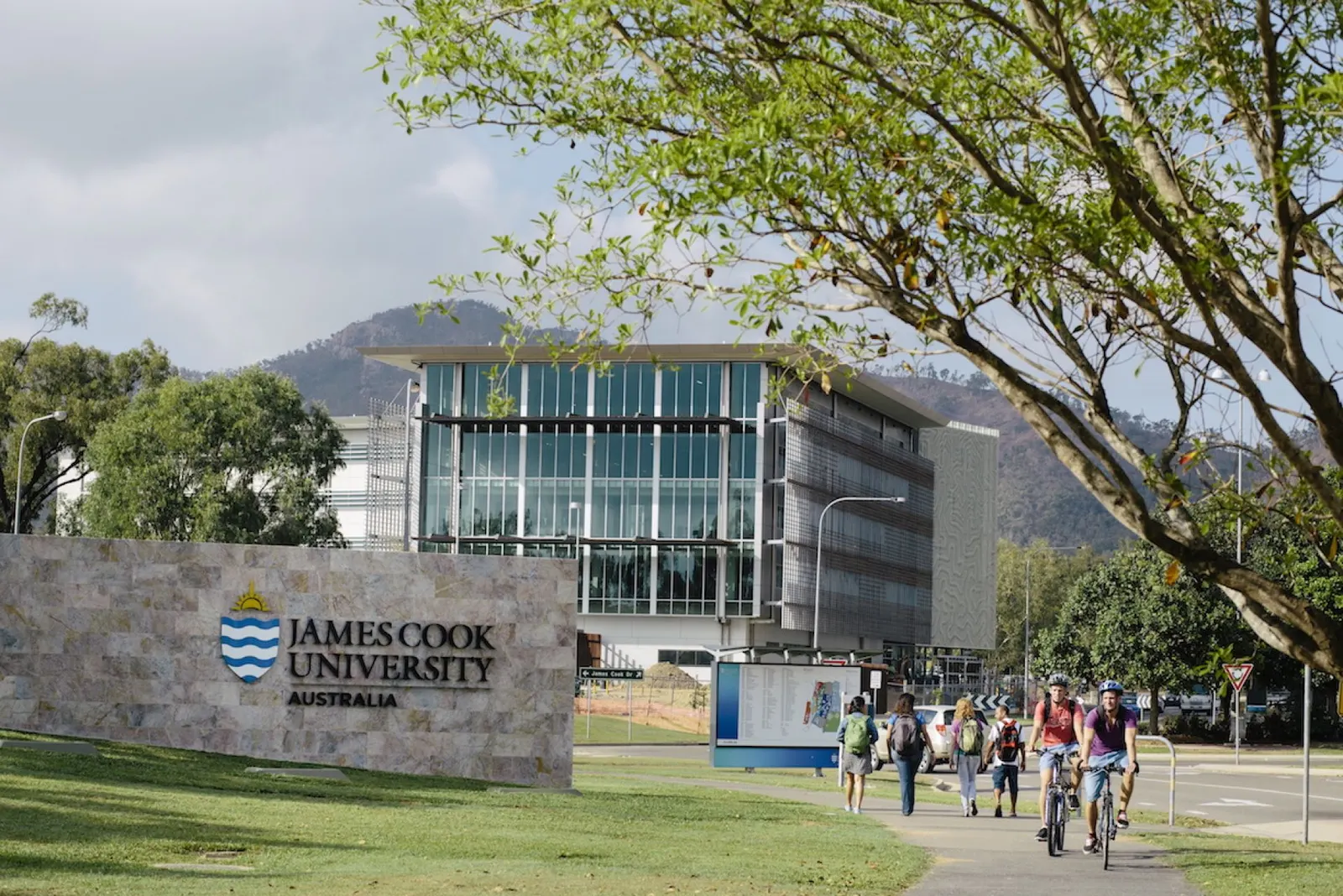
One small step before the deadline
The full position description and application portal sit on the JCU careers site, and the role is summarised with closing date and key details at Academic Jobs.
If you do one thing this week, read the last two JCU annual reports end to end and write three paragraphs on where the university's next financial stress is most likely to come from, and what you would do about it in your first 120 days. That paragraph belongs in your cover letter, whatever else you cut.
- higher-education-careers
- james-cook-university
- queensland-university-jobs
- townsville
- university-finance-jobs