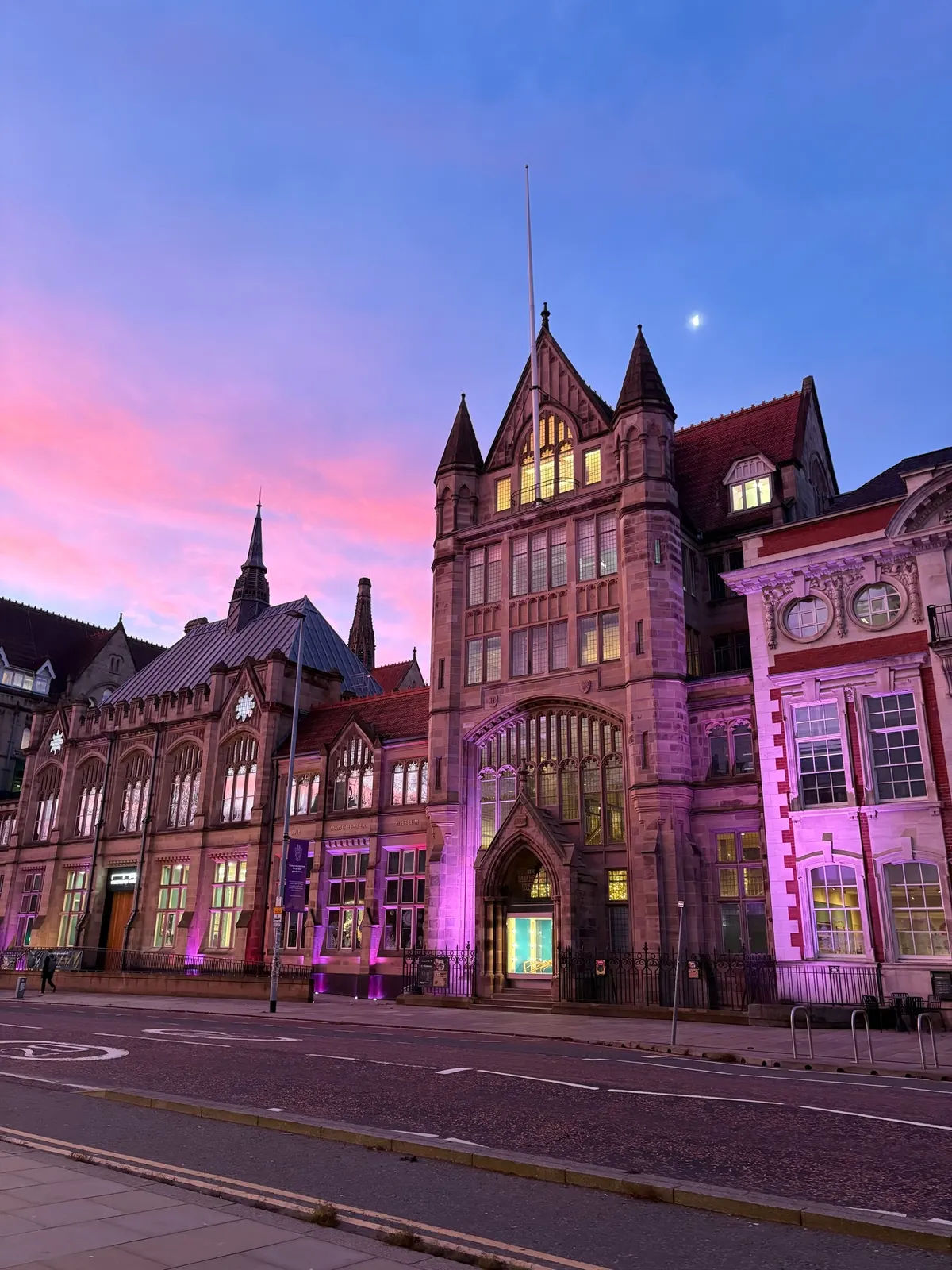
Manchester has just posted one of those job titles that would have read as science fiction ten years ago.
The University of Manchester is recruiting a Lecturer in Digital Engineering for Fusion Energy, a teaching and research appointment aimed at people who can combine hard computational methods with an energy source that has spent decades promising more than it has yet delivered. The post is live now on the university's own jobs portal, and the phrase 'digital engineering' is doing most of the work in that title.
In plain terms, digital engineering means designing, testing and predicting a system inside software before any physical hardware is built. In fusion, where a reactor has to hold a plasma at extreme temperature while its structure absorbs punishing neutron loads, that computational work matters as much as the plasma physics itself. You are not being hired to produce lecture slides. You are being hired to help build the simulations, data pipelines and digital twins that fusion reactor programmes use to decide what actually gets manufactured.
Digital engineering pulls together finite element analysis for structural performance, computational fluid dynamics for coolant and blanket design, reduced-order models that speed up design loops, uncertainty quantification for safety cases, and machine learning tools that interpret diagnostics or monitor components. None of these methods are new. Fusion binds them together under conditions that make small errors expensive.
The UK's fusion effort has shifted from campus experiments to a national infrastructure programme. The centrepiece is STEP, the Spherical Tokamak for Energy Production, planned for West Burton in Nottinghamshire. A tokamak is a doughnut-shaped magnetic chamber that contains hot plasma, and STEP is the UK's attempt to turn that design into a prototype power plant.
Fusion needs people who can model, simulate and build before steel gets cut
You can see why a Russell Group university is hiring in this field now. The Joint European Torus, known as JET, ran at the UK Atomic Energy Authority's Oxfordshire site for four decades and produced some of the most significant fusion energy experiments ever recorded before its scientific programme ended in late 2023. That closure changed where the sector's attention sits: less emphasis on operating a single experimental machine, more emphasis on designing the next one digitally and training the people who will do that work.
The UK Atomic Energy Authority publishes detailed programme material on STEP, including the plant's site, timeline and the industrial skills it is expected to pull through. That national programme is the backdrop to this Manchester post. Universities are not recruiting fusion lecturers because enrolment has spiked. They are recruiting because the design problems have outpaced the number of people who can solve them in software.
Manchester has a particular advantage here. The university's Dalton Nuclear Institute has long connected research, training and industry across the nuclear sector, and the city has a deep engineering and advanced manufacturing base. A digital engineering lecturer does not arrive into an empty room; they arrive into a department where simulation methods already matter to existing nuclear and mechanical engineering work.
The strongest applicants will show they understand the difference between a model that runs and a model that can be trusted. That second part is where fusion gets hard. In a licensed power plant, a simulation is not a nice-to-have; it is evidence. You should be comfortable explaining how you would verify and validate a model, how you would handle uncertainty, and how you would communicate those limits to a regulator or a review panel.
Teaching matters here too. A lecture course on digital engineering for fusion has to cover more than software packages. It has to teach students how to judge when a model is good enough, when it needs more physics, and when a result should be treated with suspicion. Those habits are what make graduates safe to hire.
Read the full person specification before you write a word of your application. The University of Manchester's advert sets out exactly what the panel will score against, including which areas of digital engineering are priorities. Do not assume the job means one narrow specialism. It could encompass finite element analysis, computational fluid dynamics, reduced-order modelling, uncertainty quantification, control systems, machine learning for plasma diagnostics, or combinations of all of those. The advert is the source of truth, and you can review it on the university's jobs portal.
Teaching and research posts at this grade normally divide the week between undergraduate and postgraduate teaching, doctoral supervision and a personal research programme. The exact balance varies by department, and Manchester's advert should state it plainly. If it does not, that is a fair question to ask at interview.
How to read this advert before you apply
Most academic job adverts bury the only part that matters. This one is easier to decode if you separate the formal requirements from what the panel will actually use to shortlist.
- Check the person specification first, not the summary paragraph.
- Identify the named research group or laboratory, because digital engineering for fusion is a cluster of methods, not one method.
- Show evidence of both teaching and research. You may not have a teaching award, but you should be able to point to a module you have designed or delivered and a piece of computational work you have taken from idea to result.
- Read the closing date and any interview date, then work backwards. If the timeline is tight, that is a sign the department has already scoped the role and wants to move.
The application sits on the University of Manchester jobs site, not a third-party platform. Apply through that portal so your materials land in the right workflow. The link is in the official advert.
What the national fusion push means for this post
STEP is not a distant idea. It is a formally sited programme at West Burton, with the UK Atomic Energy Authority and UK Industrial Fusion Solutions working through the design and delivery phases. The government treats fusion as part of its long-term energy and industrial strategy, and the plant depends on a workforce that can use computational models to reduce expensive physical testing.
That is where the Manchester lectureship fits. A university post in digital engineering for fusion energy is a research job, a teaching job and a supply-chain job at the same time. The successful candidate will train graduates who move into fusion companies, nuclear engineering firms and the broader simulation and certification sector. If you want the official framing, the UK Atomic Energy Authority's STEP pages outline the plant concept and the surrounding skills agenda.
The end of JET's scientific operations in 2023 left the UK fusion community with a specific problem: a generation of experimentalists knows how to run a tokamak, but the next machine will be designed and licensed through software before much metal is cut. That is why digital engineering appears in a lecturer title rather than hidden in a long list of desirable criteria.
What applicants should send, and what they should not waste time on
Do not lead with a generic statement about being passionate about fusion. The panel already assumes that. Lead with the methods you know, the problems you have solved and the software or code you have built. Name the tools, name the physics, name the outputs.
If you come from outside fusion, that is not a weakness. Engineers from aerospace, automotive, nuclear fission and defence have spent years doing simulation-led design under regulatory pressure. That experience translates directly. The task in your application is to show the translation, not just claim it.
Manchester's Dalton Nuclear Institute gives the university a ready-made network into the wider nuclear sector. Its research and training activity spans reactor systems, safety cases and digital tools, which is why the fusion post fits the university's existing strengths. You can explore the institute's work on its own pages.
What happens after the job starts
A lectureship in this area is not a quiet corner. The UK fusion programme is expanding its digital infrastructure because physical testing is slow, expensive and heavily regulated. That creates a specific research runway: you can win grants for simulation methods, digital twins and safety case development without waiting for a tokamak to be built next door.
Industry demand runs in parallel. Fusion companies and the nuclear supply chain need engineers who can validate designs in software before a regulator sees them. Those skills are portable into fission, aerospace, defence and any sector where simulation shortens certification. That portability matters, because it means a lecturer can move between academic funding and industrial consultancy without changing what they actually do.
You should also keep an eye on how the UK Atomic Energy Authority describes the STEP programme's skills requirements, because that language will appear in grant calls, studentship adverts and industrial PhD offers over the next few years. The Manchester role is one appointment, but it sits inside a much larger recruitment pattern.
Action to take this week
Open the official University of Manchester job listing and read the person specification before you touch your CV. Make two columns on a page: what the panel says is essential, and what you have concrete evidence to prove. If any essential criterion has no proof, decide this week whether you can build that proof or whether you are applying too early.
Do not wait for the closing date. Academic hiring slows down when committees hesitate, but the strongest candidates act while the role is still fresh. Get the application in, then use the time before any deadline to find one named person in the department whose recent work overlaps with yours and think through what you would ask them if you had a twenty-minute call. That shows up in an interview more than another paragraph of boilerplate.