

Most people read a job ad like this and do the wrong thing first. They send the CV they used last time, then wonder why a university with two campuses and a serious online learning agenda didn't call back. James Cook University has opened an Educational Designer role based in Cairns and Townsville, and the window to apply is live now on the JCU careers page.
The job sits where teaching, technology, curriculum design, and staff development meet. You will not be hidden in a production queue. You will work directly with academic staff to reshape subjects for students who may be on campus in Townsville, studying from home in Cairns, enrolled fully online, or moving between all three modes. That changes how you should prepare the application.
What the JCU educational designer role actually involves
Educational designer titles vary across Australian universities. Some call them learning designers, instructional designers, or academic developers. At JCU the work is practical: partner with subject coordinators to design whole subjects and the modules inside them, then support the teaching team to use the university's learning technologies well.
You will need to do more than build content. You will need to help an academic rethink a unit so the learning outcomes and the activities and assessment that support them line up. That means working inside a learning management system, improving accessibility, coaching staff who have deep subject knowledge, and documenting decisions for future course reviews.
In a normal week you might be in a curriculum mapping meeting in the morning, revising a subject site after lunch, writing a short guide for teaching staff before the day ends, and answering questions from a tutor. The role is collaborative. If you want a predictable, repetitive output, this is not the job.
Why this role matters at JCU right now
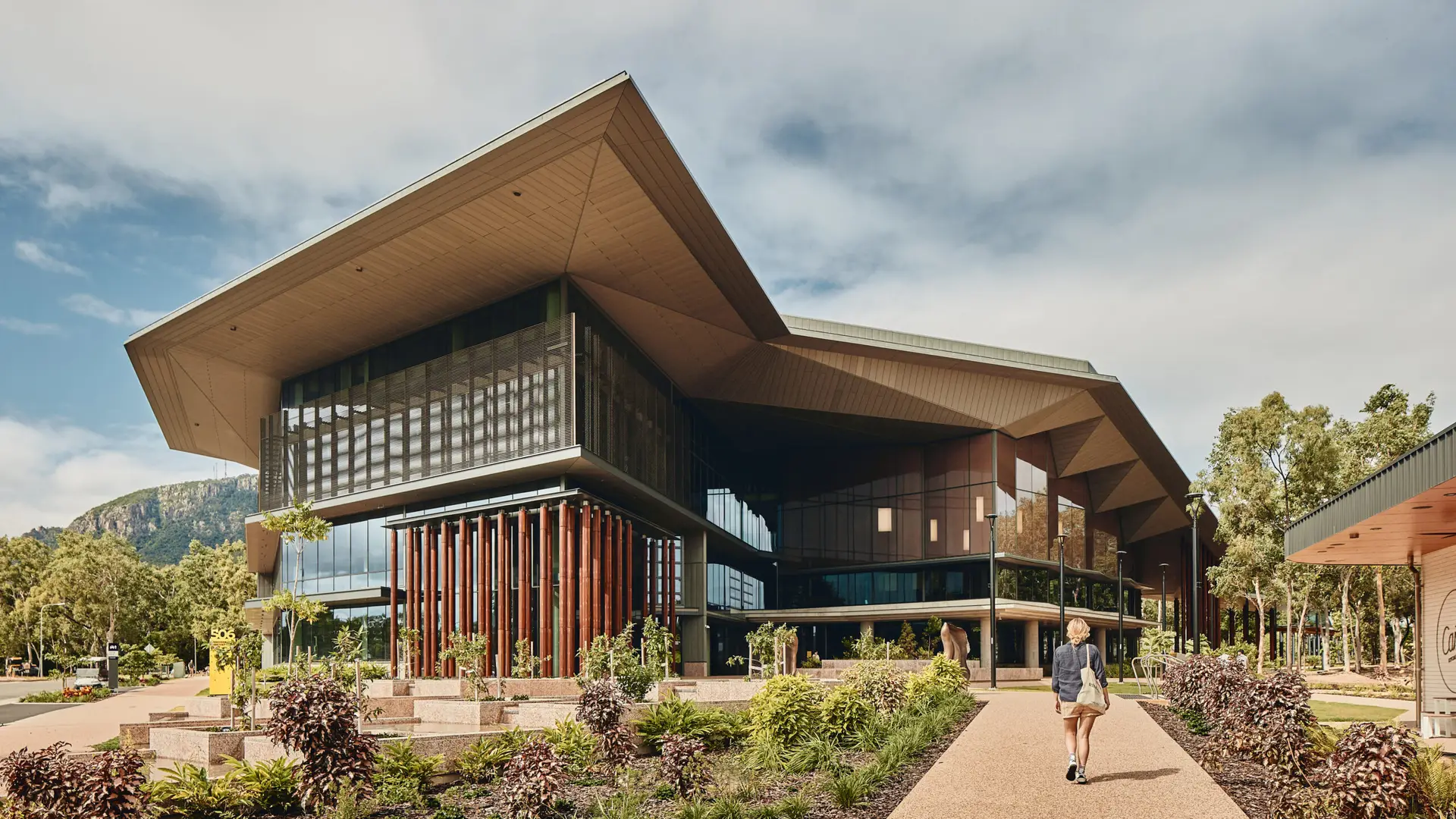
JCU is the only university headquartered in northern Queensland. It has major campuses in Townsville and Cairns plus study sites across the region and in Singapore. Students are spread across thousands of kilometres, so blended and online delivery is not a side project. It is how the university reaches people who cannot always get to campus.
Australian regulation adds pressure. The Tertiary Education Quality and Standards Agency expects universities to show that courses are well designed, assessment is sound, teaching staff are supported, and evidence is kept. That expectation creates real work for educational designers who can document good practice.
For JCU, the role matters because subject quality can improve without waiting for a funding cycle. A well-designed unit reduces failure rates, lifts student satisfaction, helps teaching staff spend time on teaching, and shortens the time they spend on administrative fixes. JCU's learning and teaching area treats this as continuous improvement, not a one-off project.

The skills that actually get you shortlisted
The position description is your source of truth, and you should read it line by line. In general, JCU will want evidence that you can work with academic staff, not just operate software. That is the distinction many candidates miss, and it shows up in every stage of shortlisting.
Strong candidates can usually point to concrete examples:
- Redesigning a subject or module with before-and-after results, such as improved completion or fewer student queries about instructions.
- Running curriculum mapping sessions with staff who had no background in learning technology.
- Making materials accessible for students with disabilities, including screen reader users.
- Advising on assessment changes that are practical for a teaching team of five or more people.
- Writing design documentation that survives staff turnover, so a new tutor can pick it up without a long handover.
Experience with a specific learning management system helps, but it is rarely the deciding factor. A candidate who can explain how they diagnosed a subject's problem and got agreement on the fix will beat a candidate who lists six platforms and no outcomes. Professional networks such as ASCILITE are a good place to see what experienced learning designers in Australian tertiary education are talking about.
How to submit a stronger application for the Educational Designer role
Do not treat the selection criteria as a formality. Here is the process I would use if I were applying this week.
- Download the full position description from the JCU careers portal and highlight verbs like partner, redesign, evaluate, advise, and document.
- For each requirement, write a short example with a specific subject, the tool you used, the people you worked with, and what changed as a result.
- Check the application format JCU wants. Some universities require a statement against selection criteria; others want a two-page cover letter and CV.
- Ask someone outside higher education to read your draft. If they cannot tell what you did, rewrite it until they can.
- Submit before the deadline. Public university portals slow down in the final hours, and late applications are usually not accepted.
If your CV needs a structural reset before you send it, read AcademicJobs' guide on writing a winning academic CV. It is built for exactly this kind of application.
Cairns and Townsville: the practical trade-offs
Location is part of the decision, and the two cities are not interchangeable. Townsville is larger and home to JCU's main campus. Cairns has a smaller campus and a different economy, with more weight on tourism and services. Both sit close to the Great Barrier Reef and the Wet Tropics, which matters if outdoor access shapes your weekends.
Housing costs are lower than Sydney and Melbourne, but rental supply in both cities has been tight at times. If you are moving, secure a short-term base and inspect in person before committing. JCU staff work across both locations, so check the ad's travel expectations and choose where you will live relative to the campus and the airport.
The dual-location listing widens the net. If you can work from either campus, say so clearly in the application. Do not make the panel guess.
What happens after you hit submit
University recruitment in Australia runs slower than the private sector. Expect a gap between the close date and first contact. A shortlist is usually made against the stated selection criteria, then interviews cover your examples in more depth. Some panels add a small task, such as reviewing a sample subject outline or suggesting changes to an assessment.
If you are invited to interview, use the Educational Designer listing on AcademicJobs to re-read the role while you prepare, but go back to the original position description for formal requirements. Ask how the role sits between central learning design and the faculties, what the first 90 days look like, whether you will work more with particular schools, and who signs off on subject changes. Those questions show you are thinking about the job itself.
Your first move this week
Download the position description and map your three strongest examples against the top selection criteria before you write a word. That one step will tell you whether you are a genuine fit and where to spend your application time.



Discussion
Be the first to comment on this article!
You’ll be asked to sign in before your comment is posted.