

At a glance
James Cook University is hiring an Educational Technology Designer for its Graduate Research School in Townsville. This two-year, HEWL 7 role pays $99,878.44 to $110,446.52 plus up to 17 per cent super. Here is what the job asks, how the pay compares, and how to apply before the 1 November 2026 deadline.

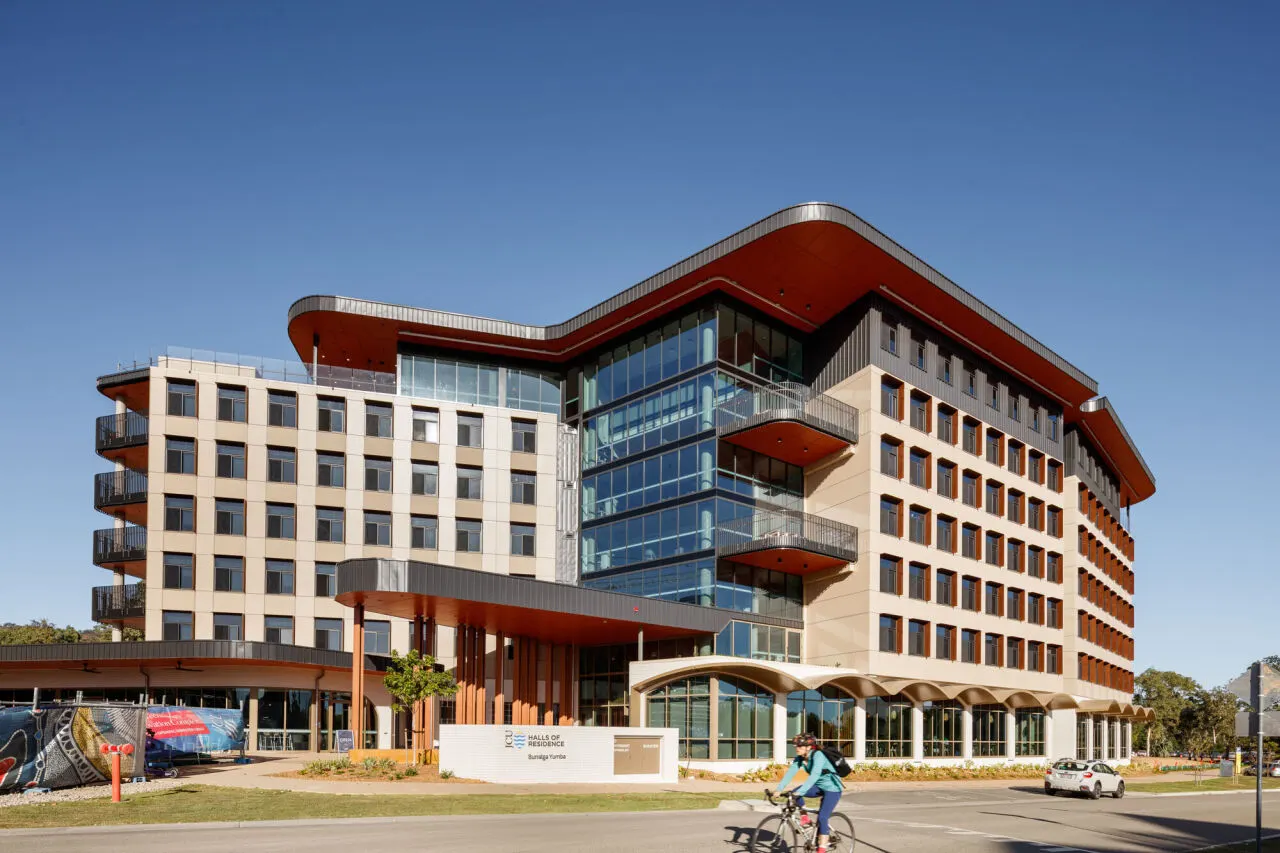
The first number that matters here is the deadline: applications close on 1 November 2026. James Cook University (JCU) is hiring an Educational Technology Designer for its Graduate Research School, a full-time, two-year fixed-term appointment based at the Townsville Bebegu Yumba campus in Douglas. The role pays between $99,878.44 and $110,446.52 a year at HEWL 7, plus up to 17 per cent superannuation, for a 36.25-hour week.
Before you weigh that number, weigh the base rate for the profession you would be joining. The 2025 Learning Design Futures survey, run by researchers at three Australian universities with the Australian Institute of Training and Development, found that 57 per cent of learning designers say career progression pathways are unclear. Higher education is the largest single employer, at 55.2 per cent of respondents, and only 16.4 per cent hold fixed-term contracts of the kind JCU is advertising. This posting is the exception in one useful way: it names its pay band, its tools and a contact person, and it sits inside a school with a defined learner — researchers and research students.
A designer I worked with — call her Dr. P — spent the first eight months of a near-identical regional university contract converting mandatory researcher workshops into online modules. Most of that time did not go into instructional design. It went into chasing busy academics who had promised recordings and then gone quiet, and into rebuilding a literature-review workshop whose original deck had no descriptive text for screen readers. Her conclusion applies squarely to this JCU post: subject matter expertise is rarely the bottleneck. Restrained attention from time-poor researchers, and retrofitting accessibility onto legacy content, are.
What the job actually asks for
The Graduate Research School (GRS) administers JCU's higher degree by research (HDR) cohort — masters by research, PhD and professional doctorate candidates. Its machine already exists: the subject RD7003 Professional Development runs compulsory and elective workshops, with attendance logged in CareerHub for face-to-face sessions and in LearnJCU, the university's Moodle-based learning management system, for completed online modules.
The designer's output plugs straight into that machinery. You would convert priority face-to-face offerings into online professional development, maintain the modules, apply emerging technologies, and use learner insights to improve completion and outcomes. The ad is specific about the skills it wants: confidence with a learning management system, authoring tools and multimedia; the ability to translate complex research concepts into clear, pedagogically sound learning experiences; and a commitment to inclusive, accessible and equitable learning. That last clause is doing heavy lifting. In practice it means content that works with screen readers, captions on video, keyboard-accessible layouts and transcripts that match the audio.
One more requirement sets this role apart from a general instructional design post. You need to be able to apply generative AI and other educational technologies in a responsible and ethical way. That is not boilerplate in 2026. It means deciding where AI appears in learning content, how its outputs get vetted, who can see the raw prompts, and how the university can still evidence that learning happened.
Where the salary sits against the market
HEWL stands for Higher Education Worker Level, the classification ladder Australian universities use for professional staff. At Level 7, JCU's band of $99,878.44 to $110,446.52 compares like this: RMIT pays HEW 7 learning designers $103,603 to $112,144, and Monash pays $110,527 to $121,227. Australian Catholic University pays $102,346 to $110,723, while Notre Dame's Level 8 learning designers earn $116,774 to $132,357 in base salary and a senior learning designer at UNSW sits at $132,445 to $149,228. JCU's band is competitive for a regional university, and the 17 per cent super contribution is at the top end of what the sector offers, where contributions typically run from 15 to 17 per cent.
The two-year fixed term is the part to interrogate. Across the profession, 71.3 per cent of learning designers hold permanent or ongoing roles and 16.4 per cent are fixed-term, according to the same Learning Design Futures survey. A fixed-term contract is not a red flag on its own, but you should ask what happens at the 24-month mark before you accept. The benefits are concrete regardless: five weeks of annual leave plus loading, 15 days of paid sick or carer's leave, up to six months of paid parental leave, flexible working options and staff study assistance.
What this means for your lab
Two years is enough time to build a body of work, and enough time to lose it, if nothing is stored in a shared, documented place. The practical moves for whoever lands this role:
- Build one template per module type — orientation, confirmation of candidature, grant writing, research integrity — and reuse it so new content never starts from zero.
- Run an accessibility check at upload, not at the end, when retrofitting twenty legacy files becomes a resignation-level task.
- Store originals, transcripts, captions and the source assets in one shared folder with a README, so the work survives the contract's end date.
- Version every module with a date, an owner, a subject matter expert contact and a link to the source files, because academics re-record after every conference.
- Over-communicate deadlines to subject matter experts in writing. The polite follow-up email is part of the job, not a sign it is going badly.
The Townsville arithmetic
Townsville has stopped being the cheap-secret regional market it was three years ago, though it is still well under the southern capitals. Depending on the index, the median house price now lands between roughly $600,000 and $700,000 — Opteon's first-half 2026 figure for the Townsville City local government area is $700,000, up from $640,000 in 2025 and $528,000 in 2024. PropTrack had the median dwelling at $523,000 in March 2025 and $540,500 by May. The pace of growth has been the story: PropTrack ranked Townsville the country's fastest-growing market for much of 2025, with the median dwelling up 23.33 per cent in a year.
A population of around 198,000 to 200,000 means short commutes; the Douglas campus sits about 13 kilometres from the CBD, and the suburb of Douglas itself is one of the higher-volume sales suburbs. The trade-offs are real: the dry season from May to October is the payoff, while November to April brings humidity, storms and the occasional stinger warning on unprotected beaches. Professionally, the campus earns its keep. JCU was ranked number one in Queensland for full-time employment outcomes at both undergraduate and postgraduate level in the 2026 Good Universities Guide, and the campus name Bebegu Yumba means Place of Learning in the Birri-Gubba language.
Generative AI and the regulator
Whoever designs JCU's researcher development modules now makes small decisions about a large regulatory question. In September 2025, the Tertiary Education Quality and Standards Agency (TEQSA) published Enacting assessment reform in a time of artificial intelligence, guidance built on its 2023 principles. Its core argument: detecting generative AI use with certainty is all but impossible, so assessment must be redesigned to produce trustworthy judgments through multiple, inclusive and contextualised approaches. The guidance sets out three pathways — assuring learning across a whole degree, securing at least one task per unit, or a hybrid of both.
That matters to this role because professional development is where many researchers first meet institutional expectations about AI. JCU's Graduate Research School already publishes a guide telling HDR candidates to use generative AI responsibly and transparently in research and thesis writing. The designer is the person who turns that instruction into a module, a worked example, a quiz and a worked-through case study that can distinguish a researcher who understands the guardrails from one who has only heard the slogan.
How to apply
The route is the JCU careers page for vacancy 495859. You complete an application form, upload a current resume, upload a cover letter that addresses the key requirements with examples, not adjectives, and wait for an outcome — JCU says all applicants are contacted once recruitment is finalised. Enquiries go to Gabby Ryan at gabby.ryan@jcu.edu.au.
Shortlisting panels in this field read for system names. Name the LMS and authoring tools you have actually used — LearnJCU, H5P, Articulate, Panopto, or whatever your stack was — and attach one sample module or storyboard rather than a paragraph of self-description. Address generative AI directly: show a design where AI helped draft a case study or quiz stem, and explain how you vetted the output for accuracy, bias, privacy and copyright. Write the cover letter around two problems you solved, not two courses you completed; a tight, evidence-led CV does the same job.
The concrete next step: set a reminder for 31 October, pull one module you can show, and draft the cover letter before the weekend before the deadline. If a question is stopping you, email Gabby Ryan before you submit — the contact is there to be used.
- generative-ai
- james-cook-university
- instructional-design
- educational-technology-designer
- learning-designer-jobs-australia