
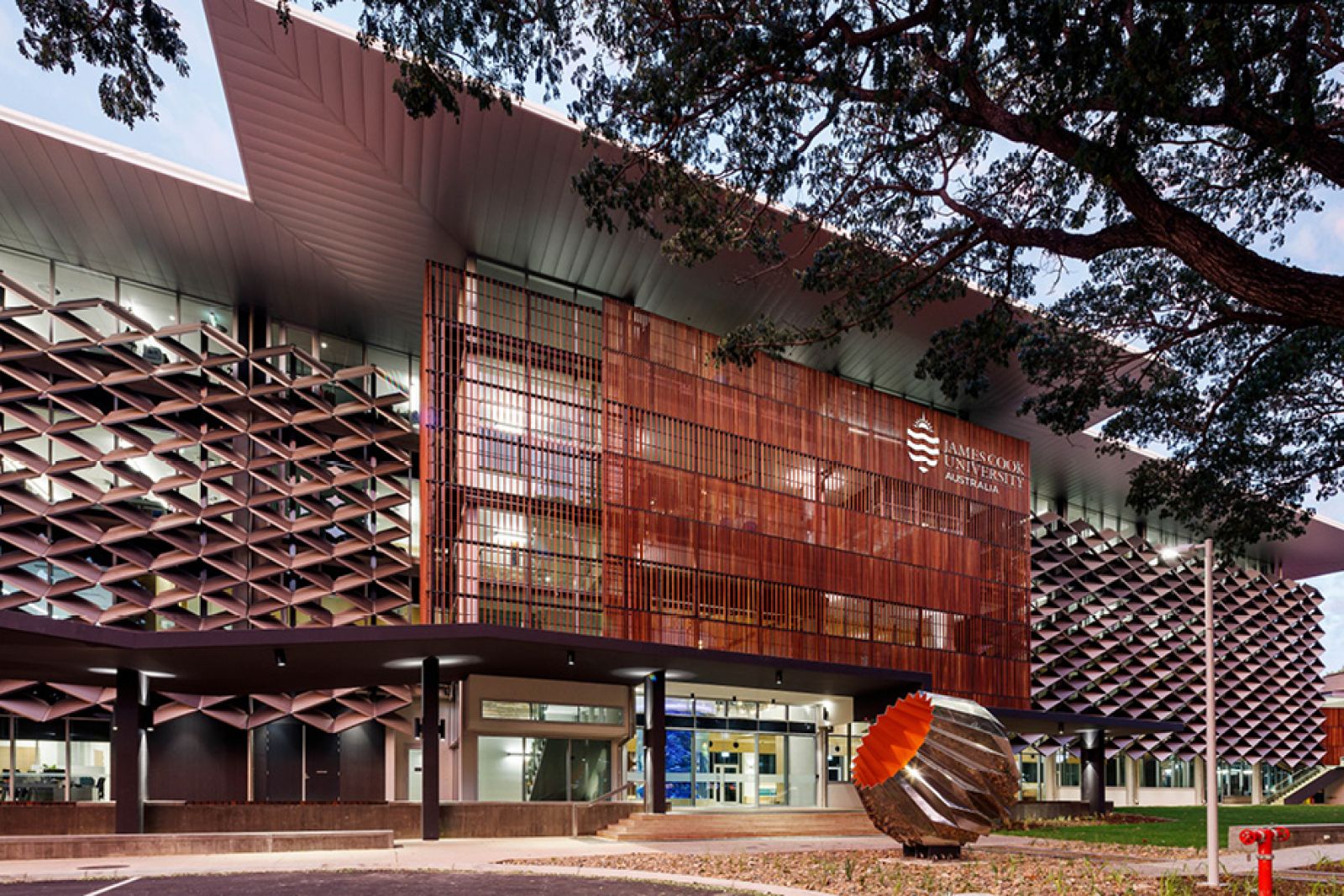
James Cook University just put up a job title that should make any movement ecologist stop scrolling: Lecturer in Movement Ecology, based in Townsville, Queensland. Not a generic ecology lectureship with movement tacked on. A post written around the study of how animals move, why they move, what that means for conservation, and how movement patterns shift under disturbance.
If you've spent a postdoc tracking animals through northern Australia, you know how few roles name this field directly. Most movement ecology work gets hired under broader labels: wildlife ecology, spatial ecology, marine biology, environmental science. This ad makes the specialty the headline, and it sits at a university that already has the field sites to support it.
What the job actually involves
The role is a standard full academic position. You'd teach into ecology and conservation programs, coordinate units, supervise honours and higher degree research students, and build an independent research program. That means lectures, field teaching, grant writing, publishing, and student supervision. The balance looks like a typical Australian Level B lectureship: a teaching load that changes by semester and a research expectation that does not wait until teaching ends.
Level B is the standard early-career academic rank in Australia, usually the first continuing step after postdoctoral work. You should not read this as a soft research-only appointment. The university wants someone who can teach movement ecology methods and keep tropical field courses running. It also wants research that holds up under national research assessment. If you're coming out of a postdoc, the shift is real: you become responsible for other people's progress, not just your own datasets.
You'll likely sit in the College of Science and Engineering and work alongside ecologists, marine biologists, zoologists, and geospatial scientists. The teaching component may include core ecology units, field courses, quantitative methods, and assessment design. Panels will care about how you handle large classes and how you design assessments. They'll also look at how you manage fieldwork logistics under northern Queensland conditions.
In practical terms, you'd teach units that may include animal behaviour, spatial analysis, biotelemetry, wildlife ecology, or conservation planning. The exact mix depends on the school's needs, but expect to cover both theory and hands-on skills such as data cleaning, home-range estimation, movement model interpretation, and basic tag deployment.
Why Townsville is the point, not the backdrop
Townsville matters because the study systems are already there. The city sits between the Great Barrier Reef and the Queensland dry tropics, with the Wet Tropics rainforests to the north-west. A movement ecologist working from JCU can access reef, mangrove, savannah, rainforest, and agricultural environments across short field campaigns. That matters when your research depends on repeated tracking across seasons.
The regional environment also shapes the teaching. Field courses can run from campus to intertidal sites, tropical savannah, protected areas, and cattle country without losing a day to travel. For students, the location makes movement ecology tangible; for staff, it means you can supervise honours projects that collect real movement data in a single semester rather than designing around expensive field campaigns.
Northern Australia's seasonal extremes are part of the job. Cyclones, wet-season flooding, dry-season heat, and months of high humidity influence when animals move and when you can collect data. If you've managed field teams through risky conditions or held animal ethics approvals, write that down early in your application. Panel members in this part of Australia read it as practical competence, not a minor detail. The region's ecological gradients also supply natural experiments. Rainfall, fire, flooding, and coastal development vary across short distances, which lets you compare movement responses without running projects in three states.
The field infrastructure you'd be using
The university's field stations and research facilities matter more than a job ad can explain. Movement ecology is expensive infrastructure work: GPS collars, satellite tags, acoustic receivers, drone surveys, and the people who maintain them. JCU already carries much of that overhead, which means your first grant can focus on research questions instead of building a field camp from scratch.
JCU's College of Science and Engineering houses much of this research activity, and its scientists run long-term projects on species that are logistically hard to track. Those projects span reef, river, agricultural, and rangeland systems. For an incoming lecturer, that creates immediate opportunities to collaborate rather than starting from zero with every project.
Australian movement ecology also draws on shared data infrastructure. The Atlas of Living Australia aggregates biodiversity occurrence records and spatial data used alongside movement datasets. You don't need to name every tool in your application, but you should show you know which data systems could extend your work.
What the selection panel is really looking for
Committees for specialised roles like this are screening for fit as much as raw publication count. They want evidence you can teach movement ecology concepts to undergraduates. They also need to see a viable field-based research project in northern Australia and a realistic pathway to external funding. The strongest shortlisted candidates connect their publication record to one or two local study systems and say exactly what infrastructure they would use.
- Reread the job ad and mark every essential criterion. Make it impossible to miss where you meet each one.
- Lead with plain-language research outcomes. Not all panel members are movement ecologists.
- Show practical teaching competence: unit coordination, field teaching, online delivery, or student supervision.
- Address regional and remote fieldwork directly. If you've worked in hot, logistically hard environments, say so.
You also need to show an independent research identity. Panels can tell when a postdoc has been riding a supervisor's grant. Name the questions that are yours and the methods you developed. Then say which funding you wrote or helped win. If your movement ecology work has direct management implications, say which agency or land manager would use it. Referee comments matter for regional appointments. Panels often check whether you finish things and work well in small teams, because Townsville's scientific community is tight and field projects depend on cooperation. Choose referees who can speak to your field reliability, not just your paper record.
How to put together an application that gets read
Most academic applications fail for a simple reason: they hide the relevant evidence. Hiring panels for Australian university roles read against the selection criteria, not around them. Put your most relevant research and teaching achievements in the first half-page of your cover letter, and make sure your CV mirrors the ad's terminology without padding it.
If you're moving from a postdoctoral position into your first continuing lectureship, the CV structure matters as much as the content. Our step-by-step guide on becoming a university lecturer covers the evidence Australian panels expect. Use it before you finalise your application, because a well-structured CV can carry a modest publication record further than a cluttered one.
The research statement should do two things: locate your movement ecology work in a clear conceptual framework, and show how you would translate it to Queensland species or systems. Do not write a generic research plan. A panel reading for movement ecology wants to see how you would use Townsville's field access, not a list of organisms you might one day study. Before you submit, test your cover letter against a simple question: could a busy panel member find the evidence for every essential criterion in under ninety seconds? If not, restructure. Hiring committees do not spend time hunting through your CV to make your case.
Apply through the official channel
The application must go through James Cook University's careers portal. You can also keep the role on your shortlist at AcademicJobs if you want the application details and closing date in one place while you prepare your documents.
This week, do one thing: download the selection criteria and open your current CV. Then write two sentences that connect your movement ecology work to a Queensland species or system you could study from Townsville. If those two sentences don't fit the role, you'll know before you spend a weekend on a full application.







.jpg)




Discussion
Be the first to comment on this article!
You’ll be asked to sign in before your comment is posted.