
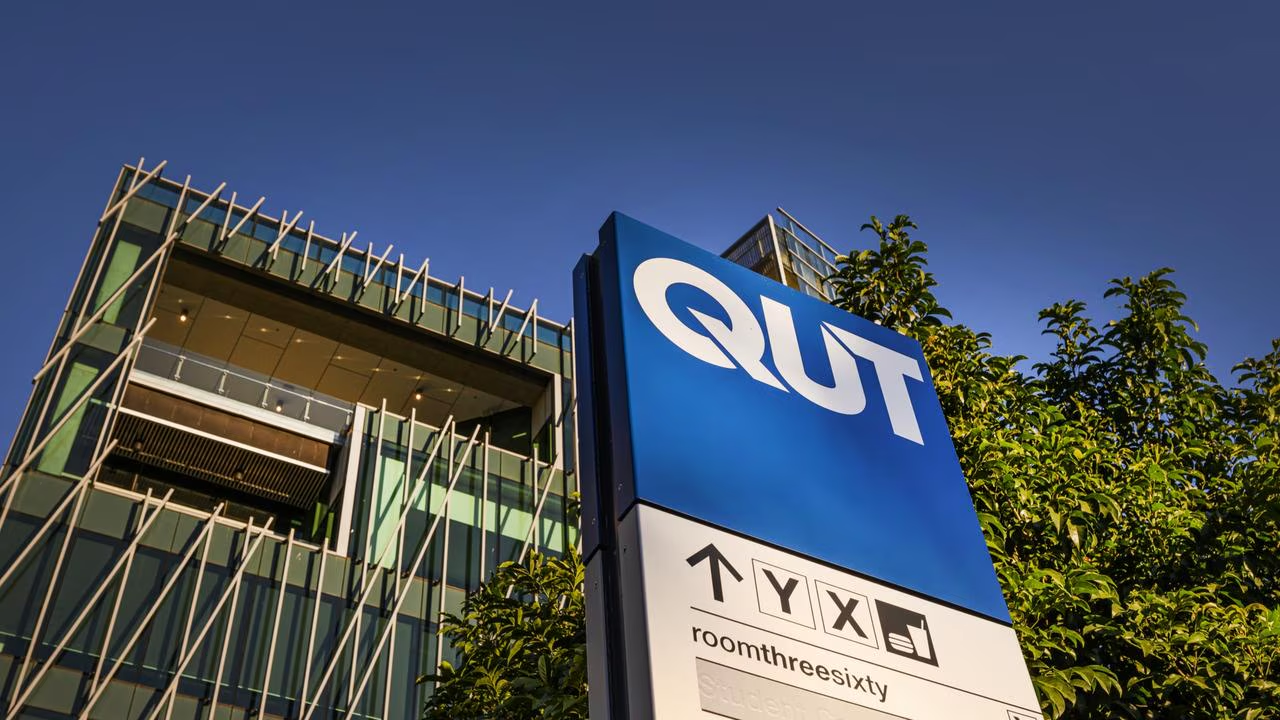
Most people apply for a laboratory assistant job without knowing whether they're walking into a teaching support role, a research workshop, or both. The advertised Laboratory Assistant – Engineering position at Queensland University of Technology sits in both, and that's why it's worth a closer look before you hit submit.
QUT is running this appointment through its standard NGA.NET recruitment portal. The role sits within the university's engineering operations, where technical staff keep undergraduate practical classes, research equipment and specialist workshops moving. You won't find every line of the position description in this article, but you'll get a clearer picture of what the panel is actually looking for.
What you'll actually do in the role
The job title says 'Laboratory Assistant', but at QUT that can mean supporting students in a structures lab one morning, maintaining a wind tunnel the next, and prepping a mechanical workshop before a first-year practical. Technical staff in engineering faculties prepare experimental rigs, check safety systems, manage consumables, and help academic staff run classes. You report to a laboratory manager or team leader, not to a distant committee.
QUT's Gardens Point campus is home to engineering facilities for civil, mechanical, electrical and mechatronics programs. A laboratory assistant in this environment may handle materials testing machines, instrumentation, power tools, chemical stores or control systems, depending on the team and the teaching week. The job is hands-on and tied to a semester timetable, so your availability during term matters as much as your technical background.
Expect to spend more time on WHS documentation than you might think. That's not a criticism; it's how university labs meet their obligations under Queensland's work health and safety laws. Safe operating procedures, inductions, chemical registers, equipment logs and incident reports are all part of the workload. If you can write a clear procedure and keep records under pressure, you're ahead of half the applicants.
Who should apply
You don't need a PhD, and you don't need an engineering degree. QUT technical roles of this kind typically suit people with a trade background, an engineering diploma, or hands-on laboratory experience. What matters is whether you can demonstrate that you've maintained equipment, followed safety systems, worked with students or researchers, and kept records someone else can audit.
If you're coming from industry, don't assume university hiring is slower or softer. The selection criteria will ask for evidence: specific machines you've operated, procedures you've written, incidents you've managed. A fitter and turner who can calibrate a tensile testing machine is often a stronger candidate than a graduate with no workshop time.
One thing to watch: QUT's recruitment portal asks for responses to selection criteria as part of the online application. Generic statements won't cut it. Give a concrete example with a measurable outcome — hours saved, downtime reduced, zero safety breaches over twelve months, and fewer repeat inductions.
What the QUT engineering precinct looks like
QUT is a university of technology, not a sandstone campus with a lab stuck in a basement. Its engineering programs are run from the Gardens Point campus in Brisbane's CBD, across from the botanic gardens and the river. The faculty operates specialist spaces for fluids, thermodynamics, structural testing, robotics and advanced manufacturing. A laboratory assistant in this setting can expect to move between these spaces depending on the teaching schedule.
That variety is one reason people stay in these jobs. One week you might be supporting a civil engineering concrete lab; the next you're prepping microcontroller kits for electrical engineering students. The role is not a single machine in a single room. It's the person who keeps the whole practical program safe and ready.
QUT's official site has campus maps and faculty details if you want to see the facilities before you apply. Visit the buildings if you're local; it will show in your interview.
How to apply through the QUT portal
The application goes through QUT's NGA.NET system, which means you'll need to create or update a candidate profile, attach your resume and cover letter, and answer the selection criteria fields. Don't wait until the last day. The portal can time out, and late applications are generally not accepted.
Here's the order I'd work in. Step one: read the full position description on the QUT site and write down the exact selection criteria. Step two: for each criterion, draft a short paragraph using the STAR approach — situation, task, action, result. Step three: get someone who works in a lab or a university to read your draft before you paste it in. Step four: submit with a clean PDF resume and a one-page cover letter naming the role and the team.
The listing is also mirrored on AcademicJobs.com, which can help if you want to track the role alongside other university technical jobs.
The market for engineering lab assistants in Australia
This is not a job you apply for in a vacuum. Australia has been short of engineering technical staff for years. The federal Jobs and Skills Australia Skills Priority List has continued to identify engineering and technical occupations as hard to fill in Queensland. That means people with the right lab, workshop and safety skills can be selective.
Engineers Australia has made the same point in its workforce reporting: the shortages aren't confined to chartered engineers. The pipeline of technicians, associates and laboratory staff is just as tight, and universities compete with mining, manufacturing and utilities for the same people.
For you, that means two things. First, if you're qualified, apply early and apply properly. Second, if you're weighing a university role against an industry offer, factor in the conditions: QUT staff are covered by an enterprise agreement, and technical roles generally come with the leave and superannuation entitlements set out in that agreement. Check the specific contract before you make any decision.
What makes a strong application
I've watched good technicians get passed over because their application looked generic. If you have a trade certificate, don't bury it on page four. If you've run a lab induction, say how many students you inducted and how often. If you've repaired a piece of equipment that cost $50,000 to replace, name it.
Use the position description as a checklist. Where it says 'experience with materials testing equipment', write one sentence about the Instron or MTS machine you've used. Where it says 'knowledge of WHS legislation', mention the specific act and your role in a safety audit. The selection panel is not guessing; it's scoring against the criteria.
Keep your resume to two pages for a technical role. Put your tickets, licences and competencies at the top, because that's what a lab manager reads first.
What to expect after you apply
QUT's recruitment process for professional and technical staff typically involves a shortlisting stage, then an interview with a panel that includes the lab manager and an HR representative. You may be asked to complete a practical task or answer scenario questions about equipment failure, safety incidents or prioritising competing requests. Some roles also require a medical or functional assessment if the work involves manual handling.
Don't read silence as rejection. University recruitment can take weeks, especially outside semester. But the strongest candidates don't wait passively; they prepare for the interview the same week they apply. If you get an offer, respond within the timeframe and ask for the enterprise agreement details in writing.
This week, download the position description, set aside an hour, and write one concrete STAR example for each criterion. Do that before you touch the portal.



.jpg)






Discussion
Be the first to comment on this article!
You’ll be asked to sign in before your comment is posted.