
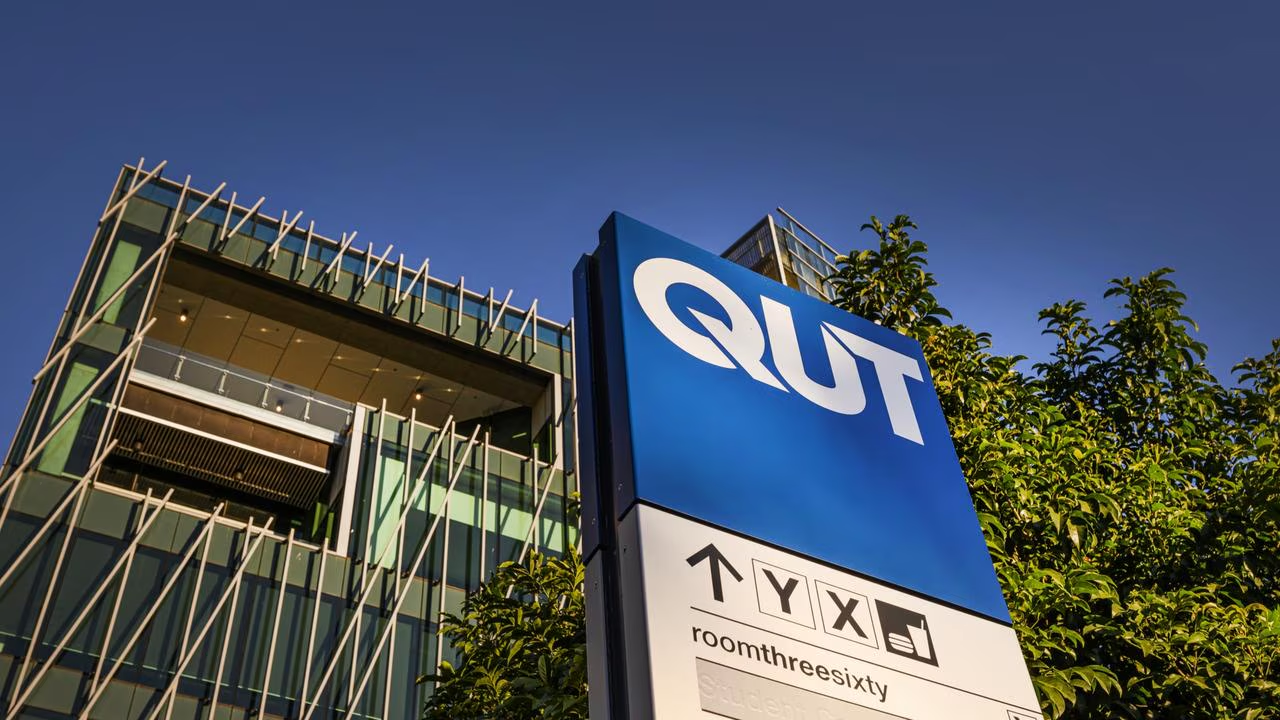
Exploring the Senior Manager, Industry Engagement Role at QUT
The Queensland University of Technology (QUT) has launched a compelling opportunity for a Senior Manager, Industry Engagement, positioned within the Chancellery Division's Office of Industry Engagement. This ongoing, full-time role, based in Kelvin Grove with hybrid flexibility, targets professionals with expertise in biosciences, biomedical technologies, and translational health innovations. As universities across Australia intensify efforts to bridge academia and industry, this position stands out for its focus on forging high-value partnerships that drive research funding, intellectual property (IP) commercialisation, and real-world impact.
Industry engagement roles like this one are pivotal in modern higher education. They facilitate the flow of knowledge from university labs to market-ready solutions, particularly in high-growth sectors such as health and biosciences. At QUT, known for its practical, real-world approach to education and research, this senior manager will play a key role in elevating the institution's profile as a leader in collaborative innovation.
The Strategic Importance of Industry Engagement in Australian Universities
In Australia, university-industry engagement has evolved into a cornerstone of national innovation strategy. Government initiatives, including those from the Department of Education, emphasise partnerships to boost economic growth, enhance graduate employability, and translate research into commercial outcomes. For instance, programs like the Australian Research Council (ARC) Linkage Grants and the National Industry PhD Program underscore the push for collaborative R&D.
QUT exemplifies this trend. Its Office of Industry Engagement supports researchers in connecting with private sector players, government bodies, and not-for-profits. The university's partnerships span clinical trials, consultancy services, and IP licensing, contributing to breakthroughs in areas like robotics, sustainable agriculture, and now, prominently, biomedical technologies. Recent successes include securing $2.7 million through the Australian Economic Accelerator Ignite program for seven research teams, highlighting QUT's prowess in attracting industry-aligned funding.
Across Australian higher education, such engagements yield tangible benefits. Statistics from government reports indicate that university-industry collaborations generate billions in economic value annually, with health and biosciences sectors leading due to demand for data-driven solutions and personalised medicine. This role at QUT aligns perfectly with these dynamics, offering a platform to amplify research translation.
Core Responsibilities Shaping Research and Innovation
The Senior Manager, Industry Engagement will lead efforts to identify and cultivate new partners for research and training initiatives. This involves scouting opportunities in the biomedical space, where data analytics and translational health technologies are reshaping healthcare delivery.
- Protecting and commercialising QUT's IP portfolio, including negotiating licensing deals and nurturing university spin-outs.
- Deepening existing relationships to foster ongoing collaborations and research training programs.
- Leveraging end-user networks to maximise impact, ensuring research addresses real industry challenges.
- Building strategic alliances across public and private sectors to bolster QUT's capabilities in biosciences and health.
These duties demand a proactive approach, blending business acumen with scientific insight. For example, the role might involve partnering with pharmaceutical giants on drug discovery pipelines or biotech firms on AI-enhanced diagnostics, directly influencing patient outcomes and economic productivity.

Essential Skills and Qualifications for Success
Candidates should hold postgraduate qualifications in a relevant field—such as biomedical engineering, health sciences, or business with a tech focus—or equivalent experience. A proven track record in research commercialisation is non-negotiable, particularly in nurturing long-term industry ties that yield funding and impact.
Key competencies include:
- Expertise in IP management, contract negotiation, and understanding commercial landscapes.
- Ability to spot funding streams, like ARC Industry Fellowships or Medical Research Future Fund grants, and align them with university strengths.
- Strong analytical skills to navigate regulatory frameworks, from Therapeutic Goods Administration (TGA) approvals to export controls on health tech.
- Exceptional stakeholder engagement, fostering trust across diverse groups including researchers, executives, and policymakers.
Commitment to equity, diversity, and Indigenous engagement is vital, reflecting QUT's values. Professionals from biomedical consulting, pharma business development, or university tech transfer offices will find their networks particularly advantageous.

Competitive Remuneration and Comprehensive Benefits
Remuneration ranges from $172,761 to $193,229 per annum (HEW10 level), encompassing a base salary of $145,985 to $163,281, plus 17% superannuation and 17.5% recreation leave loading. This package positions the role competitively within Australian higher education senior management salaries, where similar positions average around $130,000–$180,000 base.
QUT enhances appeal with:
| Benefit | Details |
|---|---|
| Work-Life Balance | Hybrid model, Purchased Leave up to 8 weeks |
| Parental Leave | Up to 26 weeks for primary carers (incl. super) |
| Professional Development | Leadership programs, study assistance |
| Wellness | Fitness Passport, health insurance discounts |
| Salary Packaging | Extra super, vehicle leasing, on-campus perks |
These perks underscore QUT's investment in staff, aligning with broader trends in attracting top talent to higher education business development roles.
QUT's Robust Framework for Industry Partnerships
QUT's strategy emphasises real-world impact through student mentoring, research collaborations, and custom education. The Office of Industry Engagement, under the Chief Commercialisation Officer, coordinates these efforts university-wide. Partnerships enable access to expertise in AI, biomechanics, and bioeconomy, with examples like the ARC Industrial Transformation Training Centre demonstrating scalable models.
Visit QUT's industry partnerships page to explore ongoing initiatives. Such structures empower senior managers to thrive, converting academic outputs into industry solutions.
Navigating a Career Path to Senior Industry Roles
Aspiring professionals often progress from research officers or business development associates in tech transfer offices. Building a network via conferences like AusBiotech or BIO International is crucial. In Australia, experience with national schemes like the National Health and Medical Research Council (NHMRC) partnerships accelerates advancement.
Case in point: QUT's prior engagements, such as Lava Blue's collaboration on sustainable tech, illustrate how managers drive multi-year projects yielding jobs and GDP growth. Tailor your CV to highlight quantifiable wins, like 'Secured $5M in industry co-funding' or 'Licensed 3 patents to biotech firms'.
Application Process and Timeline
Applications opened on 8 May 2026 and close 28 June 2026 at 11:30pm. Submit via QUT's portal (reference 26242), addressing selection criteria. Open to those with full work rights in Australia; Indigenous candidates encouraged. Prepare for interviews focusing on partnership examples and IP scenarios.
Link to the full posting on AcademicJobs.com for initial details.

Future Horizons for Biomedical Industry Engagement
Looking ahead, AI integration, precision medicine, and sustainability will dominate. Australian universities, per government reports like those from Supporting University and Industry Partnerships, aim to double collaborative R&D by 2030. Roles like this at QUT position incumbents at the vanguard, influencing policy and innovation ecosystems.
Professionals entering now can shape Australia's biomedical future, from quantum health tech to regenerative therapies. With global demand surging—projected 8% CAGR for health tech markets—this career promises enduring relevance and impact.

Stakeholder Perspectives and Real-World Impacts
Researchers value managers who demystify commercialisation; industry seeks agile partners accelerating time-to-market. At QUT, feedback loops ensure alignments, as seen in bioeconomy projects yielding ag-tech advancements. Broader impacts include job creation—uni-industry ties support 1 in 5 STEM roles—and regional development in Queensland's life sciences hub.


.jpg&w=128&q=75)