

At a glance
QUT is hiring a Director, Strategic Partnerships and Corporate Engagement on a five-year term at Gardens Point. The role, the sector data and what it means for researchers.
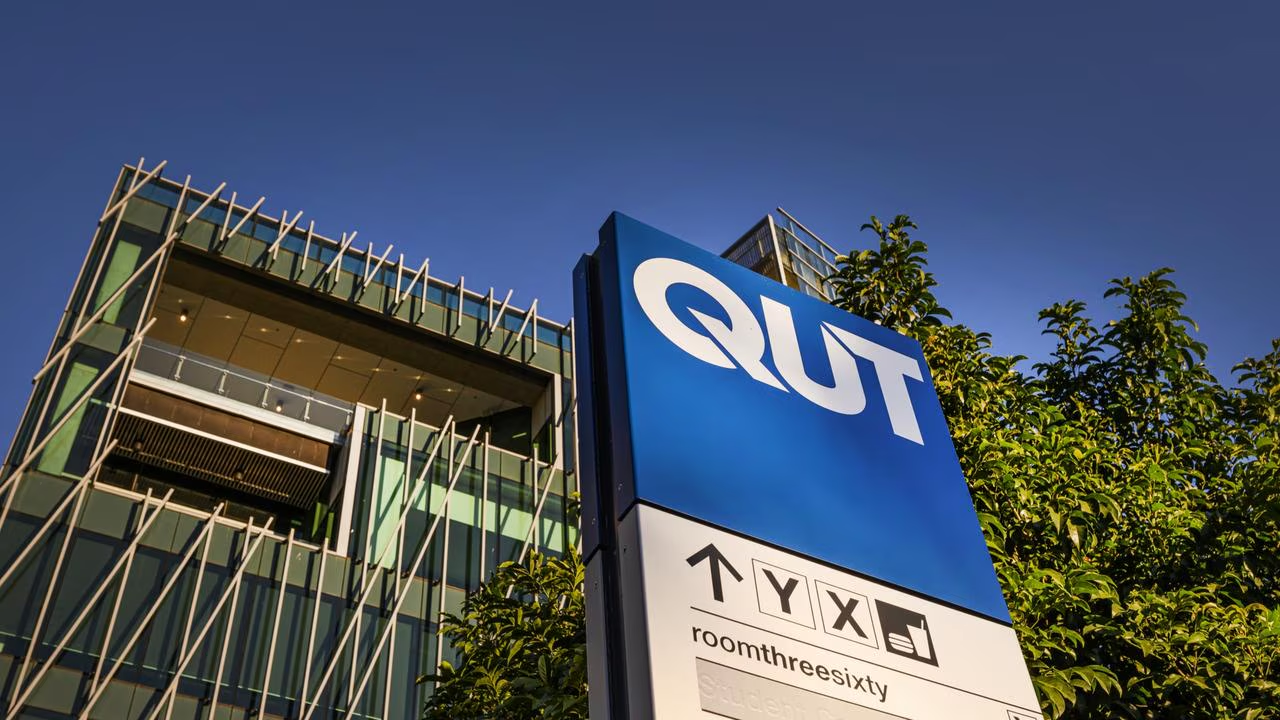
QUT is hiring someone to run its partnerships. Not to host them, not to toast them at an annual dinner — to run them as a portfolio, with governance, targets and a lifecycle. The Director, Strategic Partnerships and Corporate Engagement is a five-year fixed-term appointment at the Gardens Point campus in Brisbane, advertised under reference 26621, and applications close at 11:30pm AEST on Tuesday 1 December 2026.
The salary isn't published. The position description offers "an attractive remuneration package" to be negotiated, and QUT's standard employment offer elsewhere includes superannuation of up to 17%, parental leave of up to 26 weeks and salary packaging. If you're the candidate they want, you'll ask for the band before the second interview rather than after.
The word that matters in the ad is "operational". Plenty of universities have a partnerships strategy. Far fewer have someone whose job is the unglamorous middle: the pipeline, the handoffs, the contract that stalls in legal, the partner who can't tell whether they're dealing with a faculty or a division.
What the director actually owns
The position description is specific in a way that executive ads often aren't. The director leads the operational delivery, performance and continuous improvement of QUT's strategic partnership function, and is responsible for attracting partners, stewarding the relationships, coordinating the institution and delivering outcomes through the Engagement Portfolio. Partnership governance and performance sit in the remit too.
Read the clause about working "collaboratively with faculties, divisions and external organisations" and you'll find the difficulty. Faculties hold the researchers. Divisions hold the contracts, the finance function and the legal risk. The director holds the promise, and has to make the other two deliver on it without owning their people.
The selection criteria give away what the hiring panel has been burned by before:
- Prior leadership of an integrated partnerships function inside a large, complex organisation, including setting the operating model rather than inheriting it.
- Working knowledge of a university engagement ecosystem — research, innovation, education, work-integrated learning, philanthropy, industry collaboration, and how those pieces compete for the same partner's attention.
- An established network across senior industry, government and corporate Queensland, with evidence that the network converts into agreements.
- A record of running large-scale initiatives and transformation programs, and of holding a team together through them with budget accountability attached.
- Fluency with CRM platforms and what the ad calls "partnership intelligence systems", plus the analytical habit to demonstrate impact rather than assert it.
That last item is the tell. Most partnership offices can tell you who they know. Very few can tell you what a relationship returned two years after it was signed.
The base rate is uncomfortable
Australia is not good at university–industry collaboration, and the numbers are blunt about it. Only around 1.6% of Australian businesses collaborate with universities on innovation, according to Universities Australia's analysis of the innovation system — the lowest rate in the OECD, where the average sits near 14%. Gross expenditure on research and development was 1.69% of GDP in 2023–24, against an OECD average around 2.7% and well below Australia's peak of roughly 2.25% in 2008–09. Business R&D has been flat at about 0.9% of GDP since 2017–18, roughly half the OECD average.
The university side of the ledger has moved the other way. Higher Education Research Data Collection income from industry, not-for-profits and other non-government sources — Category 3 — more than doubled between 2014 and 2024. But when the Innovative Research Universities crunched two decades of data, it found that the growth in industry co-authorship came almost entirely from international companies, not Australian ones.
Put those two facts side by side and the brief for this role writes itself. The collaboration that works is largely offshore. The collaboration that would change the Queensland economy is thin, and the money attached to it is smaller than the rhetoric suggests.
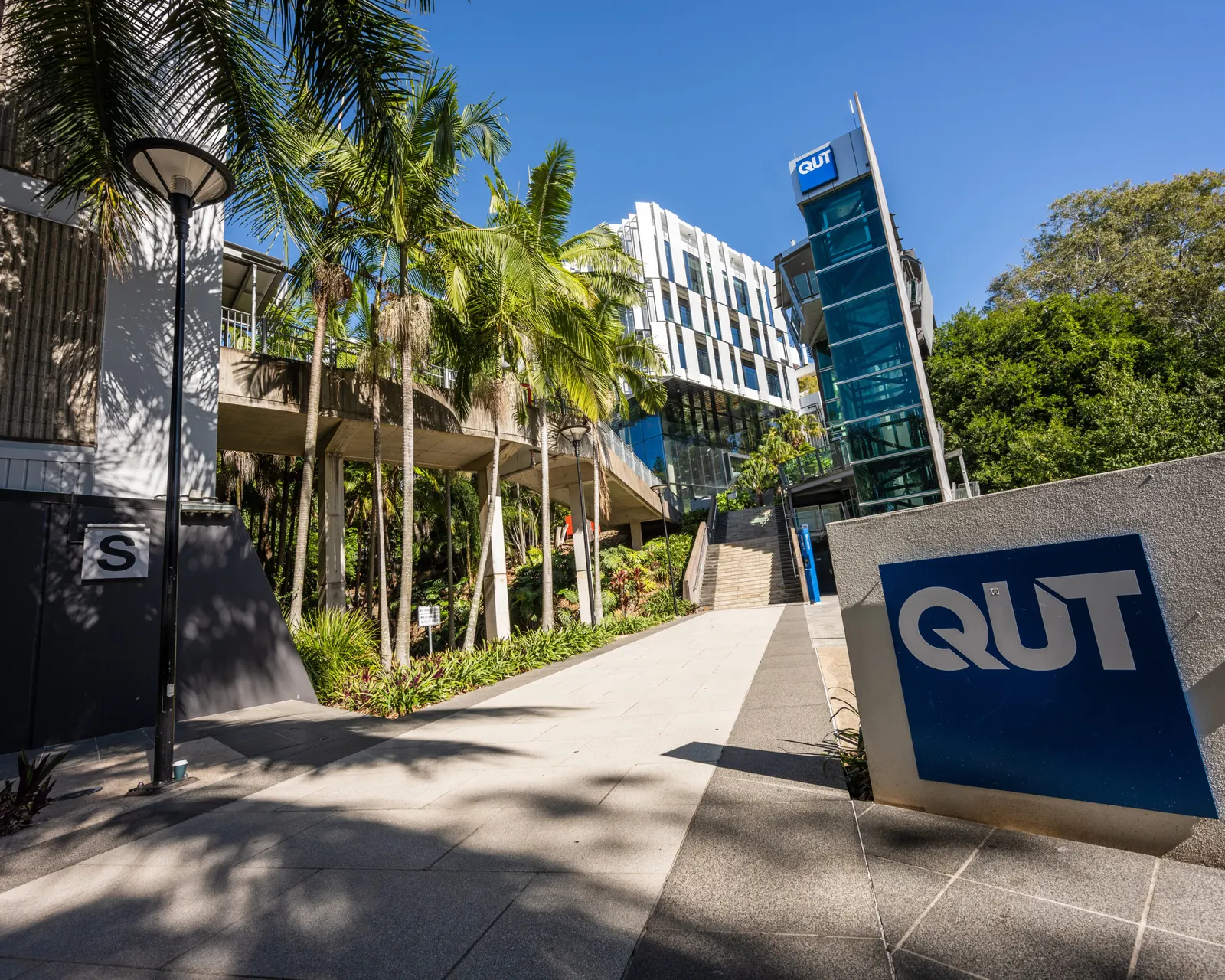
What QUT brings to the table
This isn't a standing start. QUT has run partnerships for long enough that some have institutional memory: its agreement with Brisbane software firm TechnologyOne stretches past 15 years and now includes a graduate program reserving a third of the company's intake for QUT alumni from 2025, plus $20,000 a year toward the Dean's Scholars program. There's a $3 million arrangement with Cisco, an education partnership with Queensland Rugby Union, and involvement in the Australian Cobotics Centre. The university's own industry and partnerships pages list the current suite.
Capital projects have changed the pitch. The QUT Pioneer BioPilot received an $18.2 million upgrade, unveiled in September 2025, aimed at food-grade biomanufacturing. The university has signed preliminary agreements with Australian Unity to explore a vertical campus in the Herston health precinct, appointed an executive lead for Brisbane 2032, and is finalising a campus master plan for Gardens Point and Kelvin Grove. Each of those creates a partner conversation that didn't exist three years ago.
QUT's 2025 annual report records total revenue and income of about $1.28 billion, with fees and charges up roughly 15% to $358 million, and the university's first underlying surplus from core operations since 2021. The same document forecasts research income growth of only 3% to 5% a year through to 2030. That forecast is the context for the hire: when the envelope is flat, partnerships are one of the few lines that can move.
The portfolio has been rebuilt around this role
The seat sits inside an Engagement Portfolio that has itself been reorganised. Lara McKay arrived as Vice-President (Engagement) in November 2024; the position was renamed from Vice-President Engagement and Chief Marketing Officer in May 2025, separating the marketing hat from the engagement one. Leisa Bacon, formerly an audience director at the ABC, became chief marketing officer in January 2026, and QUT has since advertised a director of alumni and corporate events and an associate director of brand and creative inside the same portfolio.
That's four senior appointments in roughly two years, all pointing at the same problem: QUT wants a single front door. The director of strategic partnerships is the person standing in it.
Measuring a partnership is harder than signing one
Institutional reporting is not built for this work. HERDC income feeds Research Block Grant allocations, and the 2026 round distributed $2.37 billion across 42 higher education providers — but the data is lagged by two years, which means a partnership signed today shows up in funding formulas long after the relationship has either matured or died. Research accounts for close to 20% of university revenue, and universities cross-subsidise a large share of it from general funds; the ratio of general funds spent per dollar of research income fell from $1.28 in 2018 to about $1.06 in 2022.
Worse, the things a good partnership produces often don't land in any HERDC category. A graduate pipeline isn't Category 3 income. A co-designed course isn't either. Neither is a scholarship, a placement, or an advisory board seat that later turns into a contract. The director has to build a measurement story that a finance committee will accept, using data the CRM can actually produce.
Federal policy is starting to reward the behaviour. The final report of the Strategic Examination of R&D, released in March 2026, proposed a premium stream in the R&D Tax Incentive that awards eligibility points partly for university collaboration, and the 2026–27 Budget began implementing parts of the package, including a National Resilience and Science Council. The Australian Academy of Science's read on the Budget is that the direction is right and the quantum is not yet settled. For a partnerships director, that's a live incentive to sell to a scale-up founder who has never spoken to a university.

What this means for your lab
Every partnerships office I've walked through has the same artefact: a partner register in the CRM, and a different, longer list in a faculty manager's spreadsheet. The gap between them is where deals go to die. A company talks to a researcher, the researcher mentions it to nobody, and eighteen months later the institution discovers a relationship it never knew it had.
So the practical test of whoever takes this job is not how many memoranda of understanding they sign. It's whether your informal industry conversation shows up somewhere the institution can see it. Three things follow for research groups.
- Register the contact. Name, organisation, date, what was discussed. It takes four minutes and it's the difference between a follow-up and a cold call.
- Expect to write a one-page impact note within a month of finishing a project, in language a partner's finance team would accept. If you can't, the partnership's renewal case rests on goodwill.
- Watch the SME channel. If the tax incentive changes land as recommended, small and mid-sized firms get a financial reason to talk to you, and most of them won't know how to start.
The other thing worth saying plainly: the 3% to 5% research income growth forecast applies to the whole institution. If partnerships are supposed to beat that, they'll need researchers who treat industry contact as institutional information rather than private currency.
If you're applying
The mechanics are simple. Reference 26621, Gardens Point campus, fixed-term full-time for five years, remuneration by negotiation, applications through QUT's recruitment portal and closing at 11:30pm AEST on 1 December 2026. The university states a target of 3.6% Indigenous Australian workforce participation and asks candidates to show a commitment to equity, diversity and Indigenous engagement — that's a criterion, not a footnote, and it's assessed like the others.
What the panel will actually be weighing is whether you can hold a portfolio across research, education, philanthropy and commercial deals without letting any one of them eat the others. The person who can do that has usually spent time on both sides of the table — enough years in a university to understand why faculties resist central coordination, and enough time in industry to know how quickly a partner writes off an institution that can't return a phone call.
One concrete move before the deadline: write a single page listing three partnerships you personally moved from first contact to contracted outcome, with the number each one shifted — revenue, placements, enrolments, or co-authored publications. If you can't fill the page with specifics, the role isn't yours yet, and it's better to know that now than in a five-year fixed term.
- australian-universities
- industry-collaboration
- higher-education-executive-jobs
- strategic-partnerships
- brisbane