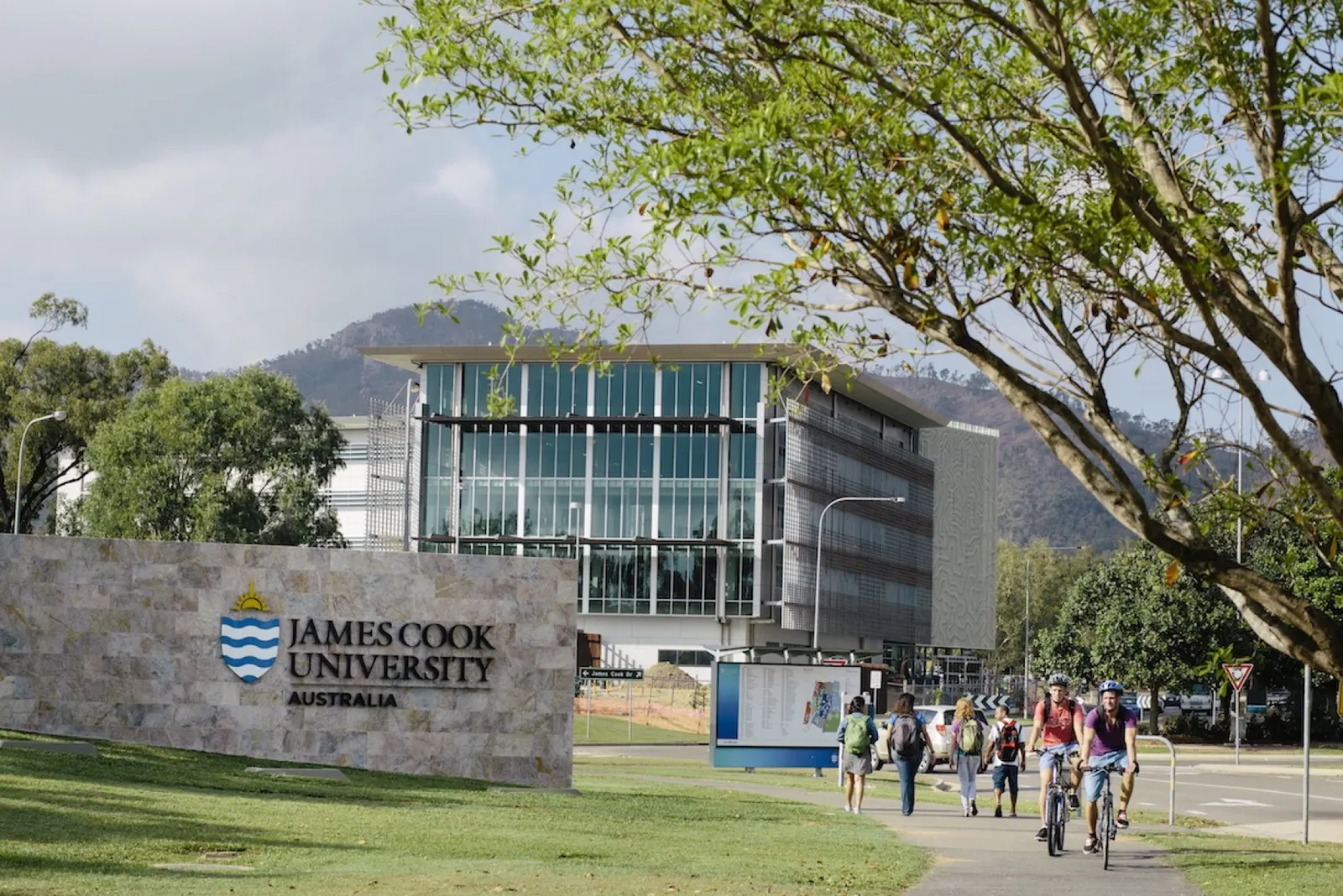
If you're a GP who can teach, James Cook University has just put a job in front of you that could matter more than another city locum. The role is Senior Lecturer in General Practice and Rural Medicine, based in Townsville, and it exists because the GP shortage in northern Queensland will not be fixed by recruitment campaigns alone.
Townsville is not a side note to the job. It is the point. JCU runs one of Australia's most deliberately distributed medical programs, sending students and registrars into communities that struggle to attract doctors. A senior lecturer in general practice helps shape those placements, teach students before they go, and supervise the registrars already there.
Why Townsville is the point, not a posting detail
Australia has a persistent problem: not enough general practitioners, and a workforce that clusters in major cities. The Australian Institute of Health and Welfare has documented the pattern clearly. People in rural and remote areas live with higher rates of chronic disease and preventable hospital admissions, yet they have less access to GPs than people in capital cities.
That maldistribution is not abstract in Townsville. The city is the main health and education hub for a huge stretch of northern Queensland, serving Mackay, Mount Isa, the Gulf and the Torres Strait. When a Townsville GP practice closes its books, patients drive hours to the next town. When a registrar completes training in Townsville and stays, the effect is immediate.
The Royal Australian College of General Practitioners has been blunt about the numbers: more GPs are leaving the workforce than entering it, and rural areas feel that loss first. This role is one university's attempt to train a fix rather than wait for one.
What the numbers show
You don't have to take the workforce warnings on faith. The Australian Institute of Health and Welfare's rural and remote health reporting shows that access to health care drops as remoteness increases, even as rates of chronic disease rise. For general practice, that means fewer GPs per person in the places where that continuity matters most.
The Royal Australian College of General Practitioners tracks workforce pressure through its Health of the Nation reports. The direction is consistent: GP workload is up, practice viability is under strain, and rural communities are among the hardest hit when a GP retires.
James Cook University's College of Medicine and Dentistry was built for this geography. Its students do placements in inner regional, outer regional and remote communities, and its GP teaching staff are the people who make those placements work.
What the position actually involves
Senior lecturer roles are not just teaching jobs. They carry curriculum design, assessment, placement coordination and clinical supervision. For general practice and rural medicine, that means you'll work across the undergraduate medical program and GP training pathways, often with registrars who are seeing patients in real clinics at the same time.
You'll plan teaching that fits rural practice, not just import a city curriculum. You'll help students understand what continuity of care looks like when the same GP delivers a baby, manages diabetes and coordinates a retrieval. You'll assess students on placement and support GP supervisors who are stretched thin.
The formal details, including selection criteria and closing date, are in the JCU position listing. Read the full description before you apply. If you want a quick view without hunting through the portal, the role is also summarised at AcademicJobs.com.
A week on the job
Some weeks you'll be in the medical school's clinical skills rooms, running a session on the undifferentiated patient. Other weeks you'll drive to a practice in Charters Towers or Ingham to sit with a registrar and their supervisor. You might review a student's reflective log, then join a curriculum committee meeting where someone proposes moving a rural health block earlier in the degree.
The thread through all of it is clinical credibility. GP students do not need another academic who has not seen a patient in years. They need someone who can say what happened in the last consultation and use it to teach the next one. That is what the role is being recruited for.
Who should take this seriously
You should apply if you have a medical degree, current AHPRA registration, and a GP fellowship through either the RACGP or the Australian College of Rural and Remote Medicine. Teaching experience matters, but clinical credibility matters more. The best candidates are usually practising GPs who can walk from a consultation into a classroom and make the connection real.
Rural experience is not a box-ticking exercise. If you've worked in a small town, you'll know why a registrar might need different supervision than a city registrar. You'll understand pharmacy gaps, retrieval distances and the fact that the nearest specialist might be a telehealth screen. Those are the stories that make your application persuasive.
How to apply in five steps
- Read the selection criteria twice. JCU will assess you against explicit criteria. Do not paste a generic academic CV.
- Collect your evidence. For each criterion, write down one concrete example from the last three years: a student you supervised, a placement you redesigned, a course you taught, or a registrar you helped through a difficult rotation.
- Write a cover letter that names the place. Say what you've done in rural or regional practice, and say why Townsville is not a compromise for you.
- Prepare a teaching statement with detail. Explain how you'd teach a GP registrar to manage an undifferentiated presentation in a town with no resident ultrasound after hours.
- Talk to someone in the JCU team. If the listing names a contact, call them. Ask what the first 12 months look like and which placements need the most support.
For help with the CV itself, our guide to writing a winning academic CV works for clinical academics, not just lab researchers.
The bigger picture: this is a pipeline job
The reason this role matters beyond JCU is that every medical school says it cares about rural health. Fewer actually put senior academic staff into general practice and rural medicine. When a university does, it changes where students end up. Evidence from longitudinal rural placement programs has long shown that students who train in regional and remote settings are more likely to return to those settings as doctors.
That makes this position a workforce intervention disguised as an academic job. The person who takes it will influence dozens of medical students and registrars each year. If a few of them stay in northern Queensland, the role has paid for itself.
Townsville is not the easiest posting to sell to someone with a city life and school-aged kids. But for a GP who wants to shape the next generation, it is one of the few jobs where the location is not a drawback. It is the whole reason the job exists.
This week, pull up the position description and write down three specific examples from your last two years of teaching, supervising or rural practice. If you cannot write three, you know what to start collecting before the next round.