

At a glance
James Cook University is hiring a Senior Technical Advisor to coordinate laboratories across education, earth and environmental sciences and zoology at its Cairns campus. This article covers the salary, selection criteria, application deadline and the restructure behind the role.

An advertisement that arrived after a rebuild
James Cook University has opened applications for a Senior Technical Advisor to coordinate practical teaching across Education, Life and Environmental Sciences at its Nguma-bada campus in Cairns. The continuing, full-time role pays $99,878.44 to $110,446.52 a year at HEWL 7, plus employer superannuation of up to 17 per cent. Applications close on 17 November 2026.
Behind the formal title sits a job that starts before the first practical of the morning and ends when the last safe work procedure has been signed off and the chemical register balanced. A Senior Technical Advisor in this portfolio prepares specimens for a second-year ecology class, checks chemical inventories against the dangerous goods register, signs off field trip risk assessments, and shows a new casual technician how to calibrate water quality meters without skipping a step. These are quiet, ordinary tasks, and they are the thing that keeps university science teaching honest.
Whoever takes the role will step into a structure rebuilt only weeks before the advertisement went live. In October 2026, Vice Chancellor Simon Biggs finalised a Change Management Plan for Laboratory and Technical Services that preserved the Veterinary Diagnostic Pathology Laboratory but removed around five full-time positions across the portfolio. The new Senior Technical Advisor post is, in part, a response to that press: one person charged with making a leaner technical service safer, more consistent and better able to support practical teaching under real budget conditions.
A job built for glue
The role asks for someone who can carry coordination, hands-on support and compliance at the same time, and JCU's advertisement is unusually frank about all three. 'Advanced technical advice' and 'hands-on delivery support of practical learning activities' cover the laboratory floor. 'Campus coordination' and 'on-the-job guidance' cover the people. Risk assessments, audits, inspections, incident and hazard reporting, training and safe work procedures cover the part universities most often underfund until an incident forces the issue.
Scheduled medicines carry their own compliance weight in Australian teaching laboratories — storage, recording and disposal — and the position description names them because universities teach with them, not because they are exotic. None of this requires villains to fail; it requires drift, understaffing and a short institutional memory. That is why the selection criteria read more like a job description for glue. JCU wants demonstrated experience coordinating technical staff, overseeing specialised equipment and instrumentation, and keeping laboratories operationally ready across disciplines. It wants WHS knowledge applied in working labs rather than quoted from a handbook. A current C Class Queensland driver's licence, First Aid and CPR certification, and a Working with Children Blue Card are prerequisites, listed because the work cannot begin without them.
Living laboratories at Nguma-bada
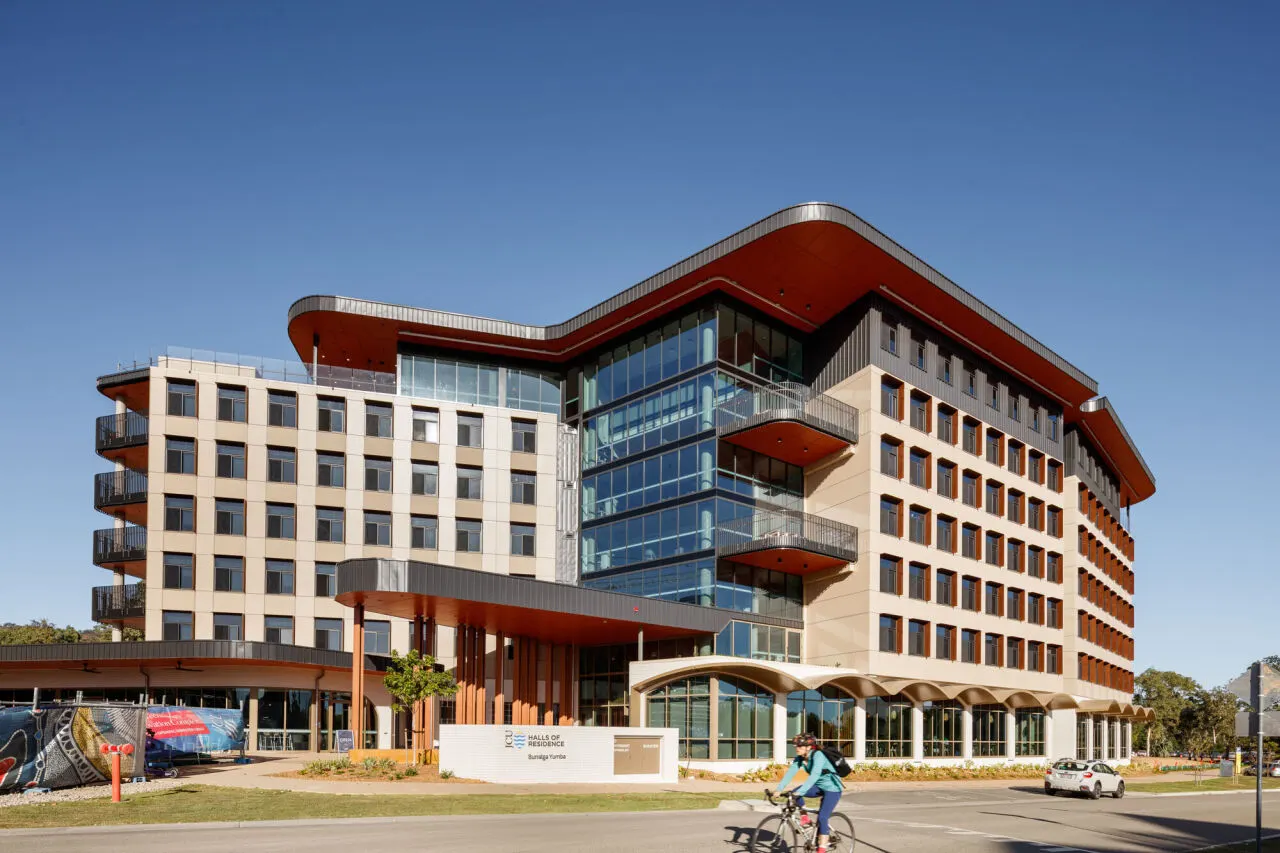
To understand what the Cairns role is for, start with what JCU actually runs from the campus. The Australian Tropical Herbarium, a joint venture with CSIRO and the Queensland and Commonwealth governments, sits on the Nguma-bada campus and houses more than 200,000 dried plant specimens, genetic samples and a wood collection. Its joint venture agreement was renewed for another decade in November 2025, and inside it operates the Tropical Indigenous Ethnobotany Centre, Australia's first Indigenous-led centre focused on plants, people and culture. The campus also hosts AITHM's OGTR-certified PC2 laboratories, quarantine-approved biology facilities, and the planned Northern Australia Plant Biosecurity Facility — a $580,000 quarantine glasshouse being developed with the herbarium and the Australian Research Council to quarantine invasive weeds and imported crop varieties.
JCU markets the Nguma-bada campus as the gateway to the Great Barrier Reef and the wet tropics, with the Daintree Rainforest Observatory roughly 120 km north at Cape Tribulation. Zoology and ecology practicals don't stay in the lab, and earth and environmental science students handle field samples collected under biosecurity conditions. The equipment list spans microscopes, water quality probes, specimen freezers, teaching aquaria and field gear that has to leave campus in someone's vehicle and come back clean. A senior technical advisor at this campus is partly a teacher of technique and partly the person who makes sure a practical in the wet tropics does not become an incident report.
Northern universities under structural pressure
The 2025 Senate inquiry into university governance found casual and sessional staff now make up 49 per cent of the university workforce, and more than 40 per cent of universities have spent much of the past five years in deficit. JCU has not been an outlier: the Australian Financial Review reported roughly 196 job losses at James Cook earlier in the cost-cutting cycle, and the October 2026 Laboratory and Technical Services restructure is the most recent wave. The Vice Chancellor framed the change as a matter of 'clearer operational and safety accountability' and services that 'remain sustainable well into the future', which is worth reading against the record rather than dismissing.
Analysts at the Australian Strategic Policy Institute have argued that JCU, Charles Darwin University and Central Queensland University share structural conditions metropolitan campuses do not face: thin student markets, limited labour mobility, and infrastructure commitments sized for ambitions that outran their budgets. When technical staff are cut across an institution without a coordinating role, accountability fragments across academic staff, casuals and whoever happens to be in the building that morning. A senior advisor becomes the mechanism for reassembling it. The fact that the university sought and incorporated staff and student feedback before finalising the plan is progress of a kind; the five lost positions are the gap between consultation and budget.
Reading the package against the Cairns housing market
The HEWL 7 band of $99,878.44 to $110,446.52 sits close to the floor of what experienced technical leaders earn in comparable roles across the sector, and the up to 17 per cent UniSuper contribution is one of the better superannuation arrangements in Australian higher education. JCU lists a package that includes staff study assistance and paid study leave, Fitness Passport, a health insurance discount and an employee assistance program.
- Up to 17 per cent employer superannuation through UniSuper
- Five weeks of annual recreation leave plus leave loading
- 15 days of paid sick or carer's leave each year
- Up to six months of paid parental leave
- A range of flexible working options
A salary reads differently against a city than against a national benchmark, though. Cairns rents rose 8.7 per cent over the year to $625 a week for all dwellings, according to PropTrack data reported in early 2026, and the rental vacancy rate has spent most of the past four years below 1 per cent. A candidate relocating from interstate should do that arithmetic before the interview, because the package is competitive but the housing market is not a footnote.
Applying with the panel's checklist in your hand
The application process is specific enough to punish anyone who treats it as a formality. JCU asks candidates to complete an online form, upload a resume and a cover letter that addresses the key requirements of the role, then submit through the university's careers portal before 17 November 2026 at 11.55pm. The selection criteria name chemical and biological safety, dangerous goods and scheduled medicines explicitly, so candidates arriving from commercial laboratories, pathology, agricultural research or environmental consultancies should translate that experience into the university's own language rather than hoping the panel will infer it.
Technical careers in Australian universities have long struggled for recognition on their own terms. These are the staff who keep instruments maintained and experiments safe while students graduate and academics publish, and the classification reflects that tension. 'Senior Technical Advisor' is a professional staff appointment at HEWL 7, not an academic one, and the person appointed will be judged on the smooth operation of laboratories they did not design under budgets they did not set.

After the welcome, the ledger
What follows from this appointment is measurable, and it should be measured in public. The university has committed to a dedicated review of the Veterinary Diagnostic Pathology Laboratory operating model, and the Change Management Plan promises clearer accountability across the portfolio. The fair test of the successful candidate, twelve months in, is whether practical classes run without academic staff doubling as unpaid lab managers, whether incident and hazard reporting closes loops rather than filing them, whether the technical team in Cairns retains the experienced people a tropical research university needs, and whether the equipment register matches what is actually on the benches. Those records exist, and they would tell the story more plainly than any strategy document.
Applications are open now, and the closing date is closer than it looks for a role this specific. The full role profile and selection criteria are published on JCU's careers portal.
- environmental-science
- james-cook-university
- higher-education-jobs-australia
- cairns-jobs
- technical-staff