

At a glance
CSULB is hiring an Associate Vice President for Research and Sponsored Programs at $210,000-$225,000. A look at the role, the research funding data, the federal policy fight, and the November 23 priority deadline.
California State University, Long Beach (CSULB) is hiring an Associate Vice President (AVP) for its Office of Research and Sponsored Programs (ORSP). The advertised salary is $210,000 to $225,000, and the chosen candidate is expected to start July 1, 2027. The search opened October 22, 2026; materials received by Monday, November 23, 2026 get priority consideration, and the posting formally closes December 22. Applications route through the executive search firm Academic Search.
Sponsored programs is the administrative machinery that converts a faculty member's idea into a funded project and then keeps the money defensible. The office runs what the field calls pre-award work — finding funding, budgeting proposals, shepherding submissions through sponsor systems, and negotiating the award — and post-award work — setting up accounts, monitoring spending, reporting to sponsors, and closing projects out. It also administers the compliance boards that make federally funded research possible: the Institutional Review Board (IRB), which reviews research involving human subjects, and the Institutional Animal Care and Use Committee (IACUC), which oversees animal research.
The timing matters. CSULB's most recent year-end report describes a 'difficult and rapidly changing external funding environment,' and the numbers support that adjective. A campus hiring for this seat in late 2026 is hiring someone to run an office whose federal rulebook is being rewritten while the office is running.
What the AVP Actually Does
The position reports to the Vice Provost for Academic Planning, a line that keeps the research office inside academic affairs rather than under a separate vice president for research. The duties read like a compliance officer's mandate crossed with an economic development brief.
- Provide strategic vision and oversight for the university's research mission, fostering interdisciplinary collaboration across the physical sciences, social sciences, health sciences, arts, and humanities.
- Serve as the institutional signatory and Institutional Official for the human subjects and animal research programs.
- Oversee research integrity, compliance, and the Office of Undergraduate Research Services.
- Build partnerships with industry and community agencies that support regional economic development.
The Institutional Official is the person who signs the federal assurances promising regulators that the university will protect human subjects and animals. It is a title that sounds ceremonial until an audit arrives. The rest of the portfolio is quieter but no less consequential: an AVP's staffing decisions on the pre-award and post-award sides determine how long a proposal takes to go out the door and how cleanly an award closes.
The Campus Behind the Title
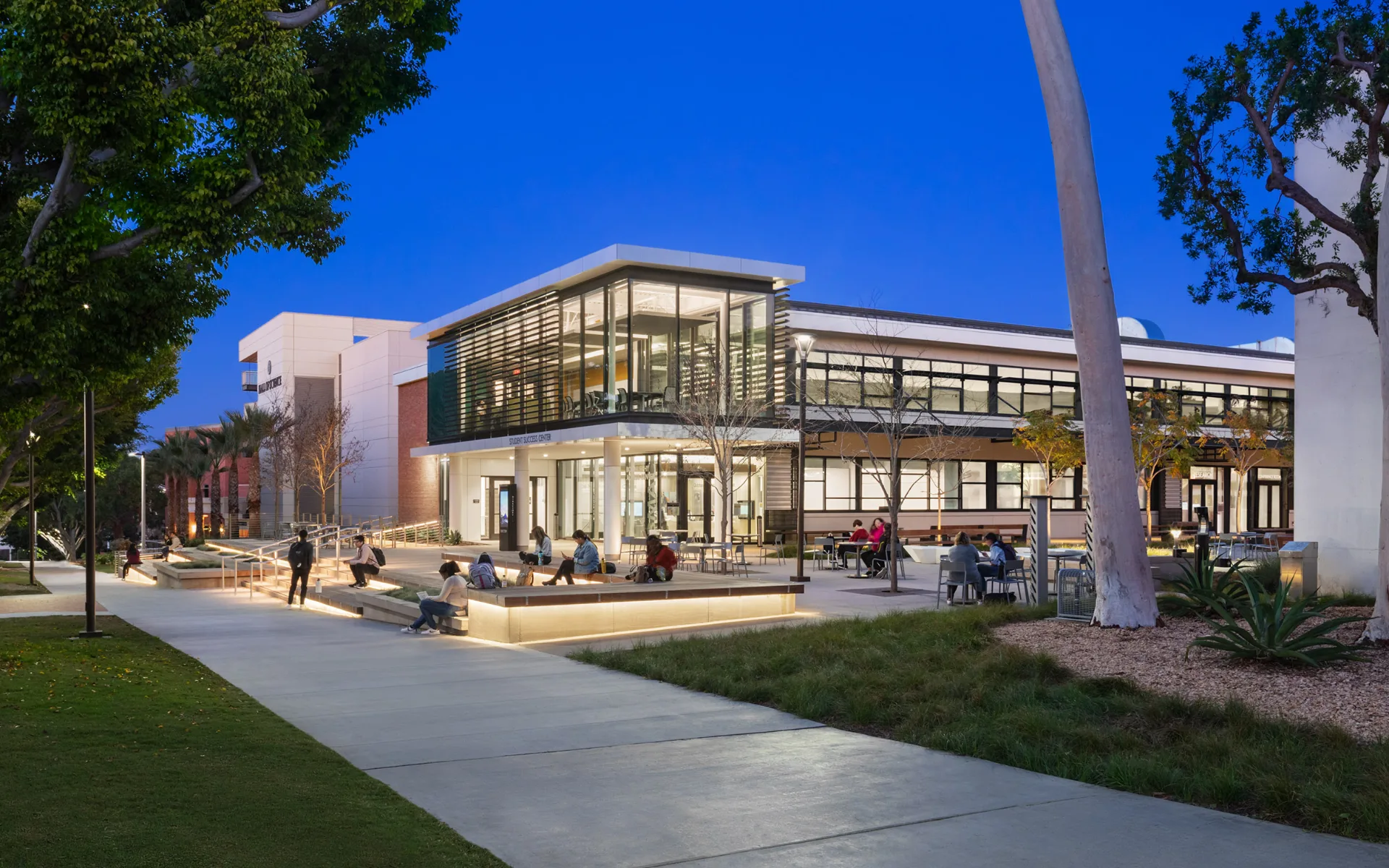
Long Beach is a 322-acre urban campus three miles from the Pacific, with 63 academic departments and programs, 25 research centers, five institutes, and four clinics. The institution's profile matters to this hire in a specific way: CSULB is one of only 27 institutions nationwide holding both the Carnegie 'High Research Activity' (R2) classification and the newer Opportunity Colleges and Universities (OCU) designation. The R2 label, first earned in 2022, recognizes high research spending and doctoral production; 139 institutions hold it. The OCU label, introduced in the 2025 Carnegie update, recognizes access and economic outcomes for students; 479 institutions hold it. Almost no one has both. In the California State University system, only five campuses do. The university described the dual designation as evidence that a Beach education advances both opportunity and innovation.
CSULB is also a Hispanic-Serving Institution with AANAPISI designation, a Minority Serving Institution whose student body is 61.2 percent underrepresented minorities with 49.5 percent receiving Pell Grants. The university ranks No. 3 among national universities for social mobility in the U.S. News and World Report figure the announcement cites, and the CSU system's 2025 economic impact study pegs CSULB's statewide economic impact at $2.4 billion. At a campus like this, the research office is the mechanism that connects faculty scholarship to the external money that sustains it.
The Ledger the New Hire Inherits
In fiscal 2025-26, CSULB submitted 257 proposals requesting $115.8 million and landed 115 new awards worth $35.86 million. The award count fell 26 percent from the prior year, and award value fell 27 percent. Total sponsored-program expenditures were $44.3 million, including $5.54 million in facilities and administrative (F&A) recovery — an effective rate of 14.3 percent. The university's fiscal 2025-26 year-end report is blunt about the cause: a difficult and rapidly changing external funding environment.
A single year says little about an office; swings in federal competitions move the totals more than management does. The five-year record is the better instrument. From fiscal 2021-22 through 2025-26, the campus submitted 1,414 proposals requesting $589.8 million and received 787 awards totaling $238.9 million, against $224.5 million in expenditures. That is a mid-sized research operation, not a flagship, and it has held up.
The prior year was bruising in a different way. Fiscal 2024-25 saw 17 federal awards terminated under new executive orders, erasing $3.3 million in unspent funding, including about $1 million in F&A recovery. The same report records the attempt by federal agencies to impose a 15 percent F&A cap, paused under court order.
Even as external awards fell, the university kept its internal research pipeline funded at roughly $2.27 million, including $1.7 million in research, scholarship, and creative activity (RSCA) support reaching 276 faculty. The IRB reviewed 619 submissions, including 333 new projects, 178 of them student-led. The IACUC oversaw 35 active protocols. The Office of Undergraduate Research Services enrolled 226 students in its research certificate program, and 108 students entered the campus research competition, with one taking first place at the statewide CSU competition.
The Federal Rules Are Being Rewritten
Few leadership searches carry a policy footnote this large. In February 2025 the National Institutes of Health announced a 15 percent cap on indirect cost recovery; the Department of Energy, National Science Foundation, and Department of Defense followed. Courts enjoined the caps, and in January 2026 a federal appeals court ruled the NIH cap unlawful. The administration declined to appeal by the April 6 deadline in the NIH and DOE cases, and NSF dropped its own appeal. NACUBO has a concise account of how the litigation ended.
None of that means the fight is settled. The fiscal 2026 appropriations bills block the Office of Management and Budget from altering negotiated rates, but they direct agencies to study alternatives — principally the Financial Accountability in Research (FAIR) model developed by the Joint Associations Group on Indirect Costs, a coalition led by former White House science adviser Kelvin Droegemeier. The American Institute of Physics has reported the model's mechanics in detail.
FAIR would replace negotiated percentage rates with two itemized categories. Essential research performance support (ERPS) would cover project-specific compliance, award oversight, information services, and facilities, billed in dollars rather than a percentage. General research operations (GRO) — institution-wide costs such as human resources and procurement — would be capped at 15 percent of the total award.
| Feature | Negotiated F&A system | FAIR model |
|---|---|---|
| Recovery method | Negotiated percentage of direct costs | Itemized project-level costs, no rate negotiation |
| Cost categories | Facilities and administration | Essential research performance support and general research operations |
| Administrative limit | 26 percent cap on administrative costs since 1991 | GRO capped at 15 percent of the total award |
| What changes on campus | One rate applied across projects | Costs must be tracked and justified per project |
For a campus recovering 14.3 percent, the reform debate is mostly about other institutions' rates. But the workload lands at CSULB regardless, because the university's year-end report flags FAIR implementation as a major operational challenge for the office's staff over the next two years.
A Thin Talent Pool for the Work
The people problem is as pressing as the policy problem. A conference project supported by the Society of Research Administrators International and the National Science Foundation's GRANTED program found that workload and stress, non-competitive salaries, limited advancement, and inconsistent job titles across the field are the main drivers of turnover in research administration — most acutely at public, minority-serving, and emerging research institutions. CSULB is two of those three, and an R2 that only earned the label in 2022, close enough to emerging that the retention math applies.
Respondents ranked competitive salaries, training and development, staff retention, recruiting, and clearer job descriptions as their top fixes. The labor market is genuinely tight: the National Council of University Research Administrators counts more than 8,600 members, and its magazine has documented offices receiving as few as one to three applicants for open positions.
The salary CSULB is offering sits above recent peer searches. Fresno State advertised $180,000 to $190,000 for a comparable AVP role in 2025, and Cal State Northridge advertised $180,000 to $203,004 in 2024. Whether that gap reflects the Southern California housing market or a deliberately aggressive posture is unknowable from the announcement; either way, it sets this search at the top of recent CSU comparators.
How the Search Runs, and How to Apply
The search is being run by Academic Search, with Dr. Cynthia Patterson and Dr. Maria Thompson, managing directors and senior consultants, as the contacts. Candidates who want a confidential conversation can send a CV to CSULB-AVPORSP@academicsearch.org. Nominations should include the nominee's name, position, institution, and email address. References will be requested only at a later stage, and all inquiries and nominations are held in confidence.
Applications go through the full profile on the Academic Search open searches page, and the announcement's direct apply link is on the job listing. The listing is also carried on AcademicJobs.com.
The posting formally closes December 22, six weeks after the priority date. That is the hiring equivalent of keeping the kitchen open after the last seating; the serious candidates are already at the table.
Because the search will weigh scholarship and administration together, candidates will want a CV that presents both cleanly. This guide to writing a winning academic CV is a useful place to start.
What the Announcement Doesn't Say
The announcement is precise about duties and dates and silent about two things a careful reader will notice. The university's fiscal 2024-25 year-end report was issued under an interim Associate Vice President, Barbara Taylor; the posting does not say what happened to the prior leadership or whether this search replaces the interim. And the announcement uses the name Office of Research and Sponsored Programs, while the campus's recent year-end reports carry the name Office of Research and Economic Development. The renaming, or the split, is not explained.
Neither omission is a scandal; searches routinely keep these details private. But whoever takes the job inherits the staffing, naming, and reporting decisions behind the title. The announcement does not ask the question that matters most, so it is worth asking here: can an office recovering 14.3 percent on its federal awards hold an R2 trajectory while Washington rewrites the rules it runs on? The committee will choose someone. The office's next year-end report will answer the rest.
- higher-education-jobs
- research-administration
- sponsored-programs
- associate-vice-president
- research-and-sponsored-programs