

At a glance
A fully funded PhD at Bond University's Institute for Evidence-Based Healthcare focuses on community antibiotic stewardship within the MRFF-backed EASSI-PC trial.
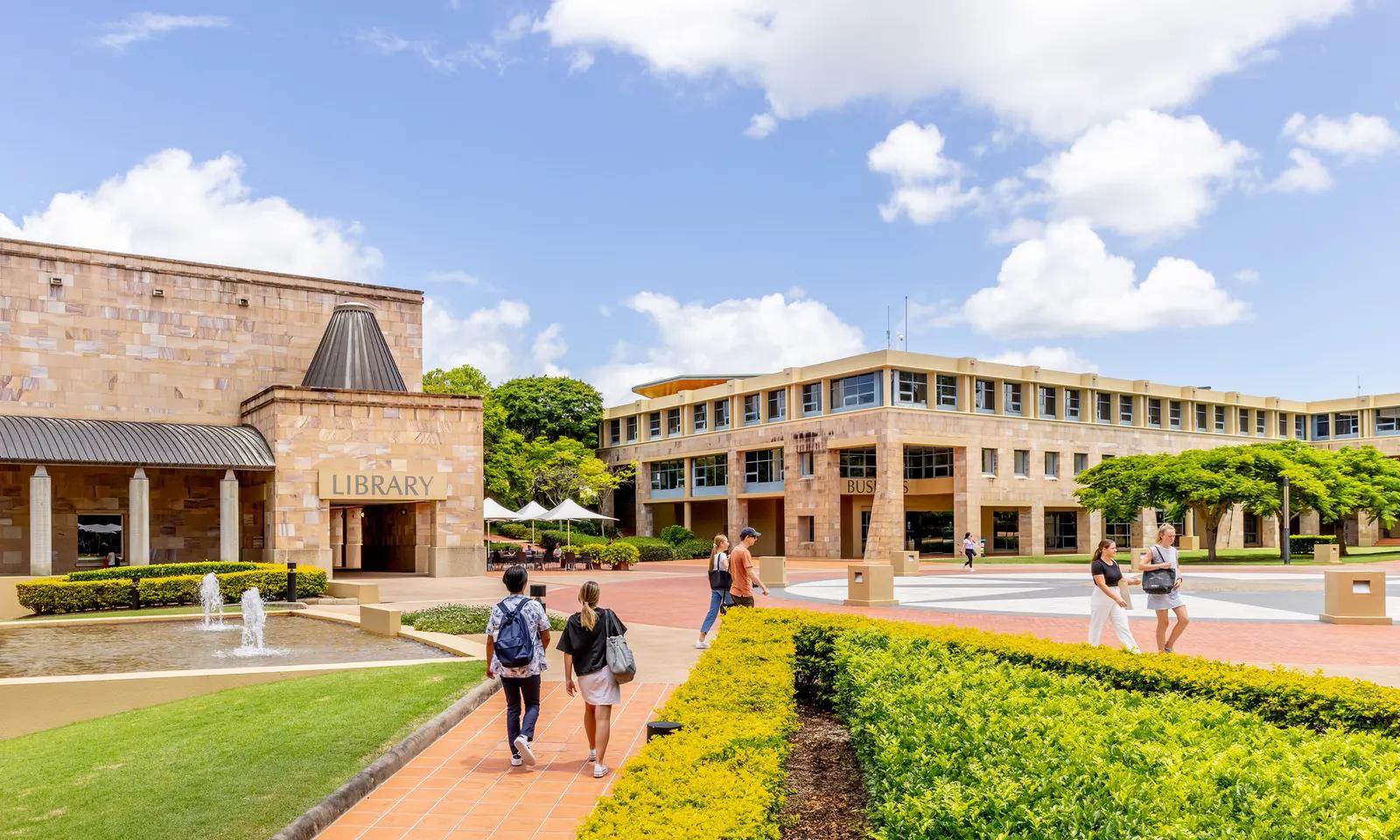
A mentee messaged me last month, half-hopeful and half-afraid. She's a nurse practitioner finishing a Master of Public Health, and she'd been circling the same Bond University advertisement for weeks without pressing submit. 'It says expression of interest,' she wrote. 'Does that mean it's not a real position?' Early in my consulting career I might have reassured her and moved on. Now I understand the real question underneath: what is a health graduate supposed to do with evidence-based healthcare research when the job ad speaks in grant codes and selection criteria? This listing is a genuine, fully funded opening — and it asks for a document that most applicants get wrong.
Bond University's Institute for Evidence-Based Healthcare (IEBH), within the Faculty of Health Sciences and Medicine, has called for expressions of interest for a Doctor of Philosophy candidate working on implementing antibiotic stewardship in the community. The project sits inside the EASSI-PC trial — the short name for Evidence-Based Antimicrobial Stewardship: Sustainable Implementation in Primary Care — funded through the Australian Government's Medical Research Future Fund (MRFF). The application window closes on Sunday 29 November 2026, and the successful candidate receives a living stipend and full tuition fee exemption.
What the EASSI-PC Project Actually Involves
The trial's aim is concrete rather than rhetorical: reduce antibiotic use for acute, self-limiting infections by helping general practices adopt strategies that already have evidence behind them, and strengthen that evidence where it's still thin. EASSI-PC is a national initiative led by four universities — Bond University, the University of Melbourne, the University of Newcastle, and Adelaide University — and it runs a cluster-randomised, pragmatic trial in Queensland, Victoria, New South Wales and South Australia.
The broad research questions around community antibiotic stewardship are laid out, but Bond is explicit that the incoming PhD candidate may refine them. That's worth pausing on. It means the doctorate is not a pre-fabricated data-entry task. The project description names the disease problem, and the student shapes the specific research questions, methods and outputs alongside supervisors Associate Professor Mina Bakhit, Professor Tammy Hoffmann and Emeritus Professor Paul Glasziou. A candidate who reads this notice carefully should see it for what it is — a funded invitation to design part of a national program of work, not an instruction sheet.
The Antibiotic Resistance Numbers Behind the Recruitment
Australia supplied 23.2 million antibiotic prescriptions through the Pharmaceutical Benefits Scheme in 2024, a 4.8% rise on the previous year. Over the same period, reports of critical antimicrobial resistance climbed by 25.2%. Those figures come from the Australian Centre for Disease Control's sixth AURA report, published in February 2026, and they're the reason a primary care trial like EASSI-PC exists.
GPs prescribe 87% of community antimicrobials. The CDC's snapshot found only 45% of antibiotics given after surgery were appropriate, and 34.7% of antibiotics prescribed to older Australians in residential aged care ran for more than six months. Professor Mark Morgan, Bond's professor of general practice and a chief investigator on EASSI-PC, described antimicrobial resistance as 'the silent pandemic of our age' — with an estimated 4.71 million deaths globally in 2021 associated with antibiotic resistance. The problem is not an absence of evidence about stewardship; it's that evidence does not reliably reach the consultation room. The new PhD sits exactly in that gap.
What the Candidate Will Do Day to Day
Bond's listing describes the work in terms of outcomes rather than hourly tasks. The candidate will work inside the EASSI-PC program, developing skills in implementation science and trial design, and contributing to research that influences how GPs prescribe for acute infections. Training runs through quantitative and qualitative methods, with direct involvement in a nationally funded MRFF program and exposure to stakeholders across clinicians, patients and policymakers.
The school's phrasing matters: 'The research questions are preliminary, and successful HDR candidates may have the opportunity to refine them.' In a field crowded with fixed project PhDs, that sentence signals intellectual room. A strong applicant will approach the EOI already thinking about which question they'd sharpen, not just repeating the advertisement back.
The Funding, and What It Actually Buys
The scholarship runs for three years and covers a living stipend, which is tax-free for full-time students, plus full exemption from tuition fees for up to four years of full-time study. There is also a project budget supporting the research itself, financial support to attend conferences, and possible support for article processing fees. The notice adds research and leadership training within the IEBH environment.
Stipends at Bond sit against a national backdrop worth understanding before you commit. The Australian Government's Research Training Program (RTP) minimum full-time stipend is $34,315 for 2026. The Council of Australian Postgraduate Associations has pointed out that this rate sank below the Henderson Poverty Line in September 2025, and an independent expert panel recommended a $50,000 base rate for priority fields including health and medical research. Bond's own Postgraduate Research Scholarship lists the same $34,315 annual stipend, indexed, with a 100% fee waiver for up to four years. A project-specific funded position such as this one usually sits more comfortably than a general university scholarship, because the grant has already been won and the stipend allocation is protected for the successful applicant for up to three years.
Who Should Read the Selection Criteria Twice
The essential requirements are a bachelor's degree in a health-related discipline — clinical training in medicine, nursing, pharmacy or allied health is preferred — plus demonstrated research capability, strong analytical and academic writing skills, evidence of authorship on scientific manuscripts, project management experience, an understanding of the Australian healthcare system, and the ability to engage professionally with clinicians and patients. The desirable list includes hospital experience, implementation science or health services research, conference presentations, and capacity to seek external funding with support.
The academic threshold matters. Bond's Doctor of Philosophy normally admits applicants with a Masters by Research, a Masters degree with a substantial research component, or an Honours degree at Class 1 or Class 2 Division A — or research experience the university deems equivalent, such as a research assistant role or a publication record. International applicants need to meet the university's English proficiency requirements for the health sciences doctorate.
One detail separated this listing from most health-services PhD calls I read. The essential list does not require a publication, but the writing demands — one-page statements, academic transcripts, an example of written academic work — reward people who can make evidence legible on a page. If your Honours thesis is your writing sample, don't submit it unrevised; run it past someone who reads for argument and clarity. If your past research sits in a research assistant role rather than a thesis, think about how to describe that work in terms an assessor can verify.
How the Expression of Interest Process Actually Works at Bond
An EOI at Bond is a genuine filter, not a formality. The university's research degrees page explains the sequence: you submit an expression of interest through the online application form with your academic history, research outline and supervisor preference; the Higher Degree Research Unit considers it; if successful, you're invited to complete the full application with a comprehensive Research Project Proposal. Not every EOI advances, and a successful EOI does not guarantee entry. You'll need to satisfy academic, residency and English requirements at the application stage too.
The whole path from EOI to letter of offer can take six to ten weeks. For a listing that closes on 29 November, that means the sensible candidates started weeks ago — but it also means a well-prepared EOI submitted now still has room to move through the full application before a January, May or September intake. Bond runs three semesters a year, and doctoral intakes are possible in each.
What the EOI Itself Must Contain
The advertised position asks for five things:
- A one-page written statement describing your interest in the research topic and your capacity to contribute
- A one-page written statement addressing the eligibility criteria
- A current curriculum vitae with the names and email addresses of two academic referees
- Your academic transcripts
- A sample of your written academic work, such as an Honours thesis, journal article or essay
Two one-page statements mean there is nowhere to hide. The first should connect the EASSI-PC problem — why stewardship evidence fails to reach general practice — to something you can actually do, backed by a line from your own training or research. The second should quietly answer every essential criterion in the order Bond lists it. A focused academic CV that leads with research experience reads far better than a long professional one.
What You Should Be Asking Before You Apply
Funded positions like this are scarce, but fit matters more than scarcity. Before you submit, ask the questions the advertisement cannot answer alone. Has the supervisory team recently taken candidates through to completion, and how do they scaffold the first year? Is the stipend rate confirmed for the full three years, or does it depend on annual grant milestones? How much of the project design is open to the candidate, given the trial protocol already exists?
These are not impolite questions. They're the questions a healthy research relationship can answer in an email or a short call, and they tell you whether a project offers growth or only labour. The early-career researchers who ask them tend to be the ones supervisors remember.
One Small Step to Take This Month
Pull your Honours or Masters thesis, choose the 300 words that best show you can build an argument from evidence, and email the Institute for Evidence-Based Healthcare team with one informed question about the EASSI-PC trial — ideally the one that shapes how you'd refine a research question. That single exchange takes an afternoon and turns a job ad into a conversation.

- phd-scholarships
- bond-university
- antibiotic-stewardship
- evidence-based-healthcare
- higher-degree-research