

At a glance
James Cook University is hiring a Manager, Analytics Capability & Data Delivery in Townsville. What the role involves, what it pays, and how to apply.
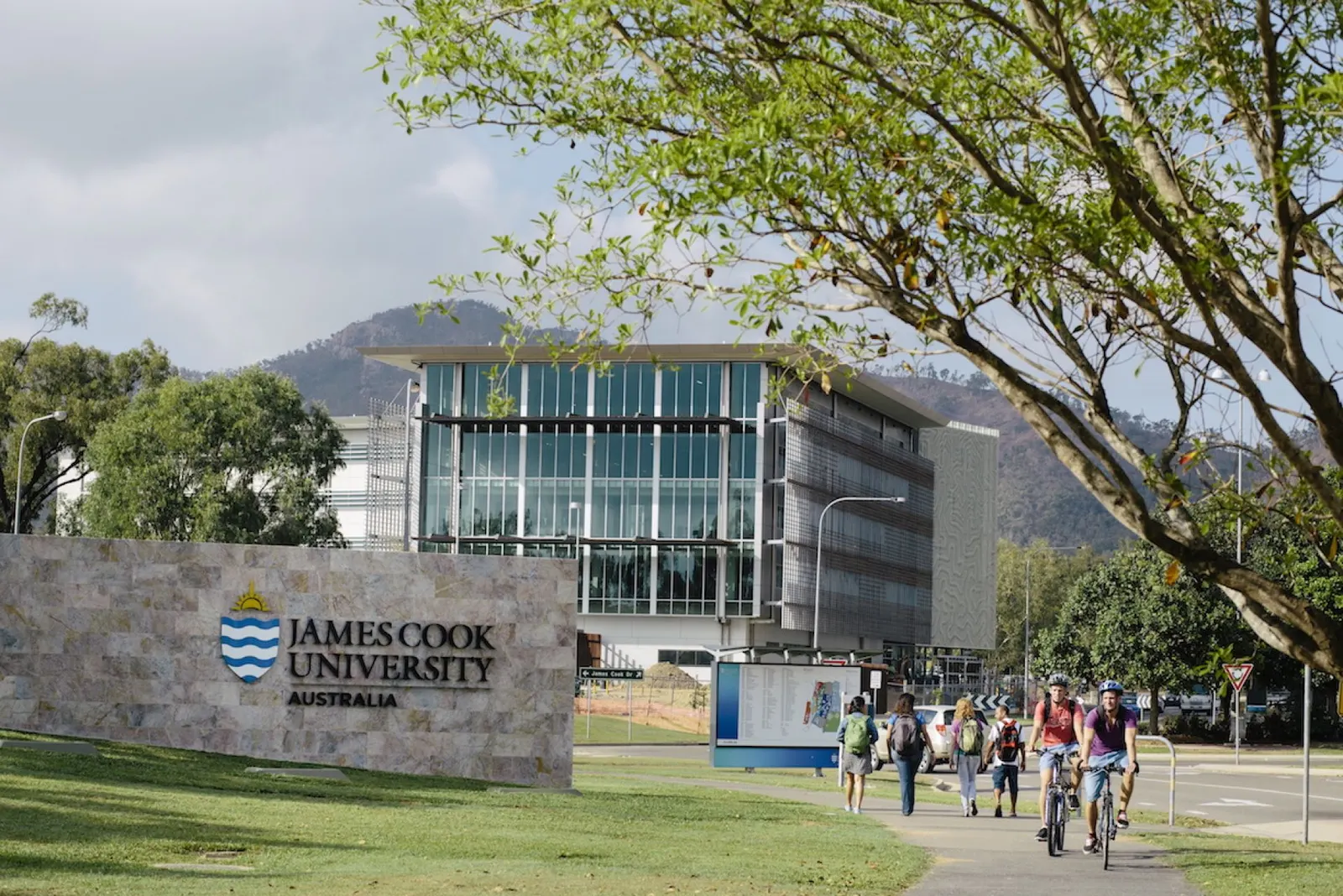
James Cook University (JCU) is advertising for a Manager, Analytics Capability & Data Delivery, a newly created continuing role based at its Bebegu Yumba campus in Douglas, Townsville. Applications close on 4 November 2026, and the position reference is 496091. It is the kind of hire that rarely makes headlines, but it tells you a fair amount about where a university is putting its money.
The timing is not accidental. JCU appointed Suneetha Bodduluri as its chief information officer in mid-2026, and in March it launched the Centre for AI and Data Science Innovation. A data delivery manager is the operational layer underneath both moves — the person who has to make enterprise data reliable enough that analytics and AI ambitions do not collapse into a pile of unreconciled spreadsheets.
What the role actually involves
The title bundles two jobs that universities sometimes keep separate. The manager leads a multidisciplinary data engineering team and is responsible for strengthening JCU's enterprise data capability, which in plain terms means the data warehousing, business intelligence and data pipelines that turn raw administrative records into reporting the university can act on.
The posting names four technical areas a candidate should bring: business intelligence (BI, the dashboards and reports built on warehouse data), data warehousing (the central stores where records from student, finance and HR systems are cleaned and combined), enterprise databases, and data pipelines (the automated flows that move and transform data between systems). Alongside that sits a people-management brief: developing staff, building partnerships across a large organisation and explaining technical concepts to people who do not need the implementation detail.
On qualifications, JCU wants a relevant postgraduate qualification, progress toward one, or an equivalent mix of education and experience. The role is full-time and continuing at 36.25 hours a week, based at the Douglas campus. Newly created roles rarely come with a settled playbook, so the first year is likely to be as much about defining what enterprise data capability means at JCU as about delivering it. Unlike some analytics roles that sit inside a single faculty, this one works across the whole university, which is usually code for arbitrating between several competing versions of the truth.
Why JCU is building this now
The new CIO is a signal worth reading. Bodduluri arrived from Service NSW, where she had been chief technology officer and, before that, acting CIO at the New South Wales Department of Customer Service; she holds a Public Service Medal. iTnews reported that the role replaced a chief digital officer position last held by Felipe Duncan, who left in mid-2025, and that overall ICT responsibility sits with chief operating officer of services Hilary Kavanagh. Hiring a CIO with an enterprise architecture and data background, then immediately hiring a data delivery manager underneath, is a sequence that suggests a coherent plan rather than backfill.
In March 2026, JCU launched the Centre for AI and Data Science Innovation (CADSI), a cross-disciplinary hub applying artificial intelligence and data science to tropical challenges. Its head, Professor Mostafa Rahimi Azghadi, named four impact domains — nature, health, economies and communities — and a set of core capabilities that includes AI and machine learning, advanced data science and analytics, remote sensing and spatial intelligence, and connected and autonomous systems, as set out in the launch announcement. A research centre can run on grant data and clever students. An enterprise analytics function cannot. That is what this manager role is being asked to supply.
The sector-wide pressure is measurable. CAUDIT, the peak body for technology leaders in Australian and New Zealand universities and research organisations, found in its 2024 Top Ten report that 52.6 per cent of respondents said data governance required immediate attention within two years, and 73.7 per cent said AI for teaching, learning and research needed to be addressed within five. The report put the problem plainly: higher education IT departments are data-rich, but their capacity to analyse that data and turn it into organisational value is not keeping pace with the amount of data generated. The Australian Universities Accord final report reinforced the point, with five of its 47 recommendations tied to the need for trusted data.
The Australian Computer Society's Digital Pulse report for 2025, prepared with Deloitte Access Economics, found 51 per cent of Australian workers lack at least one digital skill required for their role, with data analytics among the most common gaps, and estimated that closing the skills gap could add about $25 billion in economic value by 2035. Around 150,000 businesses are already dealing with significant or severe digital capability shortages, according to the society's release.
What the market pays
JCU has not published a figure for this role; the advertisement describes it as an attractive competitive remuneration package plus employer superannuation of up to 17 per cent. The base rate, for comparison, is that analytics manager roles at Australian universities currently advertise base salaries in roughly the $135,000 to $165,000 range. Queensland University of Technology's recent Analytics Manager position, a comparable HEW Level 10 role, listed a base of $145,985 to $163,281 and a total package of $172,761 to $193,229 once 17 per cent superannuation and 17.5 per cent recreation leave loading were counted.
The exception runs higher. The University of Queensland publishes an indicative average of $170,000 to $190,000 a year for analytics manager roles, and SEEK's career data has experienced analytics managers clearing $150,000 as they take on strategic responsibility. JCU's 17 per cent superannuation is the more important number for anyone doing the maths: it sits well above the 12 per cent superannuation guarantee that became the legal minimum in Australia on 1 July 2025, and it compounds on a continuing appointment.
A data engineer I worked with years ago — call her Priya — spent the better part of a year rebuilding a university's student reporting layer after dashboard sprawl had left deans pulling enrolment numbers from six different sources of truth. The person who eventually fixed the problem was not the best coder in the room. She was the one who could say no to a bad data request, explain why in one paragraph, and keep the pipeline work on track. That combination of technical judgement and the nerve to manage demand is what a role like this is actually buying.
What Townsville means for the decision
The campus sits in Douglas, about 11 kilometres from the Townsville CBD and next door to the Townsville University Hospital. That location matters for a practical reason: it is where a data manager's household is likely to look for housing first.
Housing is cheaper than south-east Queensland but no longer cheap in absolute terms. Opteon's market update for the first half of 2026 put the Townsville City local government area median house price at about $700,000, up roughly 9.4 per cent on the 2025 annual median of $640,000, with Douglas itself at $710,000, as detailed in the firm's report. Rental vacancy sits near 0.9 per cent and median weekly rents run around $540 to $550 depending on the data source. For context, Brisbane's median house price is above $1 million and the Sunshine Coast's sits near $1.29 million, so Townsville still reads as a discount, but a tight rental market means relocation needs planning rather than optimism.
JCU operates from Townsville and Cairns, plus an international campus in Singapore, and Queensland's capability directory counts more than 700 research staff across its tropical focus areas. The university reported five stars for graduate employment in the Good Universities Guide for eleven consecutive years as of its 2021 annual report. None of that changes the day job, but it frames the institution: a regional university with a national research footprint, hiring as though it intends to compete on data.
What this means for your application
The benefits list is where university roles usually beat private-sector offers on total value even when the base looks unremarkable. JCU's advertisement includes:
- Employer superannuation of up to 17 per cent with UniSuper
- Five weeks of annual recreation leave plus leave loading
- 15 days of paid sick and carers leave a year
- Up to six months of paid parental leave
- Flexible working options
- Staff study assistance and paid study leave
- Fitness Passport and a corporate health insurance discount
- An employee assistance program, plus on-site childcare and medical services at the Townsville campus
Read the selection criteria against the four technical areas rather than against job titles. A data architect who has spent ten years in financial services can do this job if the cover letter maps their warehousing and pipeline experience onto university problems such as student load forecasting, retention reporting, government compliance and executive dashboards. The advertisement asks for the ability to work through ambiguity, lead complex projects and give clear advice, which is a way of saying the successful candidate will spend as much time managing stakeholders as managing schemas.
The named contact for enquiries is Daniel Zamykal at daniel.zamykal@jcu.edu.au. The posting reference is 496091.
How to apply
Applications go through the JCU careers portal rather than a recruiter: create an applicant account, complete the form, upload a resume and submit a cover letter that addresses the key requirements. The full role description is on the JCU careers page, and the listing is also summarised on AcademicJobs. JCU says all applicants will be contacted with an outcome once the process is finalised, and it encourages people from all backgrounds who meet the requirements to apply.
Set a reminder for 4 November 2026. Before you open the application form, write a one-page cover letter that maps your most recent projects onto the four technical areas in the advertisement — business intelligence, warehousing, databases and pipelines. If you can describe the last time you made a messy data source trustworthy enough for someone to act on, you are most of the way toward what JCU is asking for.
- higher-education-careers
- university-jobs
- james-cook-university
- townsville
- queensland-jobs