

A true inspiration to all learners.
About John
John Allen is an Associate Professor of Meteorology in the Department of Earth and Atmospheric Sciences at Central Michigan University. Originally from Sydney, Australia, he completed his B.S. in Earth Sciences focusing on Meteorology and Applied Mathematics at the University of Melbourne in 2007, B.S. Research Honours in Meteorology in 2008, and Ph.D. in Earth Sciences (Meteorology) in 2013 from the same institution. Following his doctorate, he served as Postdoctoral Research Scientist and Research Associate at the International Research Institute for Climate and Society, Columbia University from 2013 to 2016 before joining Central Michigan University in the summer of 2016. He currently holds the position of Associate Director for the NSF Artificial Intelligence Institute for Environmental Sciences (AI2ES) and leads research on severe convective storms.
Dr. Allen's research interests encompass global severe weather observations and modeling, connections between severe weather and the climate system, machine learning applications for severe weather prediction, and delivering actionable risk and hazard resilience information to communities. He co-leads the NSF-funded ICECHIP hail field campaign scheduled for summer 2025. His scholarly impact is evidenced by numerous awards, including the 2020 National Science Foundation CAREER Award, 2019/2020 Central Michigan University Provost’s Award for Outstanding Research and Creative Activity, 2019 CMU College of Science & Engineering Award for Outstanding Research, 2022 American Meteorological Society STAC Outstanding Early Career Award from the Weather Analysis & Forecasting Committee, 2022 AMS Editor’s Award for Reviews in Weather and Forecasting, Monthly Weather Review, and Journal of Applied Meteorology and Climatology, 2015 AGU Editors' Citation for Excellence in Refereeing in Geophysical Research Letters, and 2015 co-recipient of the European Severe Storms Laboratory Heini Tooming Award. Notable publications include Das and J. T. Allen (2024) "Bayesian Estimation of the Likelihood of Extreme Hail Sizes over the United States" in NPJ Natural Hazards; Nixon et al. (2024) "Cell Mergers, Boundary Interactions and Convective Systems in Cases of Strong Tornadoes and Large Hail" in Weather and Forecasting; Schmidt et al. (2024) "Gridded Severe Hail Nowcasting Using 3D U-Nets, Lightning Observations and the Warn-on-Forecast System" in Artificial Intelligence for the Earth Systems; Taszarek et al. (2021) "Global Climatology and Trends in Convective Environments from ERA5 and Rawinsonde Data" in NPJ Climate and Atmospheric Science; and Zhou et al. (2021) "How Many Types of Severe Hailstorm Environments Are There Globally?" in Geophysical Research Letters. His work advances climatology of hail, tornadoes, and convective storms amid climate variability and change.
Trending Geoscience Research & Publication News

Academic Mobility After US Funding Freezes | AcademicJobs
Photo by Jorge Fernández Salas on Unsplash

Beach Science: 7 Things to Teach Kids | AcademicJobs
Photo by Caroline Pasarin on Unsplash

When Does Fog Happen? Timing and Conditions | AcademicJobs
Photo by Nathan Anderson on Unsplash

Pumice Research Reveals Unique Qualities | AcademicJobs
Photo by Amin Hasani on Unsplash

Mongibello Etna History and Research Findings | AcademicJobs
Photo by Julia Taubitz on Unsplash

Tungsten Wolfram Explained: Properties and Supply | AcademicJobs
Photo by Güleren E. on Unsplash
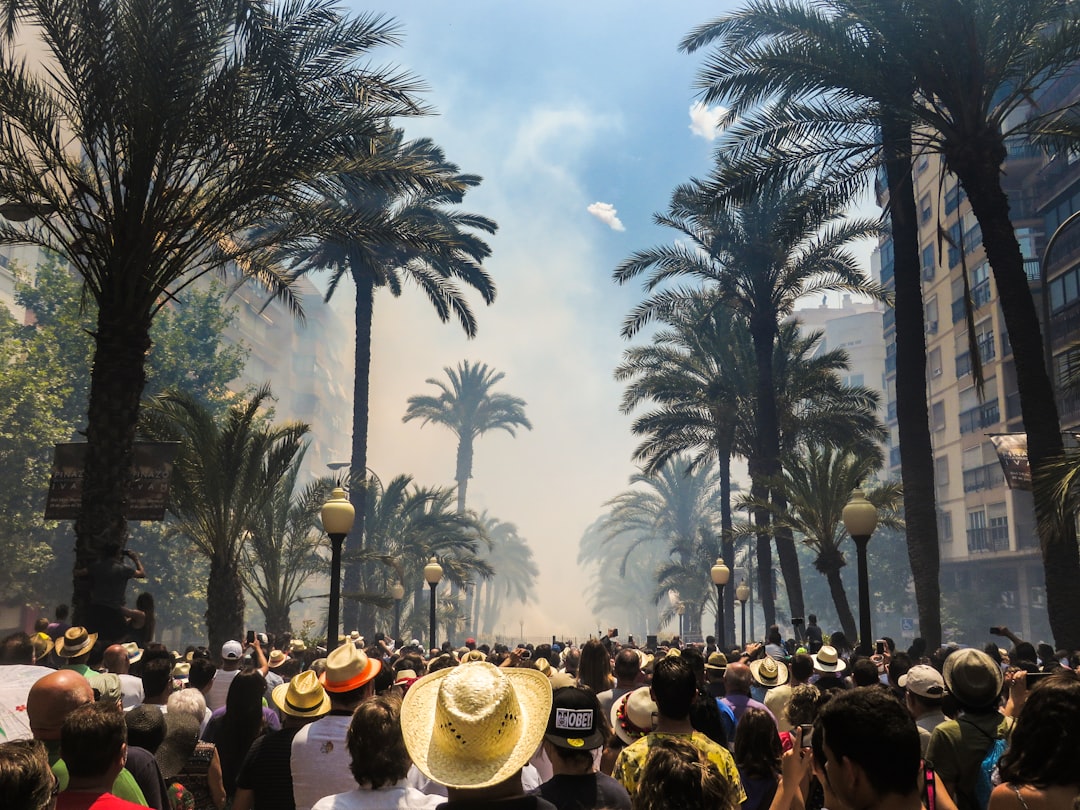
Extreme Heat Records Spain: University Research Impacts 2026
Photo by Lucas Davies on Unsplash