
Monterey Peninsula College is not hiring one history instructor. It is building a part-time faculty pool, a standing list of qualified candidates the department can call when U.S. History, Western Civilization, or World History sections open. That distinction changes what you are applying for and how quickly you need to move.
The posting asks for temporary, part-time history instructors and stays open through the college's online application portal. You will not be interviewing for a single vacancy. You will be asking the History Department to keep your materials close for the day a section fills late or a chair needs an adjunct in the middle of the semester.
That is not a lesser opportunity. In California's 116-college community college system, part-time faculty teach a large share of introductory courses, and pools are the standard front door. But the posting is written for compliance, not for candidates. Below is what the listing means once you read it like someone who has worked community college hiring.
What a Part-Time Faculty Pool Posting Actually Means
A part-time faculty pool is not a full-time search or a tenure-track appointment. The college keeps the requisition open, reviews applications as needed, and draws from the list when a department chair gets a late enrollment bump or a planned course needs coverage. You could be contacted a week before classes start, or you could sit in the pool for two semesters without a call.
- The posting usually stays open for months and may span multiple terms.
- Applications are reviewed on a rolling basis when a teaching need appears, not on a fixed interview schedule.
- Being approved for the pool does not guarantee you will be offered a class.
- Your application may be considered for fall, spring, and summer teaching assignments that fit your qualifications.
The practical result: if you meet the minimum qualifications and get your materials in early, you put yourself on a shortlist before most people even notice the pool exists. The waiting is hard; the advantage is that the screening can happen long before a specific course is advertised.
The Minimum Qualifications That Actually Get You Screened
California community colleges set minimum qualifications by discipline through the Chancellor's Office. For history, the standard is a master's degree in history, or a bachelor's degree in history with a master's degree in one of the related fields the state lists, which include political science, humanities, geography, area studies, women's studies, social science, and ethnic studies. The California Community Colleges Chancellor's Office publishes the full Disciplines List, and most districts copy the state language directly into the job ad.
If your degrees do not match the language exactly, you can still qualify through a district equivalency process. That means submitting transcripts, course descriptions, and sometimes professional experience to an equivalency committee. Do not skip this step just because your diploma says something adjacent. The committee can approve disciplines like American Studies, African American Studies, Chicana/o Studies, or a combination of coursework and teaching experience if the evidence supports it.
The work itself will likely be survey teaching: U.S. History to 1877, U.S. History since 1865, World History to 1500, World History since 1500, Western Civilization, California History, and occasionally specialized courses the department needs. Community college history instruction is undergraduate teaching, not research. The committee will care about your ability to run a room of students with mixed preparation, grade cleanly, and meet deadlines.
What the Role Pays - and What It Doesn't
Part-time community college faculty in California are paid by the lecture hour, not by a flat course fee in most districts. A three-unit history survey may count as three lecture hours per week on the salary schedule, but the schedule rarely accounts for all the hours of grading essays, responding to students, writing lectures, and holding office time. Pay varies by district and by your placement on the local salary schedule, so the same job can pay significantly more or less depending on how many units the college will assign and what step you qualify for.
Monterey Peninsula College posts its salary schedule through its human resources office, and the application portal may show a range. Candidate questions about pay, benefits, and unit limits are fair to ask before you accept a section. Benefits eligibility for California part-time faculty depends on the number of hours worked, district policy, and applicable federal and state rules. Some part-time instructors qualify for benefits through the California State Teachers' Retirement System (CalSTRS); health coverage is often tied to the Affordable Care Act's 30-hour threshold, which is one reason districts cap adjunct loads.
The labor conditions matter because they shape how you should read the posting. You are building a relationship with a department, not applying for a stable line. The California Federation of Teachers (CFT) and the Faculty Association of California Community Colleges (FACCC) have lobbied for better pay and clearer paths to full-time work for part-time instructors. You can still build a strong teaching record at a school like Monterey Peninsula College, but you should be clear-eyed about the structure.
How to Apply Without Getting Buried in the Portal
The application goes through the college's online applicant tracking system, and the link in the posting leads to the official MPC job page. The software will not chase you for missing documents. If your packet is incomplete, it may sit unread until a screening happens.
- Use the exact name on your official transcripts, including maiden or former names, so the system can match records.
- Upload all postsecondary transcripts, even for degrees that seem unrelated; minimum qualification review often requires the full record.
- Answer supplemental questions in complete sentences. The first human reader may use those answers to decide whether to open your CV.
- Write a cover letter that names the specific survey courses you can teach now, not someday: U.S. History, World History, Western Civilization, California History.
- Mention your availability for evening, morning, online, or hybrid sections if any of those fit; chairs need that detail.
- If you need equivalency, submit the equivalency request at the same time as your application, not later.
Use the official application link to confirm current requirements before you spend an hour preparing documents. The posting also appears on AcademicJobs.com for quick reference.
What Gets an Application Noticed
Most screening committees review minimum qualifications first and teaching experience second. They are not looking for a research program or a long publication list. They are looking for evidence you have taught a similar survey course to a classroom that included students testing below college level, veterans, working parents, and dual-enrolled high school students.
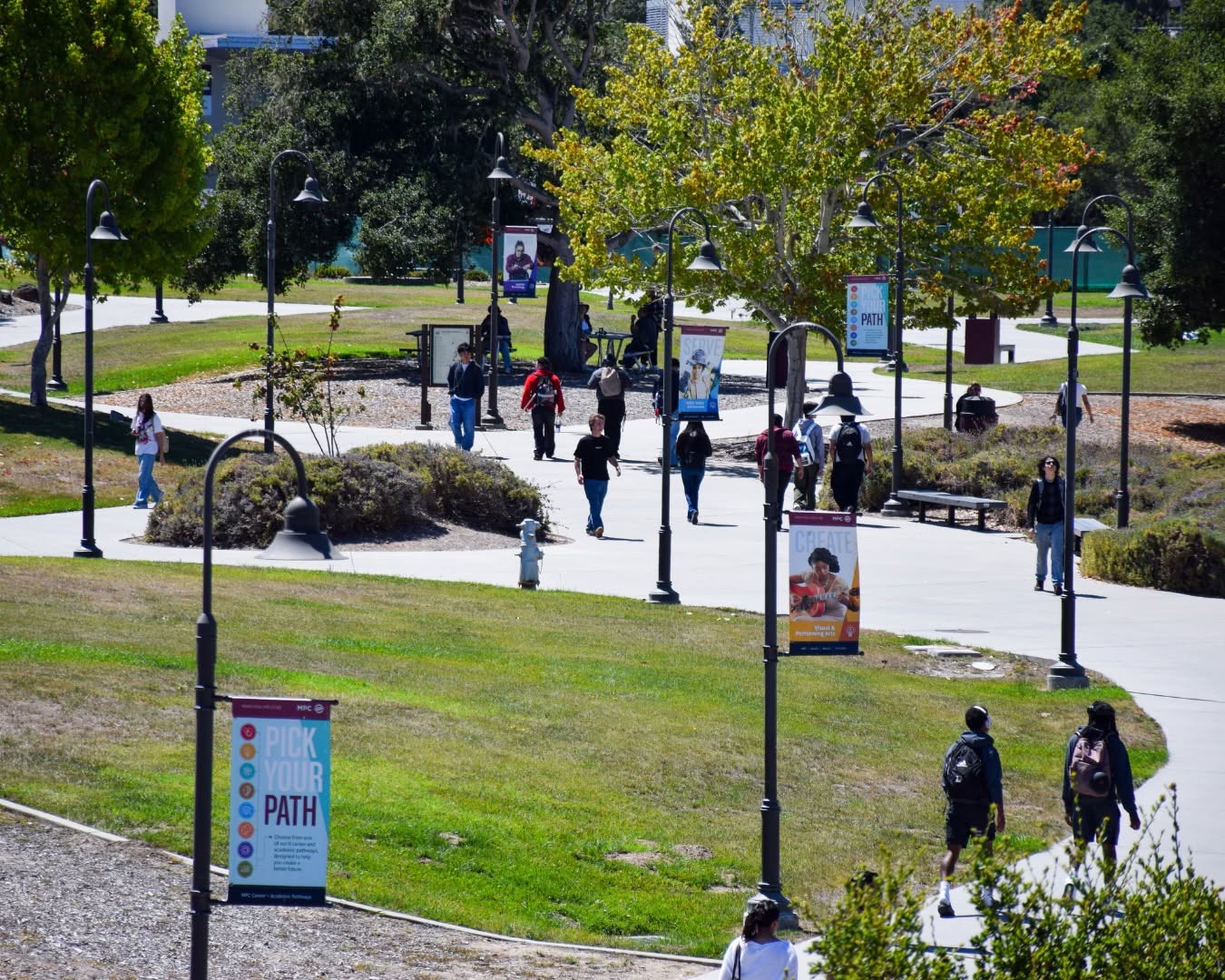
Monterey Peninsula College sits in a coastal community with a mix of transfer-focused students, returning adults, and students taking classes while working. A cover letter that shows you understand that mix will separate you from the generic applicant who pastes the same paragraph into every community college ad.
If you have taught online or used a learning management system like Canvas, say so plainly. California community colleges expanded online and hybrid offerings after the pandemic, and part-time pools often need instructors who can teach a course that meets once a week or runs asynchronously.
The Reality of the Pool
You may apply and hear nothing for months. That is not a personal rejection; it is the structure of a standing pool. But the pool only works in your favor if your materials are ready the day a chair needs someone. In many community college departments, the final hiring decision happens in the last two weeks before the term begins because enrollment numbers settle late.
That means the candidate who applied six months earlier with complete transcripts, a clear note about equivalency, and a cover letter naming available courses is the one who gets the call. The candidate who waits for a separate, course-specific ad often misses the assignment.
You should also update your application if you add a semester of teaching, a new credential, or a new availability pattern. Pools can pull applications from the same file for a year or longer, and an update can move you back to the top of a chair's list. Check MPC's employment page for current openings and human resources contact information.
Take This Action Before You Close the Tab
Pull your postsecondary transcripts and open the district's equivalency form if your degree does not exactly match. Then open the official posting, confirm the minimum qualifications, and submit the application through the apptrkr portal. Check that your phone number and email are current; some part-time offers arrive with a very short window to respond.
Your file in a faculty pool is a standing application to a department that hires late and needs qualified people on short notice. Apply now, keep your documents complete, and update your availability whenever it changes.



Discussion
Be the first to comment on this article!
You’ll be asked to sign in before your comment is posted.