

At a glance
James Cook University is advertising a Technical Officer (Anatomy and Pathology) role in Townsville, supporting human and veterinary anatomy teaching. Here's the salary range, selection criteria, vaccination requirements and how to apply before 22 November 2026.

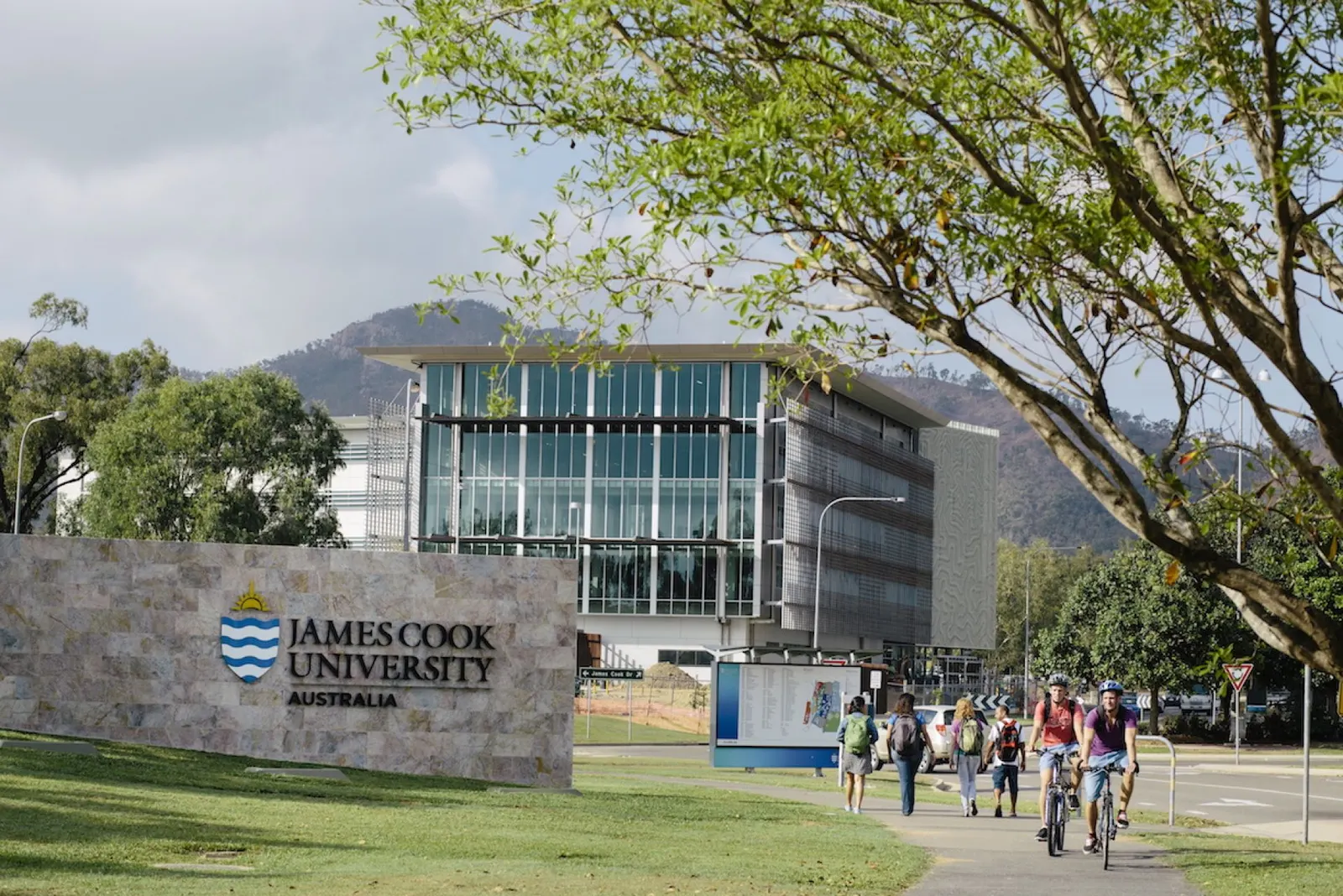
James Cook University (JCU) is hiring a Technical Officer (Anatomy and Pathology) for its Townsville Bebegu Yumba campus, and the advertisement makes clear this is not a background role. It supports practical teaching across human anatomy plus veterinary anatomy and pathology. That means setting up specimens for dissections, packing down after classes, maintaining storage for cadaveric material and keeping the facilities clean enough for audit day and safe enough for students.
The deadline is Sunday 22 November 2026 at 11:55pm. The university has flagged that the available hours may be arranged as one full-time position of 36.25 hours a week and one part-time position of roughly 14.5 hours, or two part-time positions split between successful applicants. That flexibility matters because anatomy technical work is often filled by people already inside mortuaries, pathology labs or veterinary departments who can't always step straight into full-time hours.
Why the role exists
JCU runs one of Queensland's active body donation programs. Since the Human Bequest Program began in 2005, more than 360 North Queenslanders have donated their bodies for teaching and research. The university accepts an average of 25 to 40 whole-body donors a year depending on the period counted, and its skeleton program supports the education of approximately 1,000 students per week. Whole-body donations help train future doctors, physiotherapists, dentists, occupational therapists, nurses, pharmacists and research scientists. The technical officer is one of the people converting those gifts into usable teaching resources under the Queensland Transplantation and Anatomy Act 1979 and its 2017 Regulation.
Donated bodies don't arrive ready for class. They need transport, embalming, storage, tracking and careful preparation, and the bulk of donations are used for long-term anatomical teaching. That's the base rate. The exception is a smaller share diverted to short-term surgical training, where surgeons rehearse procedures on donors who can't be hurt.
What the technical officer actually does
The duties are varied but they sit under two obligations that never really switch off. One is preparation: setting up equipment, anatomical specimens, consumables and teaching materials before practical classes, intensives and workshops, then packing everything down and returning it to safe storage. The other is the care of specimens before, during and after use. That covers preparation, preservation, handling and storage of human and animal anatomical material, with the flow-on administrative work of accurate recordkeeping. Wrapped around both is the unglamorous operational layer of equipment checks, cleanliness, hygiene, waste management, stock control, procurement and asset management.
A colleague who worked in a university mortuary — call her Dr. R — used to say the difference between a calm practical class and a failed audit usually isn't the dissection; it's the bin schedule and the fridge log. That's exactly how safety and compliance are framed here: hazard reporting, incident reporting, required training and assistance with audits aren't extras. They're as much part of the job as the specimen trolleys.
If you're after more senior duties, note that JCU has advertised related roles with heavier specimen preparation, including a Technical Advisor (Anatomy and Pathology) that specifies embalming, dissection and prosection. The Technical Officer role is a step down from that, working under appropriate direction and established procedures, which makes it a realistic entry point for someone with solid laboratory or mortuary experience who isn't yet ready to run whole programmes.
Who should apply, and what strict requirements catch people late
Qualifications can be a degree in a relevant field or an equivalent combination of education and experience. JCU wants demonstrable practical experience in anatomy teaching, research or clinical laboratories, including preparing anatomical materials, handling human or animal specimens and using and maintaining technical equipment. Organisational skills, problem-solving, comfort with records and enough digital fluency to manage the asset databases all count.
Base rate first: most successful applicants will arrive from a pathology lab, a mortuary, a veterinary practice or another university anatomy facility. The exception is a candidate from a strong adjacent laboratory background who shows a genuine willingness to work respectfully with cadaveric material and has the manual handling history to back it up. JCU says that willingness is non-negotiable, and the role includes the physical side of moving specimens and equipment.
The mandatory checks are where late applications fall over. The selection criteria include the following.
- Hepatitis B vaccination with demonstrated serology
- Willingness to acquire Q fever vaccination and other role-specific vaccinations on reasonable notice
- A current C Class Queensland driver's license
- First Aid and CPR certification plus a current Working with Children Blue Card
Q fever vaccination is a two-appointment process in Australia — a pre-vaccination blood test and skin test, then the vaccine seven days later, with full immunity only 15 days after the second visit. If you wait until the week before applying, you're already behind. The Blue Card and First Aid can take time to obtain or renew, so check them early.

Pay, benefits and the Townsville housing maths
JCU's public summary for this Technical Officer listing doesn't publish a single pay band, but the university's related Technical Advisor (Anatomy and Pathology) role, advertised in November 2026, lists HEWL 6 at $90,821 to $98,369 plus up to 17% superannuation. An earlier Laboratory and Technical Support Officer (Human Anatomy and Pathology) advertisement carried a lower band of $65,650 to $74,462. A reasonable expectation for the Technical Officer sits in the lower to middle of that spectrum, depending on duties and the successful candidate's experience. The 17% employer superannuation with UniSuper is significant — it adds close to $15,000 a year on a $90,000 base.
- Five weeks of annual recreation leave plus leave loading
- 15 days paid sick or carer's leave per year
- Up to six months paid parental leave
- Up to 17% employer superannuation with UniSuper
- Flexible working options, staff study assistance and paid study leave
- Fitness Passport, an Employee Assistance Program, on-site childcare and medical services at the Townsville campus
Relocation assistance may be considered for some related JCU technical roles, though this particular listing doesn't spell it out, so ask Dr Amanda Norton before assuming. JCU's November 2026 Technical Advisor advertisement confirms the HEWL 6 band for the higher-level role.
What Townsville costs now, for anyone weighing a move
Townsville has become one of Australia's fastest-rising property markets. According to Defence Housing Australia's market snapshot, the city's median house price reached $635,000 in the December 2025 quarter, up more than 22 per cent year-on-year. Rental vacancy sits around one per cent, which is well below the two to three per cent considered balanced. Median weekly rents were around $560 for three and four-bedroom houses and $390 for units at that point.
That's a genuine cost-of-living shift for a technical officer on a HEWL band in the $60,000s to $90,000s. See Defence Housing Australia's Townsville spotlight for the underlying council data. The counterweight is lifestyle: JCU sits at the gateway to the Great Barrier Reef and tropical North Queensland, so the full package, rather than the take-home pay alone, often becomes the deciding factor.
The donor program behind the job
Since 2005, JCU's Human Bequest Program has accepted body donations from people who live within 400km of Townsville, are over 18, and meet a set of medical and practical conditions. Donors can be rejected for reasons including post-mortem examinations, certain infectious diseases, body size outside the 40 to 90 kilogram range and storage limits. University staff collect, embalm and prepare the bodies, which are then retained for teaching, sometimes for up to ten years.
JCU's Human Bequest Program page sets out the consent process, and an ABC News report from 2022 interviewed both a prospective donor and the program coordinator about why the year-round work matters. For this Technical Officer role, the day-to-day connection is real: you may assist with the preparation, handling, recordkeeping and storage of donated bodies and tissues, always under the ethics, safety and security procedures the legislation requires.
What this means for your lab
If you already work in a lab or mortuary and you're reading this because your institution can't find people, the JCU advertisement is part of a wider pattern. Training pathways for technical staff are uneven nationally. Tasmania cut its TAFE laboratory technician course in late 2025, leaving schools and labs scrambling, while Queensland invested $4.5 million in a new clinical skills lab at Loganlea TAFE to train more pathology collectors and lab workers. That mismatch means experienced candidates can often move earlier and negotiate harder than they expect.
For a lab manager, the practical takeaway is redundant documentation. The moment a departed technician leaves with the only knowledge of where the formaldehyde is stored or how the donor register gets updated, the next hire inherits a liability, not a workspace. A shared folder, one README per process and a named understudy for each critical task cost less than fresh embalming re-work. For an applicant, the same logic works in reverse: if you can say precisely how you fixed a broken process, you'll stand out from people who only list competencies.
How to apply before 22 November
The path is straightforward but the selection criteria require deliberate answers. Go to the JCU careers portal, create an applicant account and complete the application form. After that, upload your resume and a cover letter that addresses both the key requirements for success in the Role Profile and the selection criteria in the advertisement. Do not skip the cover letter. A CV alone rarely shows why you can work respectfully with donor material and handle the physical side of the job.
If you need a structure for that letter, our guide to writing a winning academic CV includes prompts that work just as well for professional technical roles. Inquiries go to Dr Amanda Norton at Amanda.norton1@jcu.edu.au. The full role and application portal are at careers.jcu.edu.au.
One step to take this week
Open the role profile and list each selection criterion beside a specific example from your own lab or mortuary history. If one of those criteria is Q fever vaccination, book the pre-vaccination screening now; it requires two appointments seven days apart and full immunity takes 15 days after the vaccine. That's the most common avoidable reason candidates can't start when a department wants them. The deadline is Sunday 22 November at 11:55pm, but the vaccination clock starts the day you call the GP.
- higher-education-jobs
- james-cook-university
- queensland
- technical-officer
- townsville