Assistant or Associate Professor Space Biology / Astrobiology
Job No: 539530
Work Type: Full Time
Location: Brevard
Categories: Biology/Life Science, Agricultural Sciences, Physical/Mathematical Sciences
Department: 60100000 - AG-MICROBIOLOGY - CELL SCI
Job Description
Classification Title:
Ast/Aso Prof
Classification Minimum Requirements:
Candidates for this rank shall hold the highest degree appropriate to their field. A candidate shall be expected to demonstrate successful experience pertinent to the position they are being recommended and have demonstrated qualities relevant to the goals of the academic unit in which they will be employed.
Job Description:
The http://ifas.ufl.edu is creating an environment that affirms community across all dimensions. If an accommodation due to a disability is needed to apply for this position, please call 352-392-2477 or the Florida Relay System at 800-955-8771 (TDD) or visit https://hr.ufl.edu/manager-resources/recruitment-staffing/institutional-equity-diversity/ada-and-accessibility-services-for-uf-employees-and-job-applicants/ .
This is a 9-month tenure-accruing position that will be 30% teaching (College of Agricultural and Life Sciences) and 70% research available in the Microbiology and Cell Science Department, Institute of Food and Agricultural Sciences (Space Life Sciences Laboratory, Merritt Island FL). Duties will include teaching a 3-credit course in space life sciences to students at the undergraduate and graduate levels annually, training PhD students, and contributing to the graduate curriculum. The incumbent will also assist with curriculum development for new BS, MS, and PhD programs in space sciences currently being formed across campus and teach courses within these programs. Research related to the fields of space biology, space biomanufacturing, and/or astrobiology (e.g. extremophile research) are of particular interest. Tenure will accrue in the Department of Microbiology and Cell Science. The faculty member will seek contract and grant funding actively to support their program, with federal competitive grant support being particularly important. The faculty member will engage in extension activities in their program area.
The successful candidate will engage in scholarly activities related to instruction, including teaching undergraduate and/or graduate courses, advising and mentoring undergraduate and graduate students, participating in curriculum revision and enhancement, seeking funding for the teaching program, supervising undergraduate and graduate research and creative work, publishing teaching-related scholarship, producing learning tools, and engaging in professional development activities related to teaching and advising. Faculty are encouraged to support and participate in the CALS Honors Program, distance education, and international education.
Because of the IFAS land-grant mission, all faculty are expected to be supportive of and engaged in all three mission areas—research, teaching and extension—regardless of the assignment split specified in the position description.
Background Information:
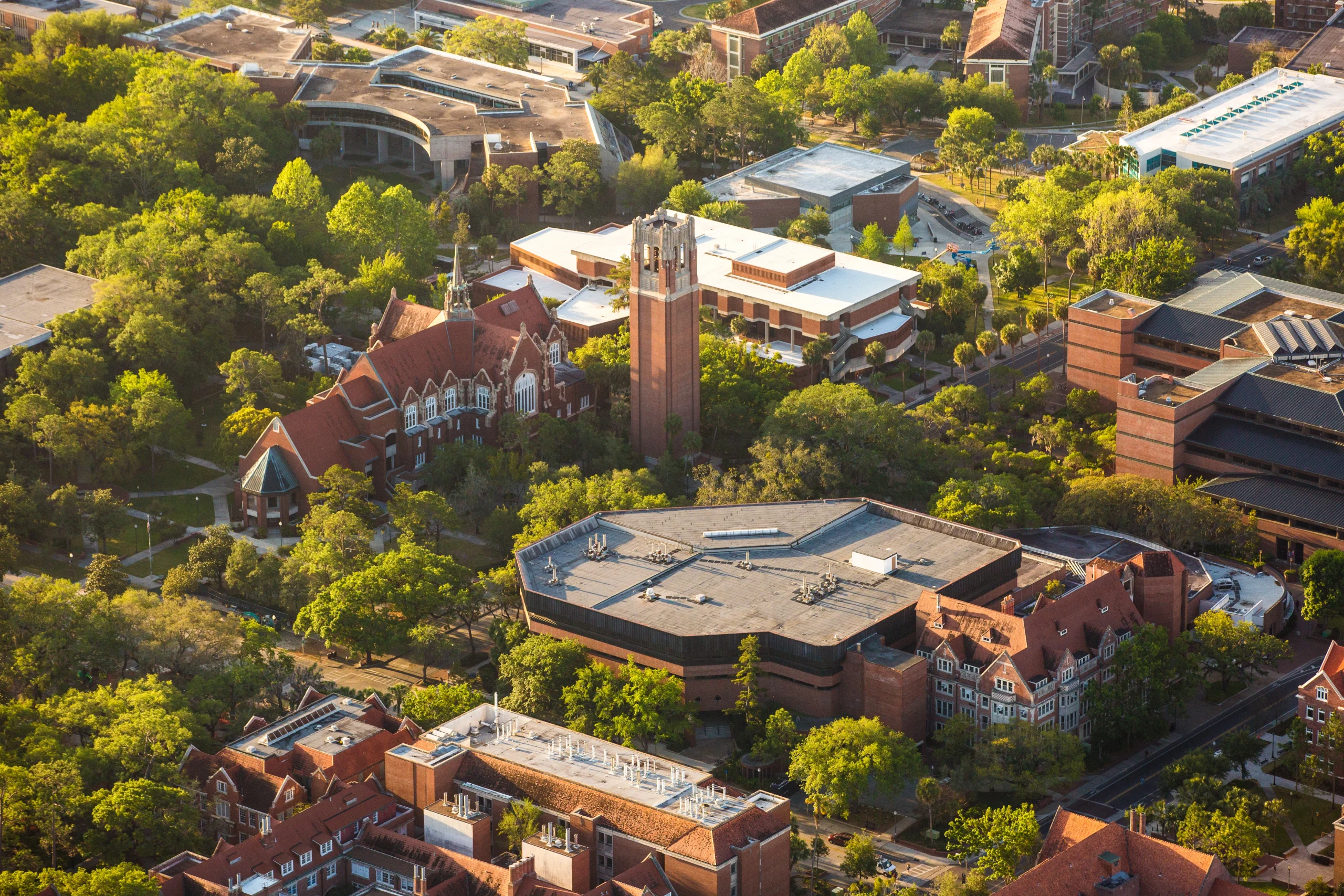
The http://www.ufl.edu/ is a Land-Grant, Sea-Grant, and Space-Grant institution, encompassing virtually all academic and professional disciplines, with an enrollment of more than 56,000 students. UF is a member of The Association of American Universities. The University of Florida is home to https://www.rc.ufl.edu/about/hipergator/, one of the most powerful supercomputers available to a University in the world. It includes 49,920 AMD cores for traditional computing and 608 NVIDIA GPUs for artificial intelligence analyses.
The University of Florida Genetics Institute is an interdisciplinary institute that seeks to promote excellence in the areas of genetics and genomics through research, education, and outreach. There are over 220 faculty who are members of UFGI and are from multiple colleges at UF including the Colleges of Medicine, Pharmacy, Veterinary Medicine, Liberal Arts & Sciences, Engineering as well as from IFAS. UFGI also administers the Genetics & Genomics Ph.D. program.
The Microbiology and Cell Science Department has 29 tenured or tenure-track faculty, 7 lecturers, 79 PhD students, 700 MS students, and 1,000 undergraduate students. We pride ourselves in our commitment to computational and bioinformatics training that is crucial for our graduates to be blue chip recruits for positions in the life sciences. NASA is currently the largest external funding source for Microbiology and Cell Science, and Florida's aerospace sector—centered around Kennedy Space Center on Merritt Island—is experiencing rapid growth. The incumbent will be well positioned to establish a research program that takes full advantage of local momentum in the space sciences and astrobiology.
The http://ifas.ufl.edu includes the http://cals.ufl.edu/, the http://research.ifas.ufl.edu/, the https://sfyl.ifas.ufl.edu/, the http://www.vetmed.ufl.edu/, the http://www.flseagrant.org/ program, and encompasses 16 on-campus academic departments and schools, 12 Research and Educational Centers (REC) located throughout the state, 6 Research sites/demonstration units administered by RECs or academic departments, and Florida Cooperative Extension Service offices in all 67 counties (counties operate and maintain). The School of Natural Resources and Environment is an interdisciplinary unit housed in IFAS and managed by several colleges on campus. UF/IFAS employs nearly 4,500 people, which includes approximately 990 salaried faculty and 1,400 permanent support personnel located in Gainesville and throughout the state. IFAS, one of the nation's largest agricultural and natural resources research and education organizations, is administered by a Senior Vice President and four deans: the Dean of the College of Agricultural and Life Sciences, the Dean for Extension and Director of the Florida Cooperative Extension Service, the Dean for Research and Director of the Florida Agricultural Experiment Station, and the Dean for the College of Veterinary Medicine. UF/IFAS also engages in cooperative work with Florida A&M University in Tallahassee.
Expected Salary:
Commensurate with Education and Experience
Required Qualifications:
A doctorate (foreign equivalent acceptable) in the life sciences with a strong background and experience in any aspect of space biology and/or astrobiology is required. Candidates should have demonstrated skills in verbal/written communication and procurement of extramural funding. Candidates must be supportive of the mission of the Land-Grant system. Candidates must also have a commitment to https://www.ufl.edu/about/core-values/. Experience in publishing peer-reviewed papers as first authors is essential.
Preferred:
Postdoctoral experience is desirable. Successful grantsmanship is preferred.
Special Instructions to Applicants:
For full consideration, candidates should apply and submit materials by August 23, 2026. The position will remain open until a viable applicant pool is determined.
Employment Conditions
This position is available January 2027 and will be filled as soon thereafter as an acceptable applicant is identified. Compensation is commensurate with the education, experience, and qualifications of the selected applicant.
Nominations
Nominations are welcome. Nominations need to include the complete name and address of the nominee. This information should be sent to:
Please refer to Requisition # 539530
Dr. Brent C. Christner, Professor
Chair, Search and Screen Committee
University of Florida
Microbiology and Cell Science Department
University of Florida
1355 Museum Drive
Gainesville, FL 32611
Telephone: 352-392-1906
Electronic Mail: mailto:xner@ufl.edu
Application Information
- Individuals wishing to apply should go online to https://apptrkr.com/7223954 and submit:
- Cover letter that states applicant's interest in the position and qualifications relative to the credentials listed above
- Curriculum vitae
- Contact information (including email addresses) for three individuals willing to write letters of recommendation
- Unofficial transcripts
- Research statement with a maximum of 1,500 words
- Teaching statement with a maximum of 1,000 words
Selected candidate will be required to provide an official transcript to the hiring department upon hire. A transcript will not be considered “official” if a designation of “Issued to Student” is visible. Degrees earned from an education institution outside of the United States are required to be evaluated by a professional credentialing service provider approved by http://www.naces.org/.
Hiring is contingent upon eligibility to work in the US. The University of Florida is a public institution and subject to all requirements under Florida Sunshine and Public Record laws. The University and greater Gainesville community enjoy a variety of cultural events, restaurants, year-round outdoor recreational activities, and social opportunities.
Health Assessment Required:
No
Applications Close:
To apply, visit https://apptrkr.com/7223954
Our Commitment:
The University of Florida is an Equal Employment Opportunity Employer.
Hiring is contingent on eligibility to work in the U.S. The University of Florida is a public institution and is subject to all requirements under Florida Sunshine and Public Record laws. If an accommodation due to a disability is needed to apply for this position, please call 352-392- 2477 or the Florida Relay System at 800-955-8771 (TDD) or visit Accessibility at UF.
Find Your Best Opportunity
Tell them AcademicJobs.com sent you!