
Academic Jobs - Home of Higher Ed Logo
Centre de recherche de l'Institut universitaire en santé mentale de Montréal Jobs

Centre de recherche de l'Institut universitaire en santé mentale de Montréal

Directrice scientifique ou Directeur scientifique Centre de recherche de l’Institut universitaire en santé mentale de Montréal (CR-IUSMM)

Closes:

70

À PROPOS DE SANTÉ QUÉBEC EST-DE-L'ÎLE-DE-MONTRÉAL - UNIVERSITAIRE ET DU CR-IUSMM

Reconnu par le Fonds de recherche du Québec (FRQ), le Centre de recherche de l’Institut universitaire en santé mentale de Montréal (CR-IUSMM) constitue un pôle majeur de recherche en santé mentale au Québec. Il regroupe près de 40 chercheuses et chercheurs réguliers, plus de 25 chercheuses et chercheurs associés, ainsi qu’un vaste bassin d’étudiantes, d’étudiants, de stagiaires et de personnel de recherche hautement qualifiés, et s’appuie sur des plateformes numériques, biologiques et cliniques.

Le Centre structure ses activités autour de quatre axes :

  • Neurosciences et santé mentale;
  • Santé des populations;
  • Recherche clinique;
  • Pratiques en santé mentale et mobilisation des connaissances. 

De plus, le CR-IUSSM est doté de deux plateformes partenaires qui ont pour mission de transformer les données de la recherche en innovations utiles, utilisables et accessibles en santé mentale :

  • la Biobanque Signature pour optimiser l’utilisation de données;
  • le Centre Axel pour faciliter les solutions numériques.

 Sites institutionnels :

Santé Québec Est-de-l'Île-de-Montréal - Universitaire, affilié à l’Université de Montréal (UdeM) et, plus récemment, à l’Université du Québec à Montréal (UQAM), dessert une population de plus de 500 000 personnes sur un territoire d’environ 127 km². Dans un environnement marqué par une forte prévalence des troubles de santé mentale, des dépendances et des enjeux psychosociaux complexes, l’établissement soutient une mission universitaire forte, orientée vers l’excellence des soins, l’innovation et l’équité.

L’OPPORTUNITÉ

Dans un contexte de transformation du réseau, d’évolution des mécanismes de financement de la recherche et d’attentes accrues quant à l’impact clinique et sociétal, le CR-IUSMM souhaite consolider son positionnement distinctif, renforcer sa cohérence scientifique et accélérer l’intégration des connaissances dans les trajectoires de soins et de services.

La directrice scientifique ou le directeur scientifique assure le leadership scientifique du CR-IUSMM. La personne titulaire du poste agit à titre de stratège, de rassembleuse ou rassembleur, et d’ambassadrice ou d’ambassadeur du CR-IUSMM, en collaboration étroite avec les universités partenaires, les équipes cliniques, la direction de l’enseignement, de la recherche et de l’innovation (DERI), ainsi que les partenaires externes, dans le respect des orientations gouvernementales et des priorités organisationnelles, notamment celles du FRQ, de Santé Québec et du ministère de la Santé et des Services sociaux (MSSS).

À noter que cette direction scientifique pourrait être proposée en binôme ou avec l’ajout d’une direction scientifique adjointe.

FINALITÉ DU RÔLE

Assurer la pérennité, le rayonnement et l’impact international du CR-IUSMM en :

  • définissant une vision scientifique ambitieuse et réaliste sur quatre (4) ans;
  • renforçant la gouvernance scientifique et la culture de collaboration;
  • soutenant l’excellence, l’équité et le développement des talents;
  • favorisant une diversification des sources de financement;
  • maximisant l’impact clinique, organisationnel et sociétal des recherches;
  • promouvant l’implantation des pratiques et interventions fondées sur les données probantes dans les milieux cliniques;
  • protégeant la liberté scientifique des membres chercheurs du CR-IUSMM.

PRIORITÉS STRATÉGIQUES ATTENDUES (HORIZON DE 12 À 18 MOIS)

  • Vision : proposer une programmation scientifique modernisée qui met en valeur l'expertise des chercheurs et les forces des plateformes partenaires afin de répondre aux défis actuels et émergents de la recherche en santé mentale.
  • Rayonnement et visibilité : accroître la visibilité du CR-IUSMM et renforcer sa capacité à faire rayonner les travaux de ses chercheurs et de ses étudiants.
  • Financement et soutenabilité : mettre en œuvre une stratégie de financement reposant sur des demandes structurantes d'envergure, la diversification des sources de revenus et le développement d'activités philanthropiques.
  • Impact et intégration aux soins : contribuer à revaloriser l'engagement en recherche des professionnels cliniques et à promouvoir les investissements en recherche au sein des établissements de Santé Québec afin d'accélérer le transfert des connaissances vers les soins et services.
  • Partenariat : mobiliser un vaste réseau de partenaires institutionnels, communautaires, philanthropiques et gouvernementaux autour d'une vision renouvelée et d'un financement durable de la recherche en santé mentale.

RESPONSABILITÉS PRINCIPALES

1) Vision et programmation scientifique

  • Définir, en concertation avec les membres et les partenaires, une vision scientifique et une programmation cohérente et réalisable à moyen terme (quatre (4) ans).
  • Identifier et soutenir des projets structurants et fédérateurs, notamment dans les créneaux émergents (recherche clinique, recherche partenariale, recherche numérique et intelligence artificielle).
  • Mettre en place des mécanismes de suivi de performance scientifique (indicateurs, tableaux de bord, revues périodiques), adaptés à la réalité multidisciplinaire de la santé mentale et des membres du CR-IUSMM.
  • Anticiper la concurrence accrue pour l’obtention de financements de recherche, notamment dans le cadre du prochain renouvellement des centres de recherche par le FRQ.

2) Gouvernance scientifique, éthique et qualité

  • Assurer une gouvernance transparente, rigoureuse et collégiale, conforme aux exigences éthiques, réglementaires et institutionnelles.
  • Favoriser un climat de travail fondé sur le respect, l’équité, l’intégrité scientifique et la reconnaissance des contributions.
  • Représenter le CR-IUSMM auprès des instances internes et externes (Santé Québec Est-de-l'Île-de-Montréal - Universitaire, universités, FRQ et autres partenaires).

3) Financement, infrastructures et partenariats

  • Piloter les demandes de financement majeures et soutenir la compétitivité des équipes (ex. qualité des dossiers, stratégie et positionnement).
  • Obtenir des fonds diversifiés soutenant et structurant le CR-IUSMM : subventions, partenariats, contrats, philanthropie, chaires et initiatives structurantes.
  • Appuyer la planification, le développement et la pérennité des plateformes et des infrastructures de recherche, qu’elles soient biologiques, cliniques, technologiques ou liées aux données.
  • Engager activement les patientes et patients partenaires dans les différentes étapes et activités de recherche.
  • Prioriser les besoins, planifier et optimiser l’utilisation des espaces dédiés aux équipes de recherche au sein du CR-IUSMM.

4) Développement des talents et de la culture scientifique

  • Déployer des approches de mentorat, d’accompagnement et de développement du corps professoral et scientifique, y compris de la relève et ce, lors de l’intégration au CR-IUSMM ainsi qu’en début de carrière (ex. fonds d’infrastructure et programmes de chercheurs-boursiers du FRQ).
  • Mettre en place des leviers (ex. bourses) pour soutenir la compétitivité des étudiantes et étudiants à la maîtrise et au doctorat ainsi que des stagiaires postdoctoraux, membres du CR-IUSMM.
  • Promouvoir l’excellence méthodologique et la complémentarité des approches (quantitatives, qualitatives, mixtes, participatives).
  • Renforcer l’attractivité du CR-IUSMM afin de favoriser le recrutement et la rétention des talents (stagiaires postdoctoraux ainsi que chercheuses et chercheurs juniors et seniors).

5) Mobilisation des connaissances, impact et rayonnement

  • Mettre en œuvre une stratégie de mobilisation et de transfert des connaissances (aux plans clinique, organisationnel et communautaire), y compris l’évaluation de l’impact.
  • Accroître le rayonnement du CR-IUSMM au Québec, au Canada et à l’international (réseaux, communautés de pratique, collaborations, événements et positionnements).
  • Soutenir une communication scientifique de haute qualité, accessible et adaptée aux publics cibles (chercheurs, cliniciens, gestionnaires, personnes utilisatrices de services, proches, communauté).

PROFIL RECHERCHÉ

Exigences :

  • Statut de professeure ou de professeur (ou de clinicienne-chercheuse ou de clinicien-chercheur) affilié à une université reconnue.
  • Formation postdoctorale, doctorat et/ou diplôme médical, avec une expertise reconnue en recherche appliquée en santé mentale.
  • Dossier de recherche démontrant une crédibilité scientifique (publications, financement, encadrement, collaborations nationales et internationales).
  • Expérience significative en direction scientifique ou en coordination d’unités, d’équipes ou de programmes de recherche.
  • Connaissance approfondie de l’écosystème québécois et canadien de la recherche (FRQ, Instituts de recherche en santé du Canada, autres organismes subventionnaires, cadres éthiques et gestion des données).

Compétences clés :

  • Vision stratégique et capacité d’évolution dans un environnement institutionnel complexe.
  • Leadership mobilisateur, capacité de décision, courage de gestion et sens de la collégialité.
  • Excellentes aptitudes relationnelles, de communication et de représentation.
  • Capacité à structurer des partenariats et à élaborer des modèles de financement, tout en respectant l’indépendance scientifique.
  • Maîtrise du français et bonne connaissance de l’anglais, à l’oral et à l’écrit.

Atouts :

  • Expérience démontrée de mobilisation des connaissances et d’intégration de la recherche aux soins et services en santé mentale.
  • Expérience en gouvernance de plateformes (données, biobanques et technologies), en science ouverte et en gestion responsable des données.
  • Réseaux de collaborations nationaux et internationaux en santé mentale.

CONDITIONS DE NOMINATION

  • Mandat de quatre (4) ans, renouvelable.
  • Conditions de travail et de rémunération conformes aux ententes universitaires et aux règles applicables.
  • Possibilité de dégagement partiel des charges universitaires ou professionnelles, selon les modalités en vigueur.
  • Collaboration étroite avec le FRQ, la DERI et les partenaires universitaires.
  • Possibilité d’accompagnement pour bien circonscrire les rôles et les responsabilités des différentes entités (ex. FRQ, Santé Québec, le MSSS, Santé Québec Est-de-l'Île-de-Montréal - Universitaire), ainsi que certains modes de fonctionnement propres au CR-IUSMM et à l’établissement.
  • Entrée en fonction prévue le 1er janvier 2027, avec possibilité de négociation selon les disponibilités de la personne retenue.

CANDIDATURE

Les personnes intéressées sont invitées à transmettre :

  • une lettre de motivation;
  • un curriculum vitæ détaillé;
  • un court énoncé de vision (2 pages maximum) décrivant les priorités proposées pour le CR-IUSMM;
  • les coordonnées de trois répondantes ou répondants.

Date limite : 30 novembre 2026 (affichage du 5 octobre au 30 novembre 2026)

Modalités d’envoi : Veuillez, SVP, transmettre votre candidature à l’adresse suivante : lbeauregard.hmr@ssss.gouv.qc.ca.

Santé Québec Est-de-l'Île-de-Montréal - Universitaire souscrit aux principes d’équité, de diversité et d’inclusion. Nous encourageons les candidatures de toutes les personnes qualifiées.

Job details

Title
Directrice scientifique ou Directeur scientifique Centre de recherche de l’Institut universitaire en santé mentale de Montréal (CR-IUSMM)
Employer
Centre de recherche de l'Institut universitaire en santé mentale de Montréal
Location
7401 Rue Hochelaga, Montréal, QC H1L 2K4, Canada
Published
Oct 5, 2026
Closes:
Nov 30, 2026
Job type
Full time, Executive
Field
Director / Manager

Tell them AcademicJobs.com sent you!

Frequently Asked Questions

📋What is the Directrice scientifique ou Directeur scientifique Centre de recherche de l’Institut universitaire en santé mentale de Montréal (CR-IUSMM)?

This listing is for Directrice scientifique ou Directeur scientifique Centre de recherche de l’Institut universitaire en santé mentale de Montréal (CR-IUSMM) at Centre de recherche de l'Institut universitaire en santé mentale de Montréal.

📍Where is this role located?

The listed location is See the full posting for the work location..

💰What is the salary?

Salary is not listed on this posting.

📅When do applications close?

No application close date is listed.

💼What type of appointment is this?

The listed type is See the full posting for the appointment type..

📝How do I apply?

Use the Apply Now button on this listing to submit your application.

About the employer

Centre de recherche de l'Institut universitaire en santé mentale de Montréal Jobs

Centre de recherche de l'Institut universitaire en santé mentale de Montréal

Visit the employer page

Hire Experts… Post a Job

Post a Job

Roles… Create a Job Alert

Related Jobs

View All Jobs
Toronto, Ontario68

Director, Technology Services

University of Toronto
Kingston, Ontario69

Clinic Director

Queen's University

Related Research Grants

Grants and In-Kind Support to USA, Canada, and International Journalists to Report on Rainforest Abuses

GrantWatch

Grants to USA and Israel Scientists for Collaborative Biological Research Projects Related to IOS

All USA, Israel

Grants to USA, Canada, and International Researchers for Directed Fitness Research

GrantWatch

Grants to USA, Canada, and International Master's and Doctoral Students for Research in Behavior Analysis

Grants to International Organizations and Individuals to Promote Behavior Analysis

All USA, USA Territories: American Samoa (USA); Guam (USA); Puerto Rico (USA); Virgin Islands (USA); Northern Mariana Islands (USA);, USA Compact Free Associations: The Federated States of Micronesia (USA) Marshall Islands (USA) Republic of Palau (USA), International, Israel and Canada.

Grants to USA, Canada, and International Doctoral Students for Research in Behavior Development

All USA, USA Territories: American Samoa (USA); Guam (USA); Puerto Rico (USA); Virgin Islands (USA); Northern Mariana Islands (USA);, USA Compact Free Associations: The Federated States of Micronesia (USA) Marshall Islands (USA) Republic of Palau (USA), International, Israel and Canada

Grants to USA, Canada, and Mexico Faculty for Liver Disease Research

GrantWatch

Grants to USA, Canada, and International Scholars for Parkinson's Disease Studies

USA, Canada, and International

View all research grants →

Related Reading

CR-IUSMM Scientific Director: What the Montreal Role Demands

What a scientific director at CR-IUSMM actually manages

Montreal's Centre de recherche de l'Institut universitaire en sante mentale de Montreal is recruiting a scientific director. The job sits at the crossing of a psychiatric hospital, a regional health authority, and a university faculty of medicine, which makes it one of the rare research leadership postings in Canada that demands operational judgment as much as scientific reputation.

The role carries the French title Directrice scientifique or Directeur scientifique. It is a full institutional leadership job inside the Centre integre universitaire de sante et de services sociaux de l'Est-de-l'Ile-de-Montreal, the CIUSSS de l'Est-de-l'Ile-de-Montreal. It should not be read as a faculty appointment bolted onto a hospital.

If you have led a funded research program and can run a centre rather than just a lab, this is the kind of opening that does not come around often. The hire will shape mental health research priorities for eastern Montreal and will influence training for the next generation of psychiatric researchers at the Universite de Montreal.

Strong candidates tend to notice leadership searches early because the process reveals a lot about an institution before an interview ever happens. The way the posting is written, the reporting line, and the emphasis on clinical partnerships tell you where the centre wants to go.

What a scientific director at CR-IUSMM actually manages

In Quebec's health research system, a scientific director is responsible for the science strategy, the money, the partnerships, and the people. At CR-IUSMM that includes researcher recruitment, grant performance, research ethics compliance, and the centre's relationship with the Fonds de recherche du Quebec - Sante and the Canadian Institutes of Health Research.

  • Set the centre's scientific priorities and decide which internal research projects get institutional support.
  • Recruit, evaluate, and retain research scientists.
  • Steward funding relationships with provincial and federal agencies, foundations, and industry partners.
  • Oversee compliance with research ethics, financial controls, and regulatory requirements.
  • Represent the centre to the CIUSSS, Universite de Montreal, and external research bodies.

You also sit on the leadership team of the CIUSSS. You do not just advise on mental health research. You make decisions about which collaborations with Universite de Montreal get priority and how research evidence reaches the clinical teams who treat patients every day.

In practice, the job has two accountability lines that do not always align. You answer to the CIUSSS for the health network's expectations and to the university for academic standards. The best scientific directors keep both sides clear about what the research centre needs, then defend that position before either party tries to squeeze the centre into an operational box.

The job requires more than a strong publication record. Candidates need enough management experience to defend a budget, enough political judgment to work across a hospital and a university, and enough French to operate inside Quebec's public health and university systems.

Related image

The institute behind the posting

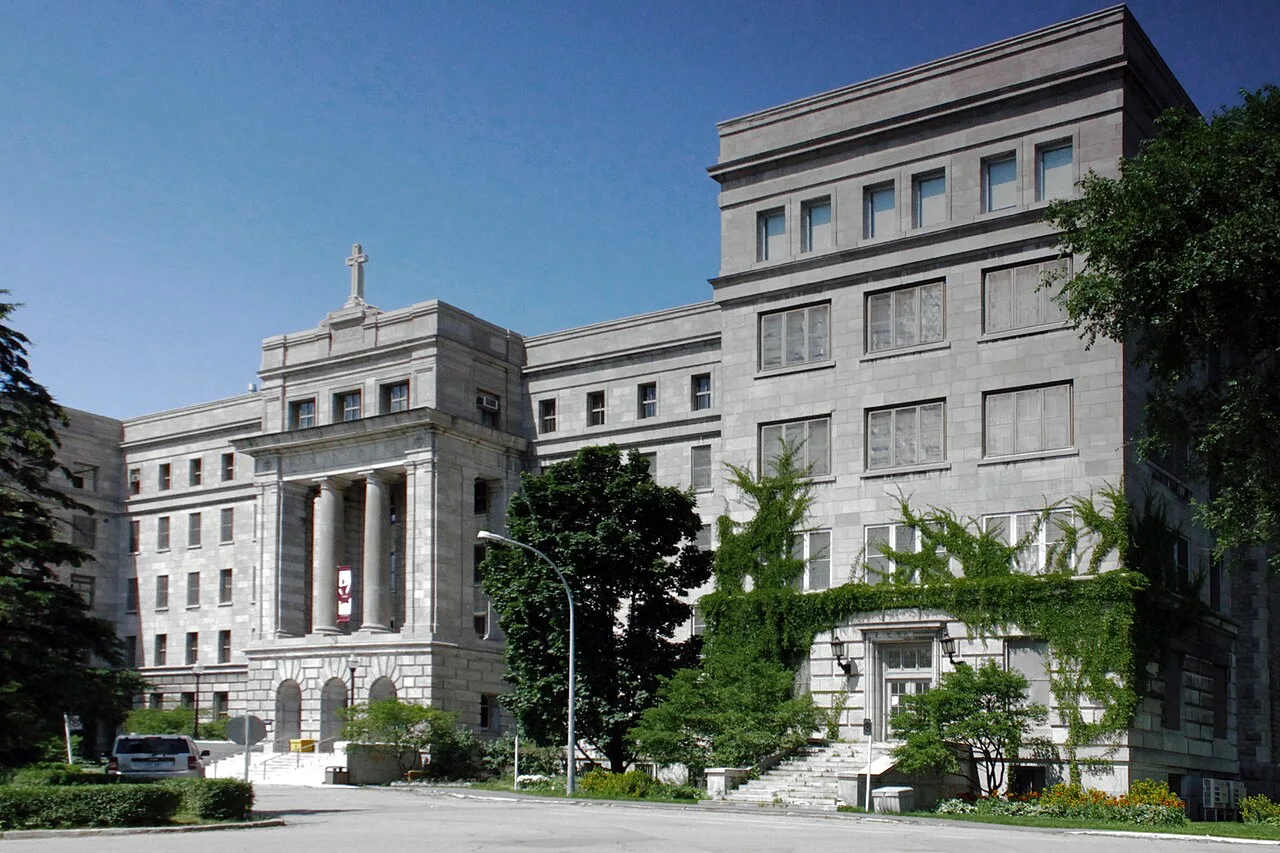
The Institut universitaire en sante mentale de Montreal is a specialized psychiatric hospital and university institute. It belongs to the CIUSSS de l'Est-de-l'Ile-de-Montreal and is affiliated with the Universite de Montreal's faculty of medicine.

Its research centre, CR-IUSMM, brings together investigators whose work ranges from the biology of severe mental illness to mental health services and population health. The institute trains psychiatry residents, psychology interns, nursing students, and graduate researchers inside the same buildings where care is delivered. In Quebec, an institut universitaire is a formal designation that ties research and teaching to everyday clinical work.

The IUSMM's clinical identity matters in the application. Candidates who come only from a university department can underestimate how much of this role happens inside a care organization. The scientific director influences service planning and sits close to hospital leadership, because research questions at an institut universitaire often start with patients who are not well served by existing treatments.

You can get a better sense of the organization through the CIUSSS de l'Est-de-l'Ile-de-Montreal and the Universite de Montreal's department of psychiatry and addictology. The official posting is on the CR-IUSMM employment and studies page.

Why the hire matters now

Mental health research in Canada is under pressure to move faster from findings into care. The scientific director sets that pace at CR-IUSMM. If the centre drifts toward safe, incremental projects, the institute misses its responsibility to the population it serves. If it chases every funding call, researchers burn out and the centre loses coherence.

Quebec has made mental health a priority through provincial programming and through its university hospital research network. A change in scientific leadership is the moment when a research centre decides which problems it will try to solve over the next five to seven years. That is a bigger decision than the job title suggests.

The federal funding side adds another layer. The Canadian Institutes of Health Research supports mental health and addiction research through its Institute of Neurosciences, Mental Health and Addiction, while the Fonds de recherche du Quebec - Sante shapes provincial funding. A scientific director who can move between those systems and the health authority's operational demands is difficult to find, which is why the search matters beyond Montreal.

Montreal also has more than one university mental health institute, so CR-IUSMM does not operate in isolation. The Douglas Mental Health University Institute is tied to McGill, and the Institut universitaire en sante mentale de Quebec is tied to Universite Laval. Candidates should understand how the Montreal institutes divide their clinical and research mandates and where CR-IUSMM's eastern Montreal population gives it a distinct role.

You can see the provincial research context on the Fonds de recherche du Quebec site.

Related image

How to read the job posting like a serious candidate

Start with the official French posting, not a summary. The language tells you what the institution values. Pay attention to the reporting line, the term length, and the required mix of clinical and research credentials. If the posting asks for a doctoral degree with a health research background, make sure your CV says that in the first ten lines, not on page four.

Then compare the role with the full description on Academic Jobs, which keeps the CR-IUSMM scientific director listing alongside other Canadian research jobs. You want to see how this search sits next to similar director-level roles in health research centres and university institutes.

Before you write anything, prepare a two-column table: one side has the posting's stated requirements, the other side has one concrete example from your career for each. If you cannot fill a row, do not submit a generic cover letter. Fix the gap or acknowledge it with evidence that you have managed exactly that kind of gap before.

  • Read the French posting in full before relying on English summaries.
  • Map each stated requirement to a specific achievement from your own record.
  • Look at the centre's research teams and axes on its official site to understand where your expertise fits.
  • Check whether anyone in your network knows the CIUSSS or Universite de Montreal leadership environment.

Treat the application like a trial run for the first month in the job. A scientific director has to communicate with researchers, clinicians, administrators, and politicians. Your cover letter should show that you can speak to all four audiences without drifting into jargon.

The practical move this week

Do not wait for a deadline signal. Leadership searches at research institutes can move quietly before the formal closing date, and strong candidates often make contact early with the right person. Download the official posting, read the entire document in French, and then write a single paragraph that translates your research leadership record into the centre's actual challenges: mental health services delivery, training, external funding, and partnerships with the Universite de Montreal.

If that paragraph sounds like boilerplate, you are not ready to apply. If it sounds specific to CR-IUSMM, send it to one trusted colleague who has reviewed a research leadership application before. Then start the online submission through the official CR-IUSMM page.

The strongest candidates do one more thing before submitting: they ask a colleague who knows Quebec's health network to read the cover letter for tone. Academic applications often sound too polite, too long, and too detached from operations. For a centre inside a CIUSSS, the committee wants judgment, not just credentials.

Frequently Asked Questions

🧠What is the CR-IUSMM?

CR-IUSMM is the research centre of the Institut universitaire en sante mentale de Montreal, a psychiatric hospital and university institute that is part of the CIUSSS de l'Est-de-l'Ile-de-Montreal and affiliated with the Universite de Montreal.

📋What does the scientific director do at CR-IUSMM?

The scientific director sets research priorities, recruits and evaluates scientists, manages funding relationships with agencies such as FRQS and CIHR, oversees ethics and financial compliance, and represents the centre to the CIUSSS, the university, and external partners.

📍Where is the role based?

The role is based in Montreal, Quebec. The institute is located in the eastern part of the city and operates inside the province's public health and social services network.

🎓Who can apply for the scientific director position?

Candidates typically need a doctoral degree and a strong record of funded research, leadership experience in a research centre or university department, and professional proficiency in French.

🗣️Is French required for the job?

Yes. The institute operates in Quebec's French-language public health and university system, so the ability to work in French is the practical baseline. English is an asset for international research collaborations.

🔗How is the centre linked to Universite de Montreal?

CR-IUSMM is a university research centre affiliated with the faculty of medicine at Universite de Montreal. Its researchers teach, supervise students, and collaborate with departments such as psychiatry and addictology.

📝How do I apply for the CR-IUSMM scientific director role?

Apply through the official CR-IUSMM employment and studies page at criusmm.ciusss-estmtl.gouv.qc.ca. The posting includes the required documents and submission instructions.

✅What should a strong application highlight?

Concrete leadership results: grants won, teams built, partnerships with health services, and examples of moving research into practice. A generic academic CV rarely fits because the role sits inside a clinical organization.

⏳When do applications close?

The official CR-IUSMM employment page states the current closing date or whether the posting remains open until filled. Check the link directly rather than relying on third-party summaries.

⚖️What makes this a difficult role to fill?

The scientific director needs to walk between a hospital, a health authority, and a university. Few candidates have deep research credibility and enough operational judgment to manage all three.

🏥What is a CIUSSS?

CIUSSS stands for Centre integre universitaire de sante et de services sociaux. In Quebec, CIUSSS organizations integrate hospitals, long-term care, rehabilitation, and community services in a region. CR-IUSMM sits inside the CIUSSS de l'Est-de-l'Ile-de-Montreal.