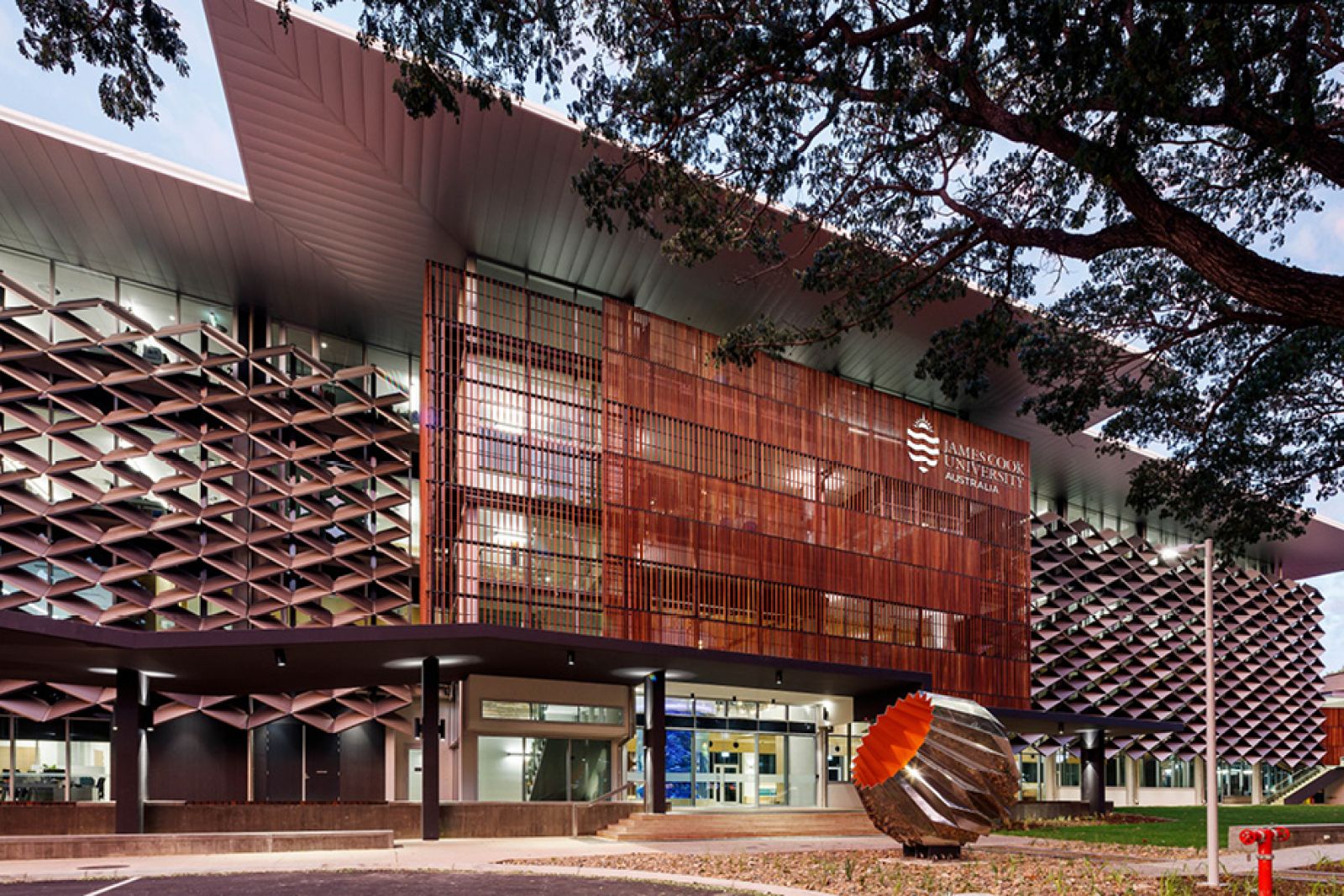
Most people apply for research jobs backwards. They open the advertisement, skim the summary, decide the title sounds acceptable, and send a generic CV. The James Cook University Research Worker role currently advertised for Townsville rewards the opposite approach. It is a project-linked support position, which means the panel is not hiring a broad academic identity. It is hiring someone who can do a defined set of tasks, work with a principal investigator, and fit into a team that already has momentum. If your application reads like a general research profile, it will look like you didn't read the ad.
Read the position description before you write a word
The title 'Research Worker' at JCU doesn't tell you much on its own. The position description does. At James Cook University, research worker roles are used across tropical health, marine science, environmental research, and public health projects, among others. In Townsville, a role might involve field sampling in a tropical estuary, lab processing, data entry and cleaning, participant recruitment, or community-based survey work. The specifics depend on the funding source, the chief investigator's project plan, and the stage of the research. If you assume the job is the same as another Research Worker role you have seen, you will probably miss the criteria that matter to this panel.
Australian university hiring panels do not shortlist on general enthusiasm. They score applications against the stated selection criteria. Start there. Print the position description or keep it in a separate window, and highlight every criterion marked essential. The essential criteria are the checklist. Each one you leave unaddressed in your cover letter is a reason for the panel to move to the next application.
What a Research Worker actually does on a JCU project
Broadly, a Research Worker supports the delivery of a research project under direction from a senior researcher. That support usually falls into four categories: collecting data in the field or lab, managing and cleaning that data, coordinating project logistics, and producing routine reports or summaries. Some roles sit closer to the participant-facing side, such as arranging interviews and mailing surveys. Others are mostly technical, working with analytical instruments, software, or specimen databases. The position description will tell you where this role sits.
James Cook University's research page gives a sense of the project areas that commonly employ research workers in Townsville, from tropical ecology to health services research. The advertised role will give specifics.
If you're moving into research support from outside a university, don't overstate the academic part. Panels at JCU care more about whether you can reliably complete the tasks than about your theoretical interests. They want evidence of practical capability. A short example from a previous job about maintaining a sample database, coordinating a field schedule, or reconciling survey responses can be stronger than a paragraph about your thesis topic.
Townsville changes the applicant pool
James Cook University's official advertisement makes clear this is a Townsville-based role, and location is part of the hiring equation. Townsville is a north Queensland centre with a regional labour market. The same title in Brisbane or Melbourne will usually attract more applicants; in Townsville the pool can be smaller, but panels often weigh retention heavily. They're asking themselves who will accept the role and stay through the project. If you're applying from outside the region, don't leave that question open. Say why Townsville, what you know about the place, and what you understand about the work.
Relocation is part of the calculation. Some candidates think mentioning a partner's job or a family connection makes them look less committed. It usually does the opposite. A concrete reason for moving reads as a lower flight risk. If you don't have one yet, be honest about what appeals to you and what you're prepared to manage.
Selection criteria are the whole game
Jobs and Skills Australia groups research support jobs within a broad set of professional and technical occupations, and entry routes vary. Some JCU Research Worker positions require a bachelor degree in a relevant field. Others accept a diploma plus practical experience, or a combination of training and demonstrated skill. The only way to know is to read the essential and desirable criteria in this specific advertisement. Don't assume a master's degree automatically puts you ahead. It helps only if it is accompanied by evidence that you can do the tasks the project needs.
When you write your application, use the panel's own terms. If the ad mentions 'field-based data collection in tropical environments' and you have done exactly that, write the phrase back in your own sentence, then add the detail: where, when, and what you collected. If the ad mentions a software package you have used, name it. These signals are not tricks. They make the panel's job easier, and panels reward candidates who are easy to score.
Four moves before you hit submit
These steps cost nothing and make the difference between a shortlist and a template reject.
- Print the position description and highlight every criterion marked essential. If there are six, make sure your cover letter answers all six with a short, evidence-based example.
- Write your cover letter in sections, not as a single narrative. Use headings that mirror the criteria, such as 'Field data collection' or 'Data management', then give one or two specific examples under each.
- Cut your CV down. A panel member may spend ninety seconds on first read. Lead with the project experience, methods, software, and outputs most relevant to the JCU role. Move your education block lower if the job doesn't require a specific degree.
- Email the contact officer with one specific question that isn't in the ad. For example, ask whether fieldwork is week-on, week-off, or whether there is a fleet vehicle for site visits. Don't ask about salary if the position description already gives the classification.
If you're new to research support
University research teams value repeatable skills over academic polish. If you've worked in a clinic, a lab, a field crew, a data entry team, or an administrative role that fed a research project, you already have pieces of the job. The key is to translate those pieces in the panel's language. 'Reconciled survey data across three sites' tells a researcher more than 'assisted with project tasks'. If you're not sure how to position that experience, the practical breakdown in how to excel as a research assistant in Australia walks through the common expectations.
Also check whether your current CV still reads like a generic employment history. Research-focused applications need a different shape. The academic CV guidance on AcademicJobs covers the sections that matter to university panels, including research experience, technical skills, and verifiable outputs.
After the deadline, keep applying
University hiring can be slow. A panel may take weeks to shortlist, and a project-linked role may wait on a funding confirmation or a chief investigator's availability. That doesn't mean the job is gone. It means you should not stop applying. Put the JCU closing date in your calendar and set a reminder to follow up if you haven't heard within the timeline stated in the ad. A short, polite follow-up is normal. Sending a new CV because you've improved one bullet is unnecessary.
While you wait, keep an eye on research jobs across Australia. The market for research support roles doesn't move in sync, and regional roles can appear at different times. If you see another JCU or Queensland university role that fits, apply. Each application is a rep of the same skill, and the next one will be faster.
The AcademicJobs listing is worth bookmarking
The JCU Townsville Research Worker position is also listed on AcademicJobs, where you can view the dedicated listing and use it alongside the official JCU advertisement. The point is not to read the same ad twice; it's to have a searchable record when you're comparing roles. If you're still shaping your application, the site's resume template and cover letter template give you a starting structure built for academic hiring.
Here's what to do this week. Download the position description, mark the essential criteria, and write three bullet points for each that use the project's own language. If you can't do that within a week, don't apply yet. A strong Research Worker application is built from the ad, not from a template. The template gets you started; the criteria get you shortlisted.