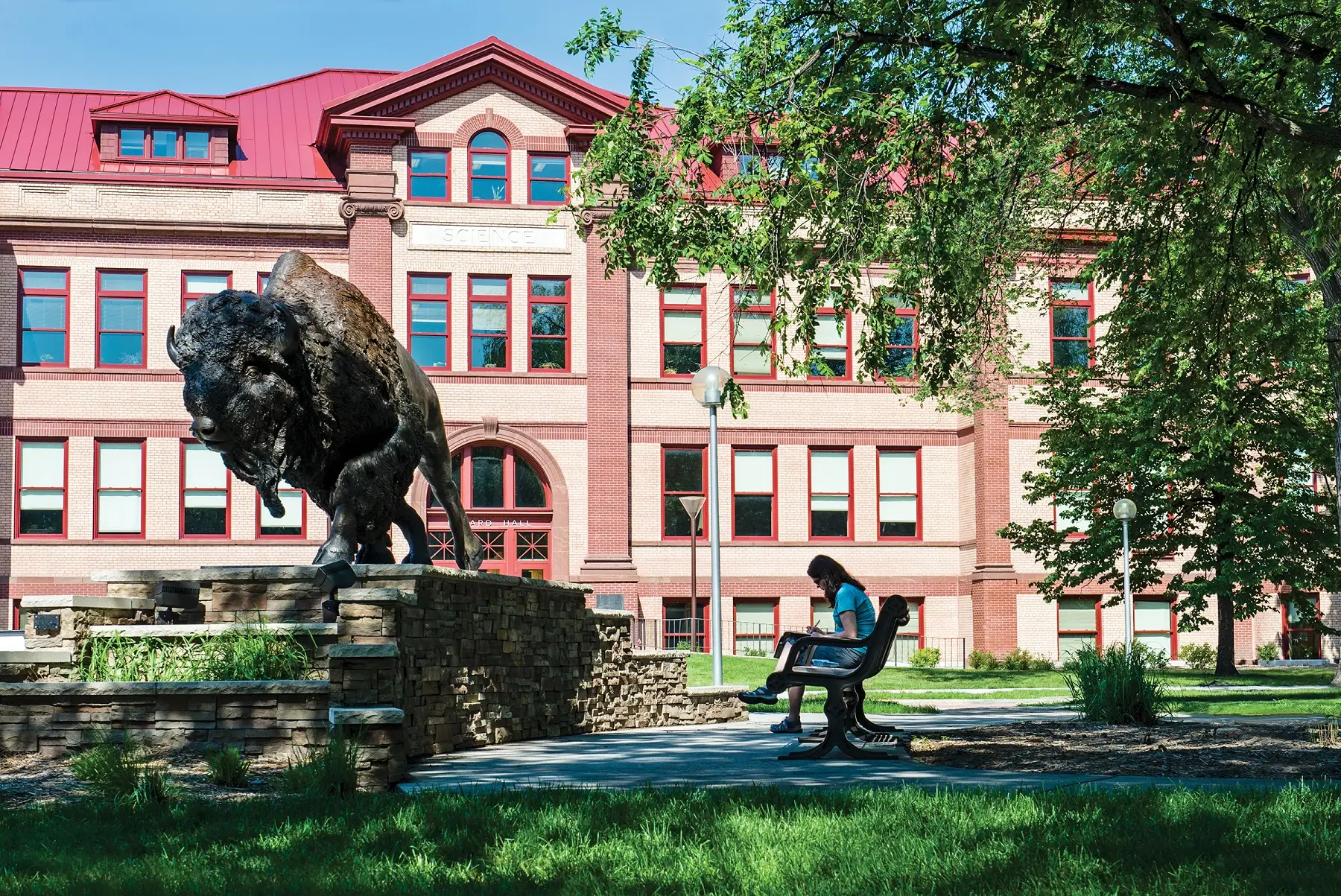
This is a dean search where the committee will sort quickly between people who read the full posting and people who applied because the title looked familiar. You want to be in the first group. North Dakota State University is not running a placeholder search for the Dean of the College of Arts and Sciences, and the application link is live now.
The role sits where student credit hours, faculty research expectations, annual state funding, and transfer student flows meet. If you treat it as a generic deanship, your file will read like a generic deanship.
What the Dean Will Walk Into
The College of Arts and Sciences at North Dakota State University is not one department; it is a broad academic portfolio that supplies many of the general education courses students take across every major. That means the dean is directly responsible for the high-enrollment courses future engineers, nurses, agricultural scientists, and business students complete in their first two years. It also means faculty workloads inside the college vary sharply between large introductory science courses and smaller advanced humanities or social science seminars.
Day to day, the dean reports to the provost and manages department chairs, school leaders, staff, and budgets. The work splits across several fronts:
- Academic planning and curriculum quality across humanities, social sciences, mathematics, statistics, and natural sciences, including service courses for other colleges.
- Faculty recruitment, promotion, development, and workload decisions in departments with different research and teaching intensities.
- Student success work tied to first-year course design, retention, advising quality, and transfer pathways from North Dakota's community colleges.
- Budget and resource allocation inside a state funding model where enrollment, credit hour production, sponsored research activity, and the college's share of state funding all shape spending authority.
- External development and alumni relations, because public funding alone will not cover every priority the college sets.
The first real tension candidates need to understand is capacity. A dean who cannot connect general education scheduling to university retention goals will struggle, no matter how good the research plan looks.
Why Fargo and NDSU Carry Real Weight
North Dakota State University is a land-grant university founded in 1890 as North Dakota Agricultural College. It sits in Fargo, part of a metro area of roughly a quarter-million people. The university carries the R1 designation from the Carnegie Classification of Institutions of Higher Education, which signals very high research activity and doctoral degree production. That designation matters for grant infrastructure, promotion expectations, graduate program resources, and the kind of faculty the college can recruit.
Enrollment has hovered near 12,000 in recent years. For a college that supplies general education across the university, even a minor shift in first-year enrollment changes the budget conversation quickly. North Dakota's university system watches retention and completion closely, and the dean will inherit those metrics in the college's annual planning.
The state's smaller population also means NDSU recruits heavily from Minnesota, South Dakota, and Montana. For the College of Arts and Sciences, that creates a practical requirement: curriculum and course scheduling have to work for residential students, online students, and the transfer population North Dakota's community colleges send each fall. Candidates who show they have managed this kind of mixed delivery model tend to stand out.
What Search Committees Look For in a Dean Candidate
The full NDSU College of Arts and Sciences dean listing on AcademicJobs.com gives the search committee's stated priorities. You should read it alongside the college's own pages and NDSU's university-level data. The College of Arts and Sciences website lists current departments and centers, and the main NDSU site carries strategic planning and unit information.
Committees usually screen for more than the boilerplate 'proven leader' line. At a public research university they ask four practical questions:
- Can this person manage a complex budget while protecting instructional quality in high-enrollment courses?
- Does this person have a record of faculty development and shared governance, not just a list of administrative titles?
- Will this person make fundraising calls and open doors with alumni, foundations, corporate partners, and industry groups outside the university?
- Can this person explain NDSU's college-level enrollment and retention data to a faculty senate, a governing board, a statewide legislative audience, and prospective donors without losing the room?
If your materials answer only the second question, the committee has no way to see the rest.
How to Read the Job Posting Like a Finalist
Most dean postings hide the actual job behind phrases about visionary leadership and interdisciplinary collaboration. This one becomes useful when you map each stated priority to a measurable problem. A line about growing research should be read against NDSU's R1 status and the need to help faculty compete for grants while carrying teaching loads. A line about student success points to first-year courses and transfer pipelines, not abstract values.
You can test your read against system-level priorities. The North Dakota University System publishes goals tied to completion and workforce alignment. The Carnegie classification is a useful benchmark because it places NDSU's research profile in a national group of doctoral universities. Neither page will tell you how to write your letter, but both will tell you where the college is being pushed.
Look for the hidden constraint: the college teaches a high proportion of undergraduate service courses, so the dean cannot simply reallocate everything toward research centers. The strongest applicants show a record of balancing those forces in writing, not just in an interview.
The Application Route and What to Send Now
The official apply link is handled through the application portal. Use the AcademicJobs.com listing as your quick reference, then submit through the apptrkr application portal. Do not send materials by email unless the posting explicitly instructs it.
Prepare a current CV, a cover letter, a reference list, and any required statements the portal lists before you open the submission form. Public university dean searches often require a leadership statement or a diversity and inclusion statement, but the specific fields in this posting should govern what you upload. If the portal allows optional statements, use them to show decisions rather than philosophy. One concrete example: a time you reallocated a department budget while preserving instructional coverage. Another: a fundraising ask that succeeded because you tied it to a specific student need by name.
The cover letter is not your CV in paragraph form. Open with the college, the state context, and one result from a similar role with a named outcome. The committee will read the first page and decide whether the rest of the file earns more attention.
Five Mistakes That Cost Candidates the Job
- Writing about North Dakota State University without mentioning its land-grant mission, R1 status, or enrollment realities.
- Summarizing the CV in the cover letter instead of addressing the college's service-course and retention pressures.
- Ignoring shared governance and faculty personnel work, which deans at public research universities spend real time on.
- Using broad phrases such as 'student-centered' or 'research-driven' without naming a program, a college, a numeric outcome, or the department affected.
- Assuming a smaller state means a slower search or a less competitive applicant pool; dean searches draw national candidates, and the committee will compare you against them.
If your current CV uses more adjectives than named outcomes, revise it before you submit.
What to Do This Week
Print the position description and mark the five phrases the search committee repeats. Then write your opening paragraph against those phrases. When the application system asks for a summary of qualifications, do not paste your CV's executive summary. Write two sentences that name the college, the state context, and one result from a similar role with a named outcome.
Submit through the official application portal once the file is clean. Early complete applications have an advantage in dean searches because review often starts as files arrive, not after a published deadline passes.