
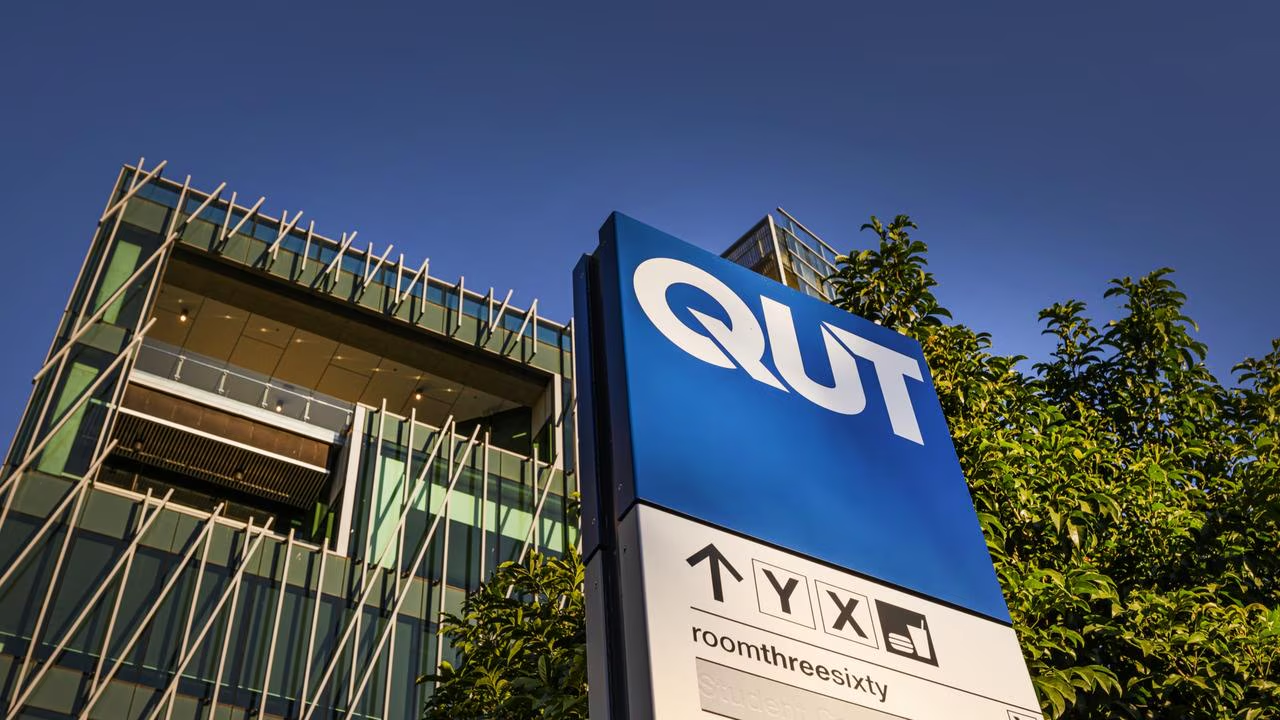
QUT in Brisbane is advertising for a Senior Information Security Engineer, and the timing is not accidental. Australian universities are under sustained cyber pressure. The sector now carries formal critical infrastructure obligations. And the number of engineers who can actually run a security operation is far smaller than the number of job ads asking for one.
The role sits inside the university's central technology function. You would be expected to handle detection engineering, tune security monitoring tools, lead incident response when something breaks, and help lift the organisation's security controls against frameworks such as the Australian Signals Directorate's Essential Eight. None of that is entry-level work.
Treat it as a real senior role, not a rebadged analyst position. If you're a mid-level security analyst eyeing a step up, keep reading. If you've run investigations and tuned detections for years, you already know why this kind of opening is rare in Brisbane.
What you'd do in the role
First, you build and tune detective controls. That means configuring a SIEM — security information and event management, the system that collects logs from servers, workstations, network gear and cloud services — so that real attacks surface above the noise. You also manage endpoint detection and response tools, usually called EDR, on thousands of university-owned devices, and you use vulnerability scanning results to decide what gets patched before anything else.
Second, you respond when things go wrong. In a university, that can be a phishing campaign that lands in staff mailboxes, a compromised research account, a misconfigured cloud bucket holding student records, or a ransomware event that takes critical systems offline. The senior engineer is usually the person who coordinates containment, preserves evidence and hands findings to the people who need them.
Third, you help set direction. You review architecture changes before they go live, advise project teams on secure design, and contribute to the annual control maturity assessment the sector now expects. You also spend time mentoring analysts, because university security teams tend to run lean and senior staff carry a coaching load. If that mix sounds broader than a corporate senior role, it is. That breadth is part of the appeal for people who want to stay technical while seeing the whole environment.
Why the role is open now
Universities make attractive targets. They hold enormous troves of identity records, personal data, financial information and research, often inside systems built decades ago and still running because replacing them would disrupt teaching and administration.
In 2019, a sophisticated actor penetrated the Australian National University over several months and accessed the personal records of more than 200,000 staff, students and visitors, with some records going back 19 years. That single event reshaped how Australian institutions talked about security.
Deakin University disclosed in June 2022 that a phishing attack on one staff member's credentials let attackers take personally identifiable information belonging to 46,999 students, some of which was posted to the dark web.
Those incidents changed the regulatory picture. Australia brought higher education into the Security of Critical Infrastructure framework, administered by the Cyber and Infrastructure Security Centre, which means universities now have mandatory cyber incident reporting and are expected to run their security programs to a defensible standard. The Australian Cyber Security Centre publishes the Essential Eight — eight baseline mitigation strategies spanning application control, patch management, administrator rights, multi-factor authentication and backups. A university hiring a senior security engineer is often hiring someone to close documented gaps against exactly that kind of framework.

Before you apply: check five things
No point writing a tailored cover letter for a job that can't answer basic questions. Take ten minutes first, then decide how much effort to spend.
- Salary band. Many universities advertise a classification rather than a dollar figure. A senior professional role is often HEW 8 or above. If the ad is silent, ask the contact officer what classification the role carries before you commit hours.
- Reporting line. Does this role report to a chief information security officer, a cyber security manager, or a general IT operations manager? The answer tells you how much authority and air cover you'll actually have.
- On-call and incident response expectations. Security incidents don't respect business hours. Know the escalation model and whether on-call is paid or absorbed.
- Tooling and cloud environment. Ask which SIEM they run, which EDR is deployed, and how much infrastructure sits in cloud tenants versus on-premises. If they can't answer clearly, that tells you something too.
- Team size. A senior engineer on a team of two is a different job from a senior engineer on a team of ten. Ask who else carries the load and who you'd back up.
One unanswered question is not automatically a deal-breaker. The pattern of answers tells you how mature the security program is, and that determines how much of your week will be firefighting versus engineering.
How to apply like a senior engineer
University applications are scored against selection criteria. Treat each criterion as a mini-brief and answer it with evidence, not adjectives. Use a repeatable structure: what the problem was, what you did, what changed, and the number that proves it.
- Download the position description and highlight every sentence that asks for a specific capability. That's your writing plan.
- For each capability, pick your single strongest incident or project and attach a number — detections tuned, mean time to contain before and after, accounts remediated, or the dollar value of an incident you stopped.
- Write the cover letter last. Keep it short: who you are, the two capabilities that make you the right hire, and one sentence about why you want to secure a university specifically.
- Check that your resume reads like an engineering logbook rather than a list of adjectives.
When you're ready, get the full detail and the application link from the job listing, which carries everything you need to start the process with QUT.
The market reality in Brisbane
Brisbane has become a security engineering market with more employers than engineers. Banks, insurers, government agencies and consultancies recruit from the same pool QUT does, and private employers typically carry base salaries universities struggle to match. What universities offer instead includes employer superannuation that can sit near 17%, a defined career structure, a campus environment with genuine variety across teaching and research, and the chance to protect students and publicly funded research rather than one corporate balance sheet. For the right engineer, that package is genuinely attractive. What universities still get wrong is speed. A four-month hiring timeline in this market will quietly cost them the candidates they need most.
If you're serious about the role, don't wait for a panel to organise itself. Contact the nominated officer early. Ask the five questions above. Then submit before the pool fills with candidates who did less homework. Formal training still matters in this field; security operations certifications from bodies such as the SANS Institute remain a de facto benchmark for senior roles in Australia.

This week, pull the position description and write down three security incidents you personally led, with numbers: what was detected, how long containment took, what changed afterwards, and the metric that proves each one. If you can't produce three, you have your answer about whether you're ready for a senior title.