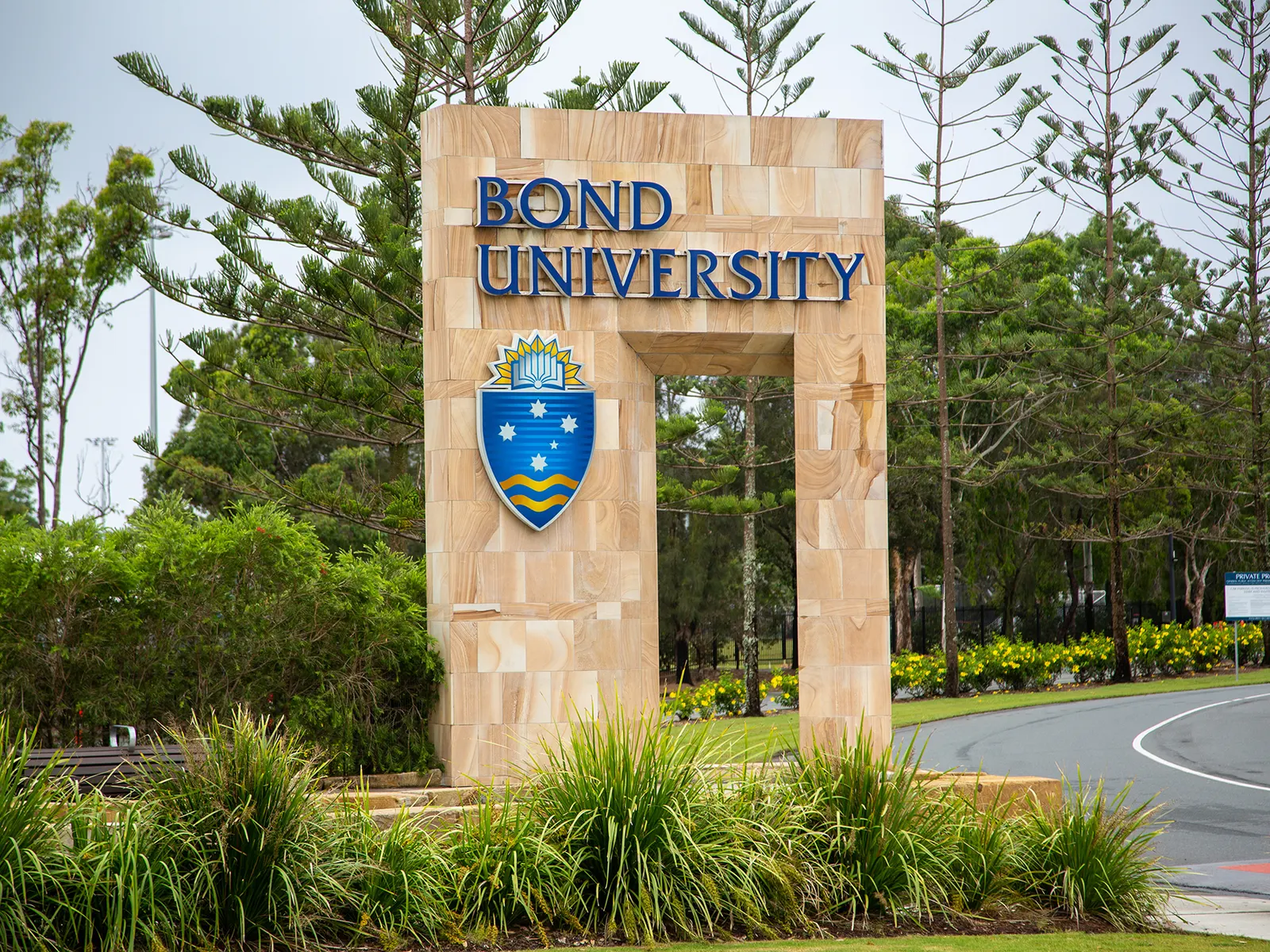
Bond University is advertising for casual food and beverage attendants across its Robina campus, and the rate on the page says something about how the Gold Coast now pays for service labour. The $37.60 hourly figure includes the 25 per cent casual loading; 12 per cent superannuation is paid on top. Applications close at 11:59pm on Thursday 19 November 2026, and enquiries go to Glen Harding, the university's General Manager, Hospitality Services.
On paper, this is a routine recruitment notice. In practice, the advertised rate and the benefits that come with it are doing most of the talking, because the selection criteria are kept deliberately short: previous hospitality experience, customer service skills, a proven ability to work in a busy team under pressure, and the right to work in Australia, verified before an appointment is made. The wider hiring market around the campus has pushed the terms upward, and job seekers who can read those terms will do better than those who skim the headline.
A Campus That Serves Seven Days a Week
The successful candidates won't be pinned to one till. Bond runs eight on-campus cafes and restaurants, and each outlet fits a different kind of shift. Lakeside, the best known, opens seven days from 7am for breakfast, lunch and dinner. Don's Tavern is the social hub and the only fully licensed venue on campus, open weekdays from 8.30am. Pulse Cafe sits in the Faculty of Health Sciences and Medicine building, Papyrus serves the main library foyer, and Panacea handles the Bond Institute of Health and Sport campus. Above the daily trade, the University Club Restaurant and the Princeton Ballroom look over Lake Orr and cater to functions of several hundred guests, including conferences and corporate events.
A breakfast shift at Lakeside is a different job from an evening function in that ballroom, which is precisely why the casual register exists. The same pool has to cover order taking, point-of-sale, table service, set-up and pack-down, and the bursts of events work that arrive with orientation weeks, graduation periods, the December-January summer season and the conference bookings that fill the gaps in between. The university's wider expression-of-interest register adds functions supervisors, kitchen hands, chefs, kitchen stewards, store persons and administrative roles, with placements running from a couple of days to several months depending on operational demand.
What the Pay Actually Tests
The Hospitality Industry (General) Award 2020, the modern award covering hotels, pubs, cafes and restaurants, set the Level 1 adult casual floor at $33.05 an hour from the first full pay period on or after 1 July 2026, after the Fair Work Commission lifted modern award minimums by 4.75 per cent. Bond's advertised $37.60 sits roughly 14 per cent above that floor, which matters because the university could lawfully have advertised the award rate and stopped there. It chose not to. The wage review determinations show the industry-wide lift these rates came out of.
The loaded figure is offered under a Bond Workplace Agreement rather than the bare award, and a flat rate carries a legal test that casual workers often miss: it has to leave an employee no worse off across a roster than the award's evening, weekend and public holiday penalties would. An employer can pay one flat number, but only if that number genuinely covers a Sunday shift's penalty as well as a Tuesday. The 12 per cent superannuation tracks the current superannuation guarantee, and free staff car parking is worth more on the Gold Coast than in a city with a functioning train connection.
The RSA, and the Gate Most Applicants Miss
Queensland law requires anyone who serves or supplies alcohol in a licensed venue to hold a Responsible Service of Alcohol certificate, the nationally recognised unit SITHFAB021 Provide Responsible Service of Alcohol. The training must come through a registered training organisation, and the document that satisfies the Office of Liquor and Gaming Regulation is a Statement of Attainment. A certificate of attendance from a cheap online course won't pass. New staff have 30 days from their start date to complete the course, and in Queensland a Statement of Attainment completed after 2002 does not expire. The state's guidance on RSA certification sets out exactly which courses qualify.
The Bond advertisement doesn't list the RSA as an explicit requirement, because not every register placement pours drinks. In practice, Don's Tavern and the University Club mean a current RSA is the difference between a full roster and restricted shifts. The university also verifies Australian work rights before appointment, which screens out otherwise qualified applicants before the interview begins.
Why Employers Are Pricing Service Work Up
The rate sits where it does because the local market will bear it, and because it has to. Jobs and Skills Australia counts about 129,300 waiters nationally: median age 21, 69 per cent women, 83 per cent part-time, with Queensland home to roughly one in five. Industry submissions put the national waiter count around 130,000 and bar attendants above 120,000. The Waiters occupation profile shows an entry-level workforce whose casual structure makes it highly responsive to demand. That responsiveness cuts both ways: this is the same cohort venues struggled to re-attract after the pandemic shutdowns.
The Recruitment Experiences and Outcomes Survey for the December quarter 2025 recorded accommodation and food services with the highest recruitment rate of any industry, 72 per cent, against a national rate of 46 per cent. Jobs and Skills Australia has also projected demand for an extra 21,400 hospitality workers, including waiters, baristas and bar attendants, between May 2023 and May 2028. On the Gold Coast, the Star, the Langham at Surfers Paradise, a pre-opening Andaz at Broadbeach and Village Roadshow's theme parks are all fishing in the same small pool of experienced casuals.
There's a quieter consequence. A market this tight raises the floor for everyone, but it rewards speed and existing credentials more than raw potential. A worker who holds the RSA and two references from high-volume venues can shape a roster; a school leaver without the certificate starts one step behind. The floor rises, but not evenly for everyone trying to step onto it.
Where the Role Leads, and Where It Can Stall
The Hospitality Award classifies food and beverage attendants in three grades. Grade 1 covers the first three months of introductory work. Grade 2 arrives when the attendant takes orders and serves with some autonomy, which moves them into a higher pay band. Grade 3 requires training or supervising other staff. Progression is not automatic: the award classifies by the work actually performed, not by job title, which is exactly where underclassification tends to hide. A worker who has been training new staff for six months while still paid at grade 1 has a classification problem, not a pay problem.
Formal study runs parallel. SIT40422 Certificate IV in Hospitality is built for people moving toward food and beverage supervisor or shift manager positions, and SIT50422 Diploma of Hospitality Management opens the venue manager path. The qualification matters, but the decisive factor is usually whether the workplace promotes from within. Bond's own register includes the functions supervisor role, which gives someone who starts clearing plates a visible next step. The full position description sits on Bond's jobs portal, and comparable food and beverage attendant roles at Australian universities are listed on AcademicJobs.com.
What Casual Actually Means Here
The advertised rate loads the casual premium into the base because casuals don't receive paid leave, notice periods or redundancy pay. A 25 per cent loading exists to compensate for those absences, and the award sets a two-hour minimum engagement for each casual shift. Those trade-offs don't disappear because the employer is a university with a gym and a medical centre on site.
The benefits do shift the arithmetic, particularly for people whose casual hours wrap around study or family care. Free staff parking, a wellbeing program, onsite medical and counselling services, gym membership, fitness classes, pool access and study assistance for staff and dependents are real value beyond the loaded rate. For a student stacking shifts around a timetable or a parent studying part-time, that package changes the calculation. For someone who needs 38 guaranteed hours a week, none of it solves the casual problem.
The roster peaks predictably enough: orientation weeks, graduation periods, the December-January summer season and the conference bookings that arrive with each. A casual register can absorb all of that demand. It cannot guarantee any of it from week to week.
The Year-Two Question
The immediate test is simpler than the long one: can Bond fill its register by 19 November at a rate that clearly beats the award? Against the Gold Coast's current labour market, the answer is probably yes. The question the hospitality team will face in the second year is different, whether a training-heavy, high-churn casual workforce stays long enough to justify the above-award wage and the benefits attached to it.
For the successful applicants, the measure is just as concrete. After the first summer, does a campus casual job become a reference on the way somewhere else, or the first rung of a hospitality career the industry keeps saying it wants to build? The roster this November will answer the first part. The retention numbers in 2027 will answer the second, and that is the number worth watching.