Expanding Access Through Digital Innovation at HBCUs
The landscape of higher education continues to evolve rapidly, with online learning playing an increasingly central role in making quality education accessible to a broader range of students. One notable development is the emergence of collaborative initiatives among Historically Black Colleges and Universities (HBCUs) that leverage digital platforms to extend their unique educational missions beyond traditional campus boundaries. The eHBCU Consortium represents such an effort, creating a shared portal for fully online undergraduate and graduate programs that preserve the cultural richness and academic rigor associated with HBCU experiences while accommodating working adults, first-generation learners, and geographically dispersed students.
This consortium brings together institutions committed to fostering inclusive environments and producing graduates who contribute significantly to various professional fields. By pooling resources for online delivery, participating schools can offer more programs than any single institution might sustain independently, addressing enrollment challenges and meeting growing demand for flexible degree options. The approach aligns with broader trends in postsecondary education where digital modalities support persistence and completion rates for non-traditional populations.
The Rolling Adjunct Faculty Pool Opportunity
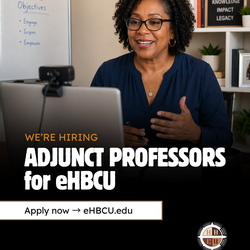
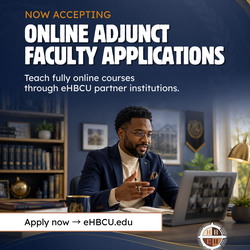
Central to sustaining these fully online programs is a dedicated pool of qualified instructors. The eHBCU Consortium maintains an ongoing recruitment process for online adjunct faculty to support course delivery across its partner institutions. This rolling pool accepts applications continuously, allowing the consortium to match instructional needs with available talent as programs expand or new sections open based on student demand.
Positions are part-time and per-course, with assignments determined by factors such as enrollment numbers, program requirements, and institutional budgets. Faculty members teach in a fully remote format using established learning management systems, ensuring consistent interaction standards that meet federal guidelines for distance education. The model provides flexibility for professionals who wish to contribute to HBCU missions without relocating or committing to full-time roles.
Successful candidates join a network of educators dedicated to student success in environments that emphasize cultural affirmation alongside academic achievement. This setup benefits both instructors seeking meaningful engagement and students who gain from diverse perspectives in virtual classrooms.
Understanding the eHBCU Consortium and Its Partners
The eHBCU initiative launched in mid-2025 as a collaborative venture among several prominent HBCUs. Founding participants include Delaware State University, Alabama State University, Southern University and A&M College, and Pensole Lewis College of Business & Design. These institutions share a commitment to extending HBCU traditions—rooted in excellence, community, and leadership development—into the digital realm.
Through the centralized portal at ehbcu.edu, students can access accredited degree and certificate programs designed with input from experienced HBCU faculty and administrators. Offerings span fields relevant to today’s workforce, including business, technology, health-related disciplines, and more. The consortium emphasizes not only content mastery but also the supportive, culturally responsive teaching approaches that have long distinguished HBCU education.
This model addresses longstanding barriers such as geographic isolation and scheduling conflicts that have prevented many prospective students from completing degrees. By creating a virtual community that mirrors the vibrant campus life of HBCUs, the initiative aims to boost completion rates among Black learners and others who value these institutions’ legacies.
Key Responsibilities for Online Adjunct Faculty
Instructors selected from the rolling pool handle core teaching duties in a virtual setting. Primary tasks include delivering course content aligned with approved curricula and learning outcomes, fostering regular and substantive student engagement through discussion forums, video sessions, and messaging tools, and providing timely feedback on assignments to support academic progress.
Faculty also maintain records in the learning management system, hold virtual office hours, and uphold standards of academic integrity. Participation in orientation, professional development sessions, and periodic assessments ensures alignment with quality benchmarks set by regional accreditors. These activities help maintain the high standards expected in HBCU-affiliated programs.
The emphasis on student-centered approaches means instructors often adapt strategies to support diverse learners, including adult students balancing work and family responsibilities. This focus creates rewarding experiences for educators who value mentorship and see direct impacts on student persistence.
Qualifications and Preferred Experience
Minimum requirements reflect standard expectations for higher education faculty. For undergraduate courses, applicants need a master’s degree in the teaching discipline or a master’s degree plus at least 18 graduate credit hours in the relevant field. Graduate-level instruction typically requires a terminal degree such as a Ph.D., Ed.D., DBA, DNP, or MFA from a regionally accredited institution.
All credentials must satisfy the specific standards of the relevant accrediting body, such as SACSCOC or others applicable to partner schools. Preferred qualifications include prior higher education teaching experience, familiarity with online instruction, comfort working with non-traditional and diverse student groups, and proficiency with platforms like Canvas or similar systems.
These criteria ensure that faculty bring both subject-matter expertise and the pedagogical skills necessary for effective remote delivery. The consortium values candidates who demonstrate a commitment to equity and inclusion, aligning with the broader mission of HBCUs to serve underrepresented populations.
Application Process and Next Steps
Interested candidates submit materials through a dedicated online form. Required documents include a current curriculum vitae highlighting academic preparation and teaching history, a cover letter specifying disciplines of interest, unofficial transcripts from all graduate institutions, and any relevant licensure or certification documentation. Official transcripts are requested only upon selection for an assignment.
Applications undergo review on a rolling basis, with inclusion in the pool serving as the initial step. Actual course assignments depend on specific needs and successful verification processes. This streamlined approach allows qualified educators to position themselves for opportunities as they arise throughout the academic year.
Details on the full posting and direct application access are available through established higher education job platforms, providing additional context on expectations and benefits associated with these roles.
Benefits of Joining the eHBCU Adjunct Community
Teaching in this environment offers distinct advantages beyond standard adjunct compensation structures. Instructors contribute to expanding educational access for populations historically served by HBCUs, playing a role in economic mobility and workforce development. The fully online format supports work-life balance, enabling professionals to maintain other commitments while engaging meaningfully with students.
Faculty gain exposure to collaborative practices across multiple institutions, potentially broadening professional networks within the HBCU ecosystem. Training and quality assurance activities provide ongoing development opportunities that enhance online teaching effectiveness. Many educators find particular fulfillment in supporting first-generation and adult learners who bring rich life experiences to the virtual classroom.
Overall, the model promotes a sense of purpose aligned with advancing equity in higher education, while offering the practical flexibility that appeals to experienced instructors seeking part-time engagement.
Broader Context: Growth of Online Education at HBCUs
Historically Black Colleges and Universities have long been vital to American higher education, producing disproportionate numbers of Black professionals in fields like STEM, law, and medicine. Recent years have seen increased interest in expanding online offerings at these institutions to reach more students without compromising institutional identity.
National data highlight strong demand for flexible options, with many learners citing convenience and affordability as key factors. Initiatives like eHBCU respond to these needs by creating scalable solutions that individual campuses might struggle to implement alone. Partnerships with organizations focused on educational access further strengthen program sustainability and student support services.
This development reflects a strategic response to enrollment dynamics and technological advancements, positioning HBCUs to remain competitive and relevant in a changing educational marketplace while upholding their foundational values.
Considerations for Prospective Online Instructors
While rewarding, online adjunct roles involve specific considerations. Instructors must be comfortable with technology-mediated communication and proactive in building rapport with students they may never meet in person. Time management skills are essential, as responsibilities include responding promptly to inquiries and grading within established windows.
Understanding accreditation requirements and federal regulations around distance education helps ensure compliance. Candidates with experience in culturally responsive pedagogy often thrive in these settings, where affirming student identities supports engagement and outcomes.
Potential applicants are encouraged to reflect on their teaching philosophies and technological readiness before submitting materials. Resources on effective online instruction and HBCU history can provide valuable preparation.
Future Outlook and Impact
As the eHBCU Consortium matures, its faculty pool will likely grow alongside program offerings. Continued emphasis on quality online delivery could influence similar collaborations among other institution types, demonstrating scalable models for mission-driven education in digital formats.
Longer-term effects may include increased degree attainment among underrepresented groups, stronger pipelines into graduate programs and careers, and enhanced visibility for HBCU approaches in broader higher education discussions. Faculty who participate now help shape these trajectories while advancing their own professional profiles.
The initiative underscores the adaptability of HBCUs in meeting contemporary challenges, ensuring their legacies of excellence endure and evolve for new generations of learners.
Practical Guidance for Applicants
Those considering the rolling pool should prepare strong application materials that clearly articulate relevant expertise and enthusiasm for the consortium’s mission. Highlighting any online teaching background or work with diverse populations strengthens candidacy. Staying informed about developments at ehbcu.edu and related higher education resources supports timely applications when opportunities align with individual schedules.
Networking within professional associations focused on online learning or HBCU advancement can offer additional insights. Ultimately, success depends on matching qualifications with program needs while demonstrating a genuine commitment to student-centered, equitable education.